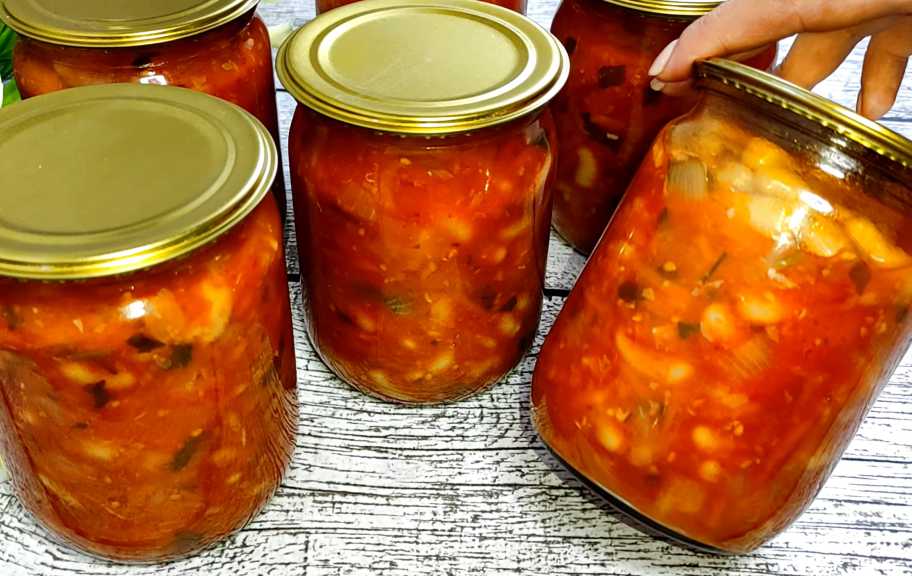
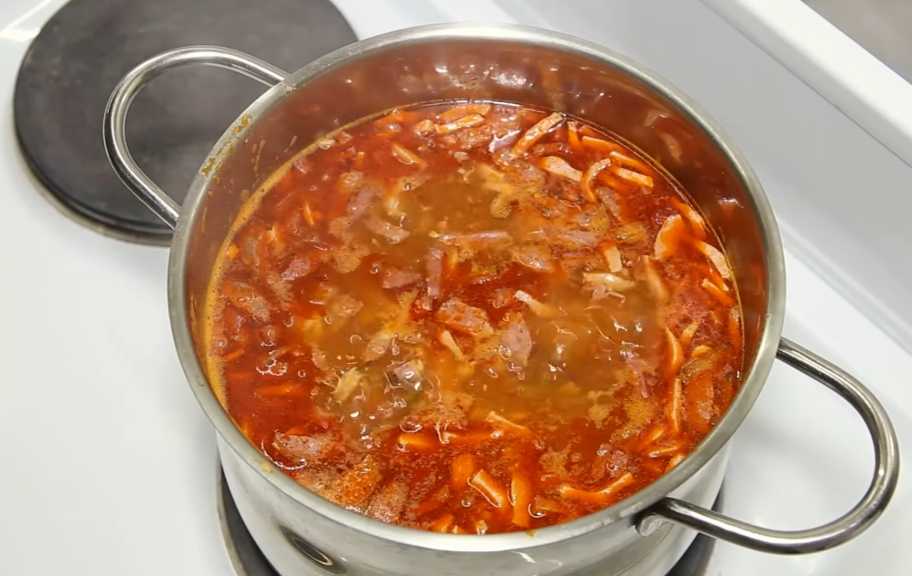
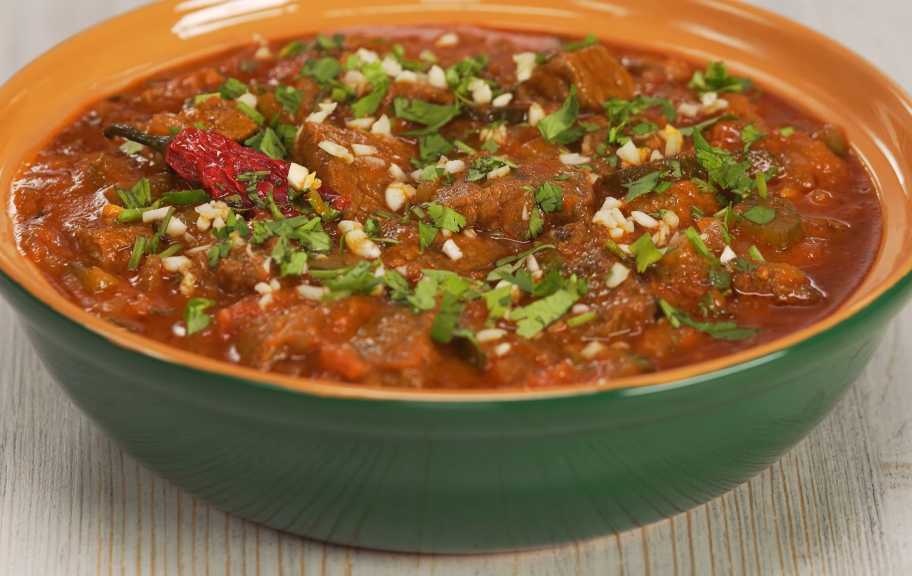
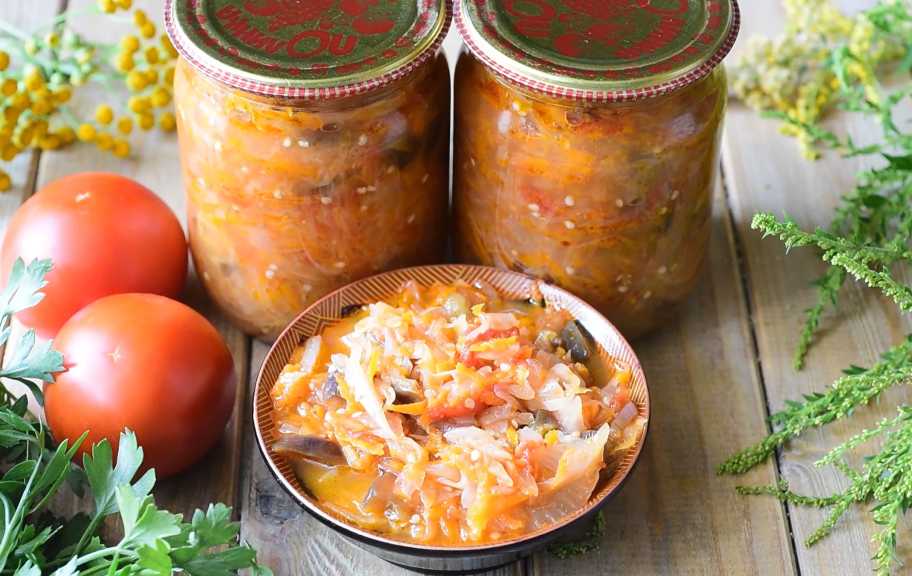
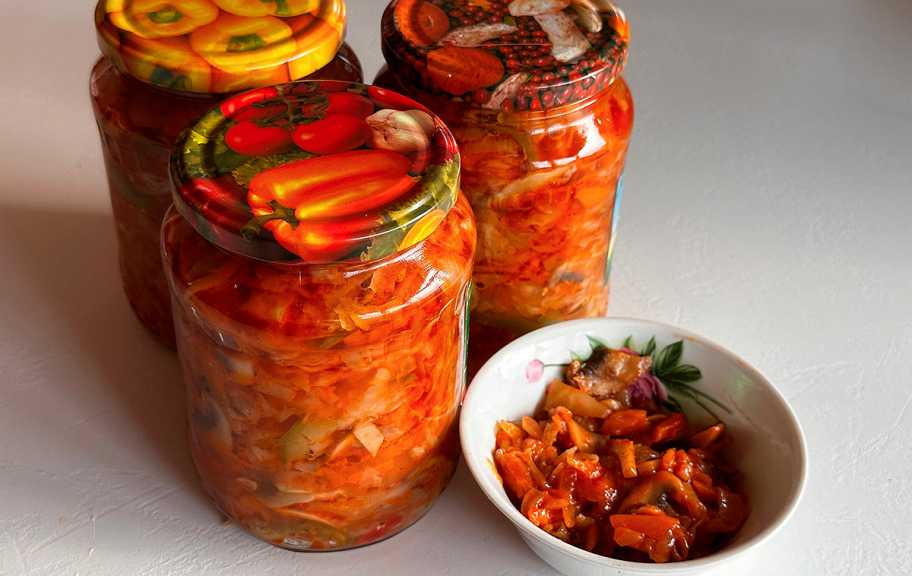
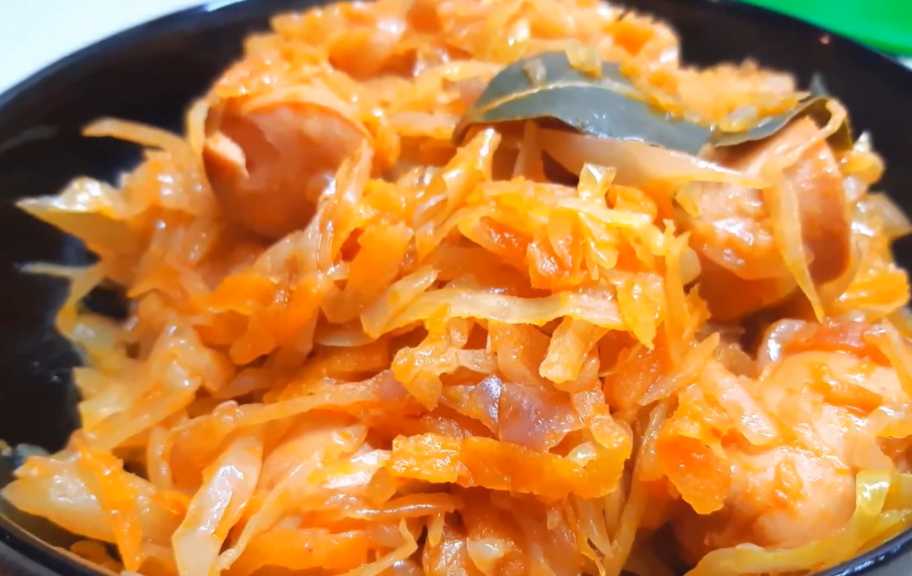
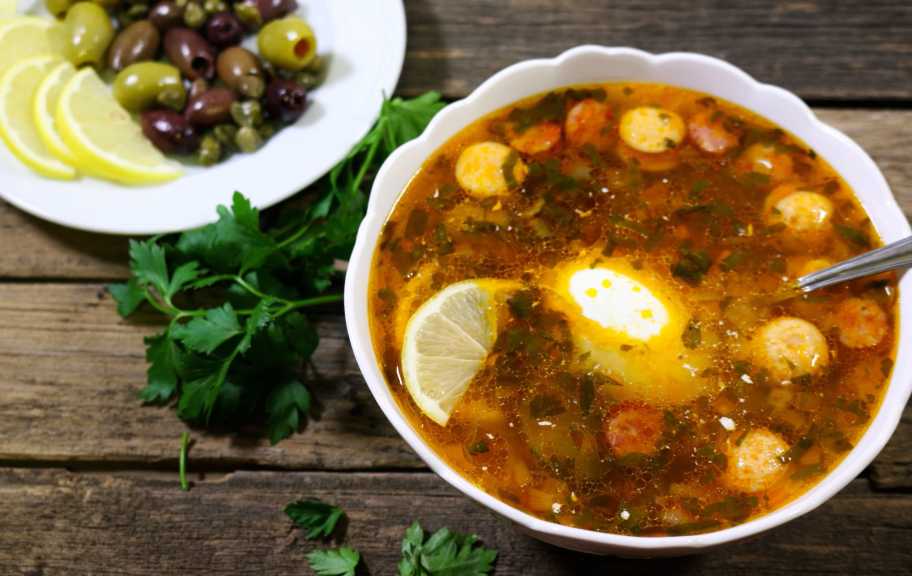
Solyanka with mushrooms in an autoclave
What do you need for cooking?
Ingredients
-
Champignons
-
Cabbage
-
Onion
-
Carrot
-
Bell pepper
-
Tomatoes
-
Tomato sauce
-
Vegetable oil
-
Salt
-
Sugar
Kitchen utensils
- Knife
- Pot
- Spoon or spatula
- Cutting board
- Jars with lids
- Autoclave
Step-by-step recipe
Step 1:
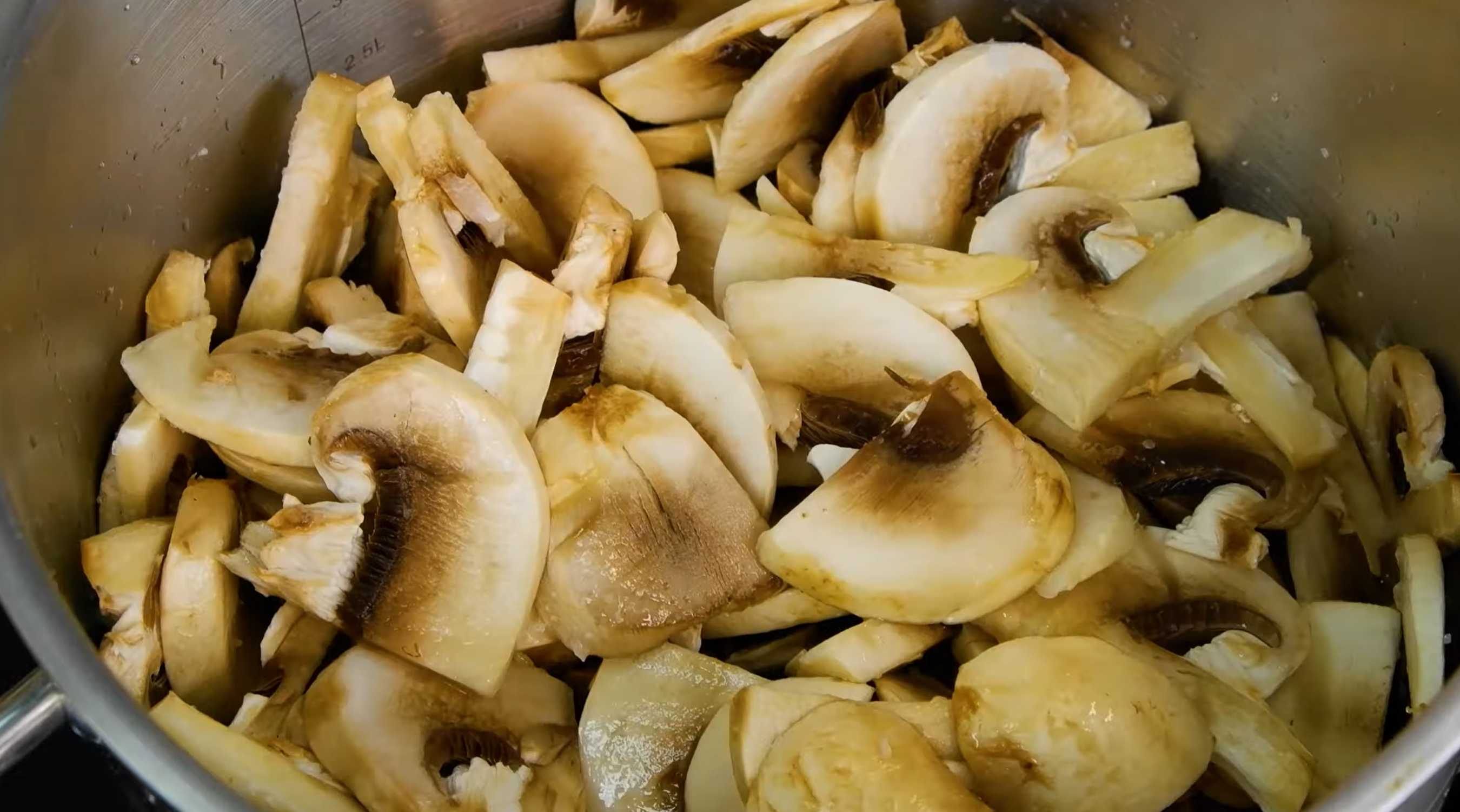 Slice the mushrooms, place them in a saucepan, and cover with water. Boil the mushrooms in salted water.
Step 2:
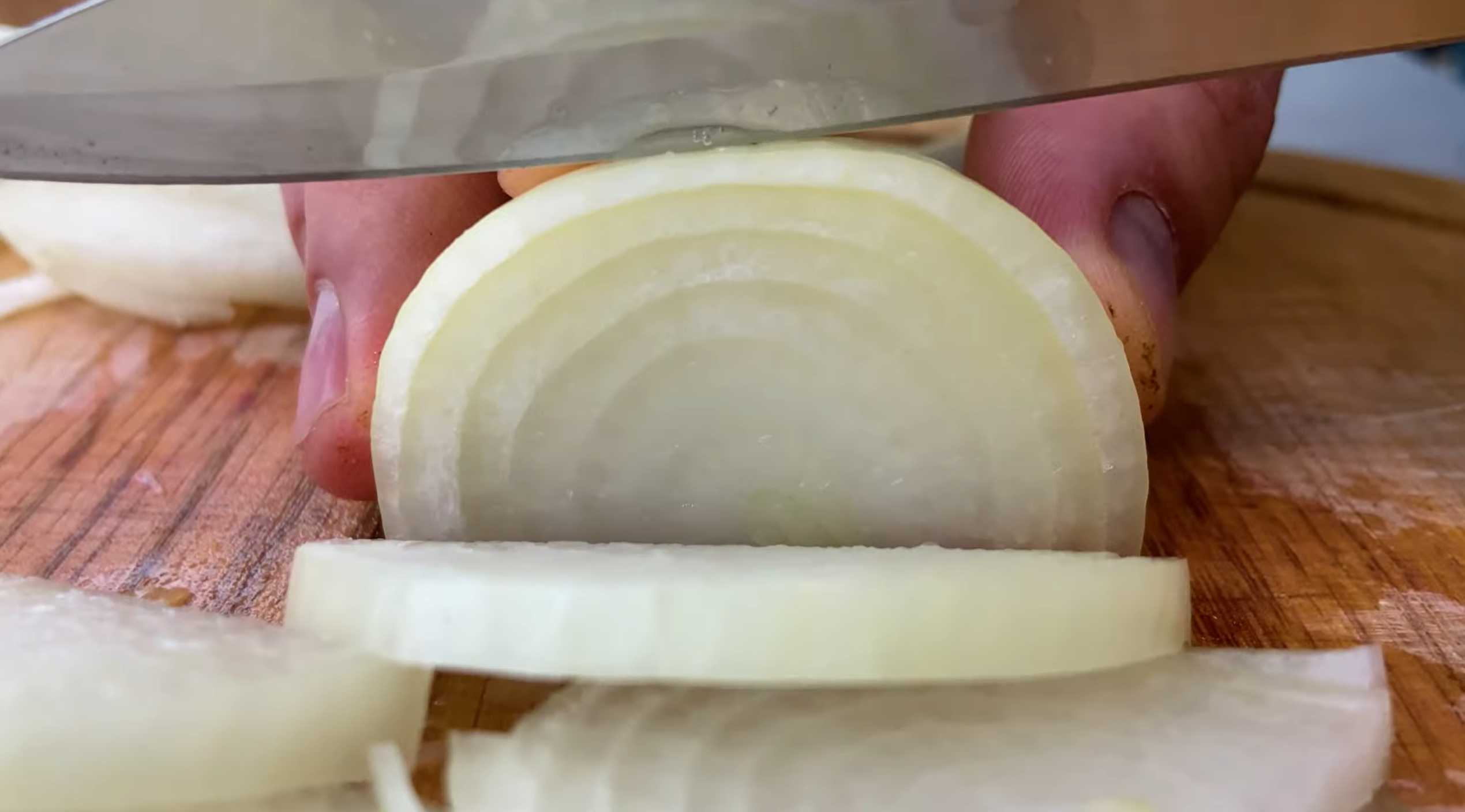 Cut the onion into half rings.
Step 3:
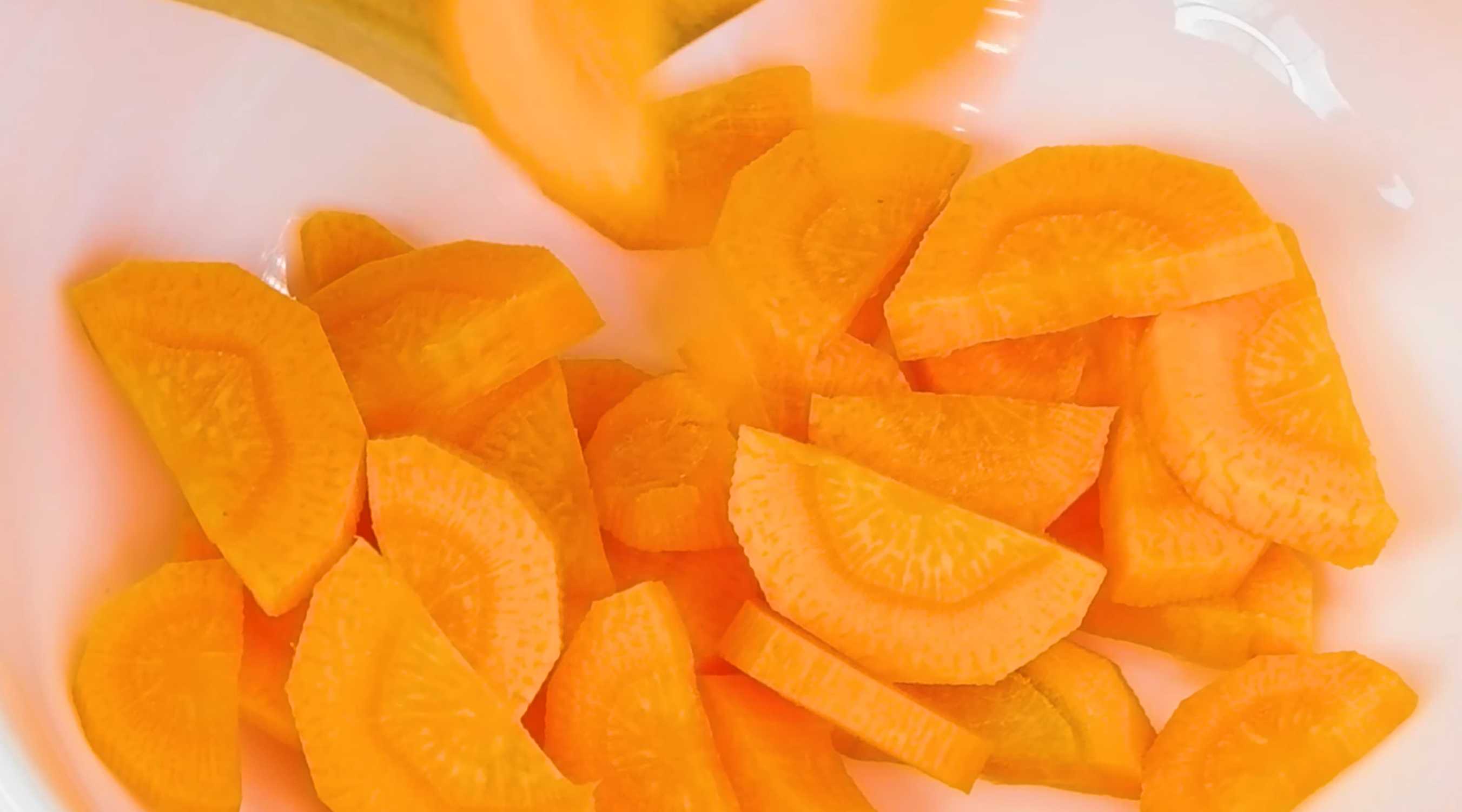 Cut the carrots into small pieces (half rings) or grate them using a Korean carrot grater.
Step 4:
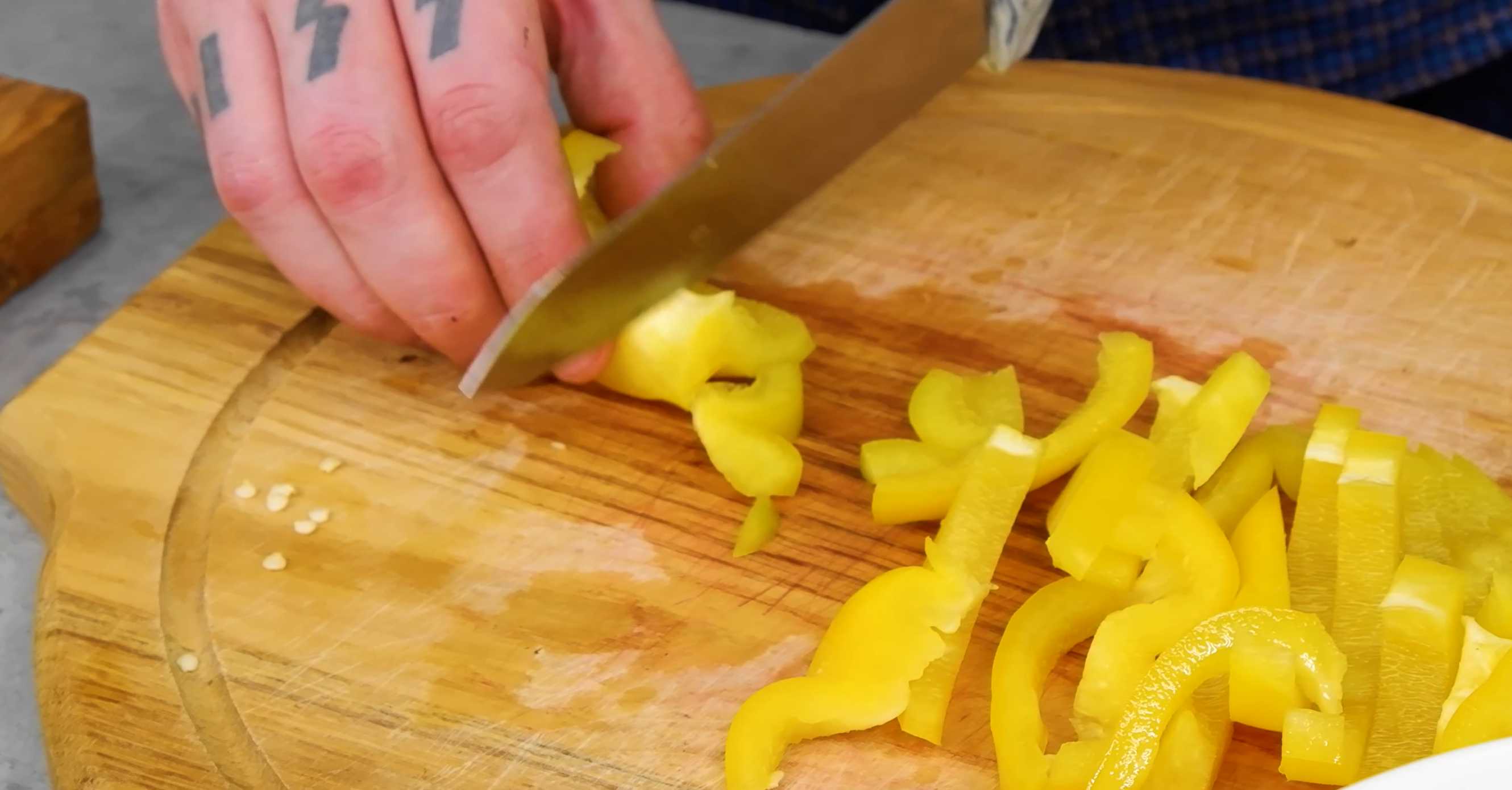 Cut the bell pepper into strips.
Step 5:
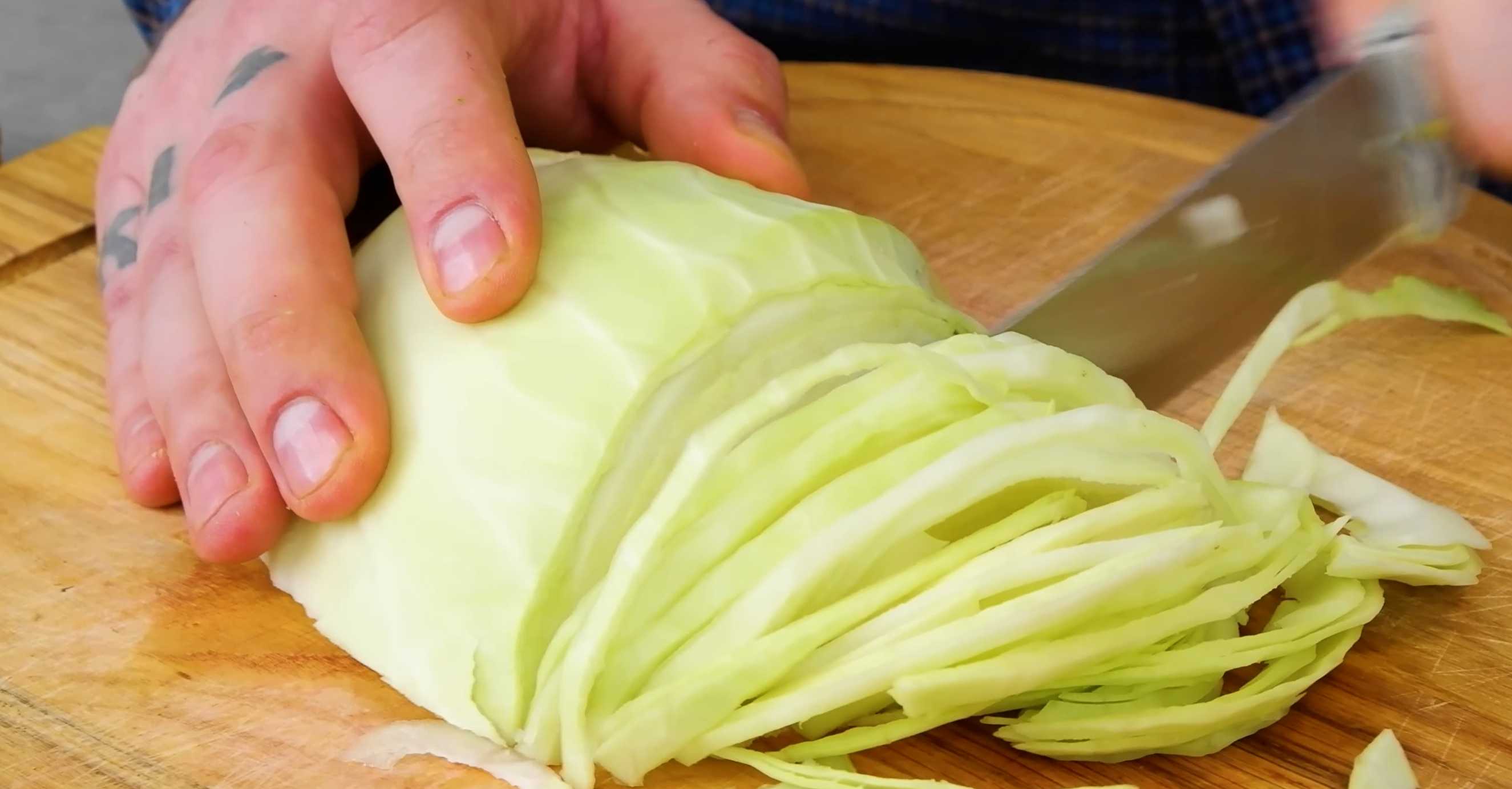 Shred the cabbage into strips.
Step 6:
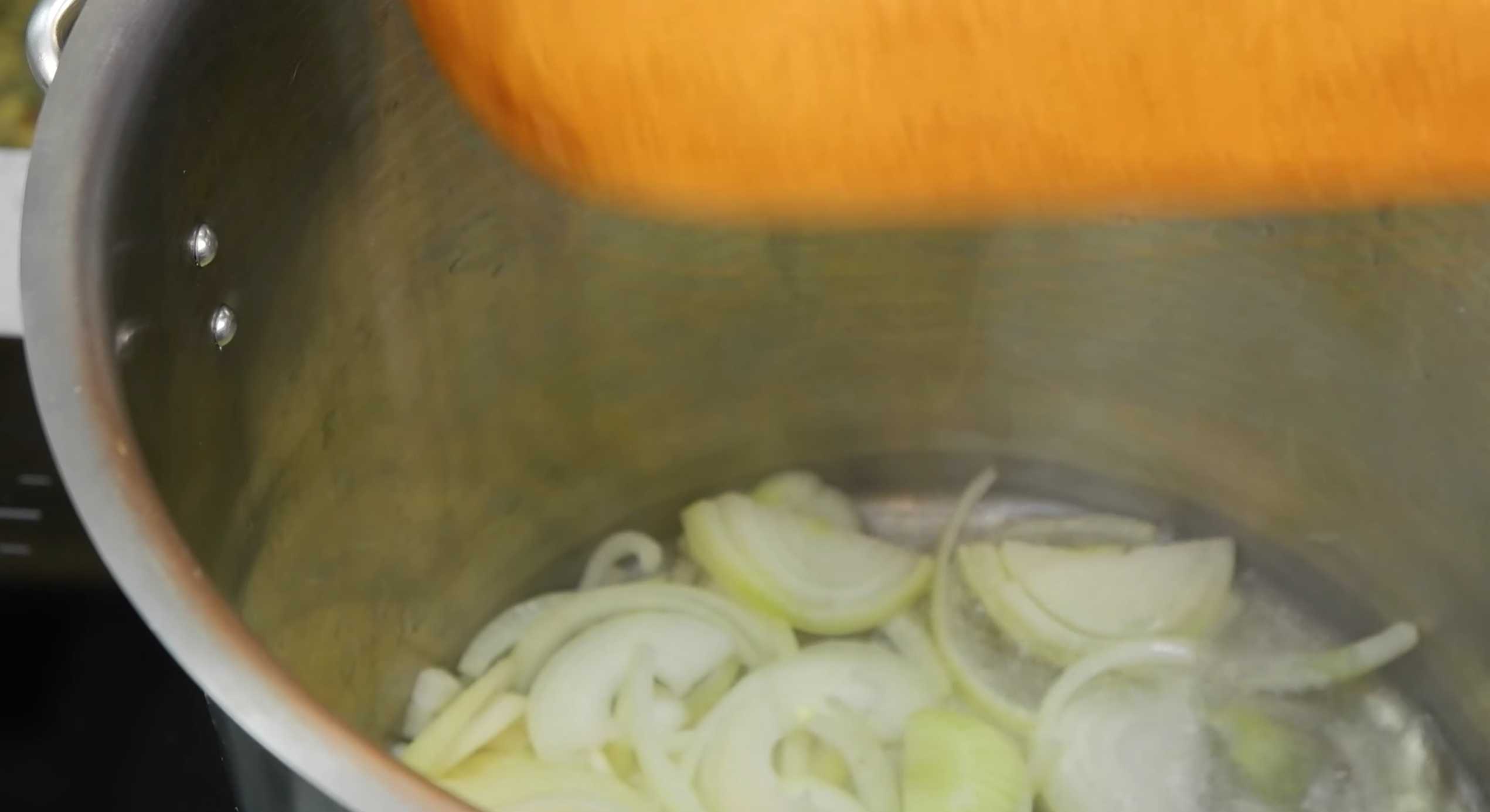 Pour 75 ml of vegetable oil into a saucepan. Fry the onion in the oil until golden brown.
Step 7:
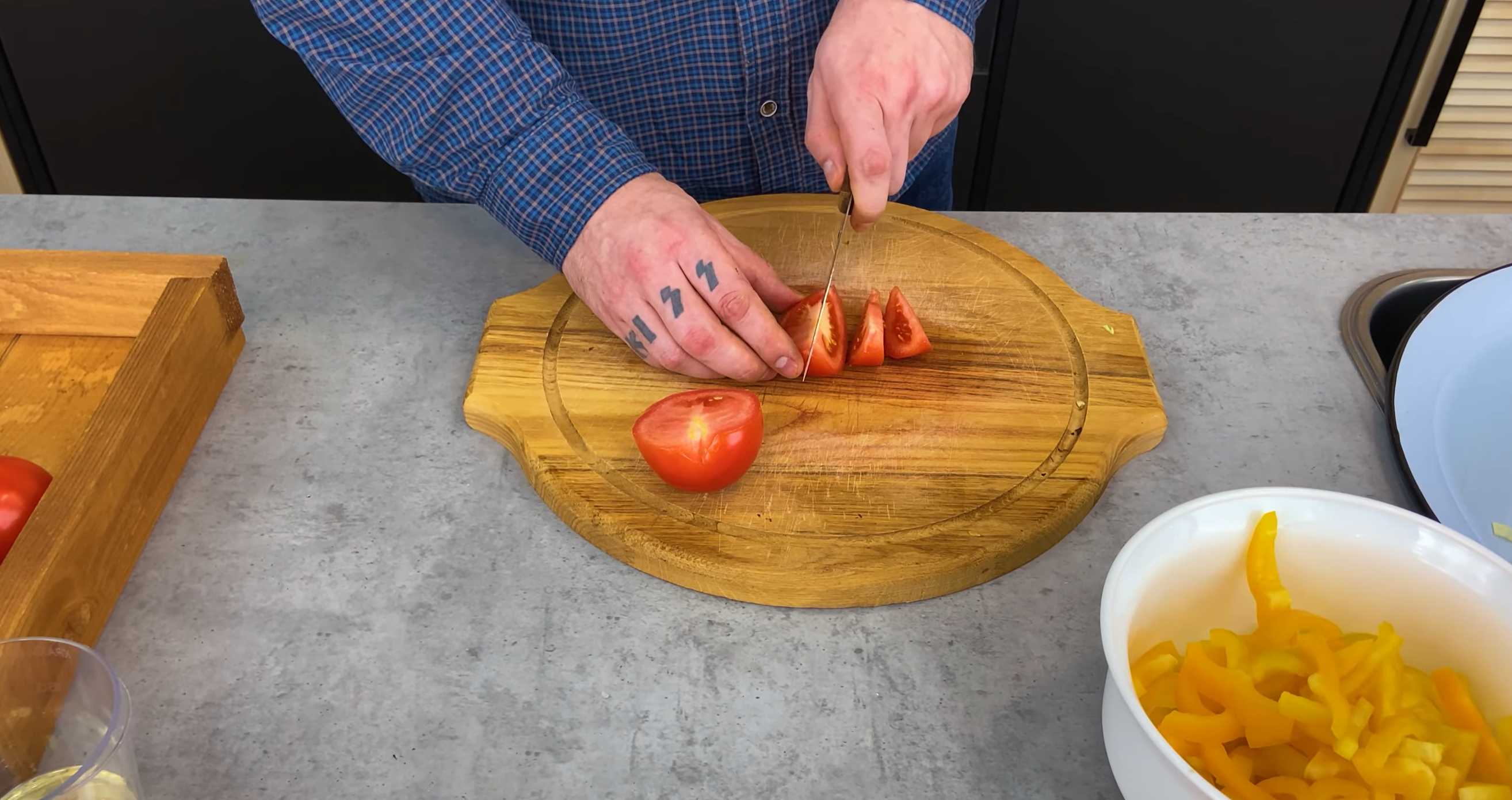 While the onion is frying, cut the tomatoes into slices.
Step 8:
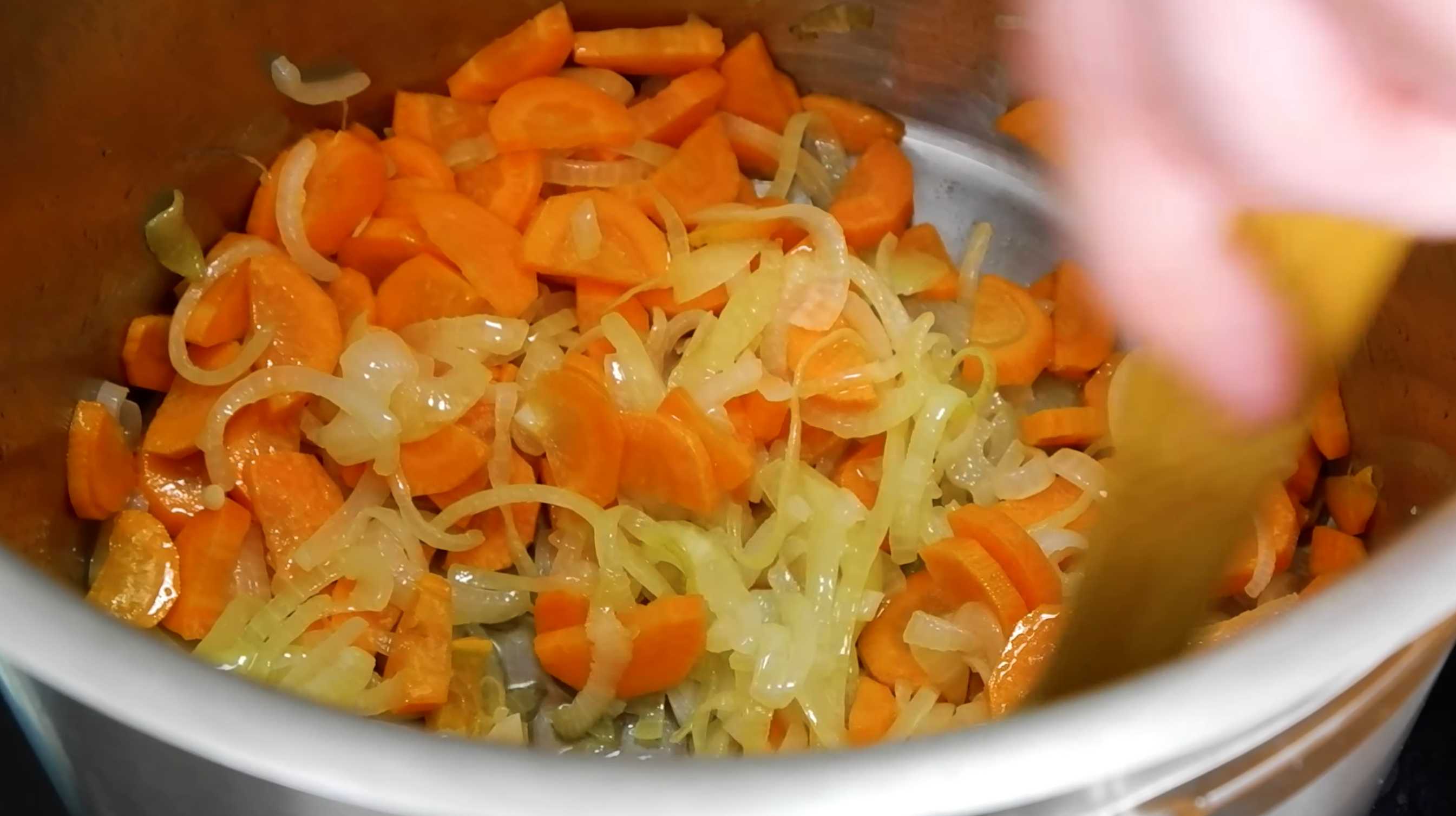 Add carrots to the onion and fry until soft.
Step 9:
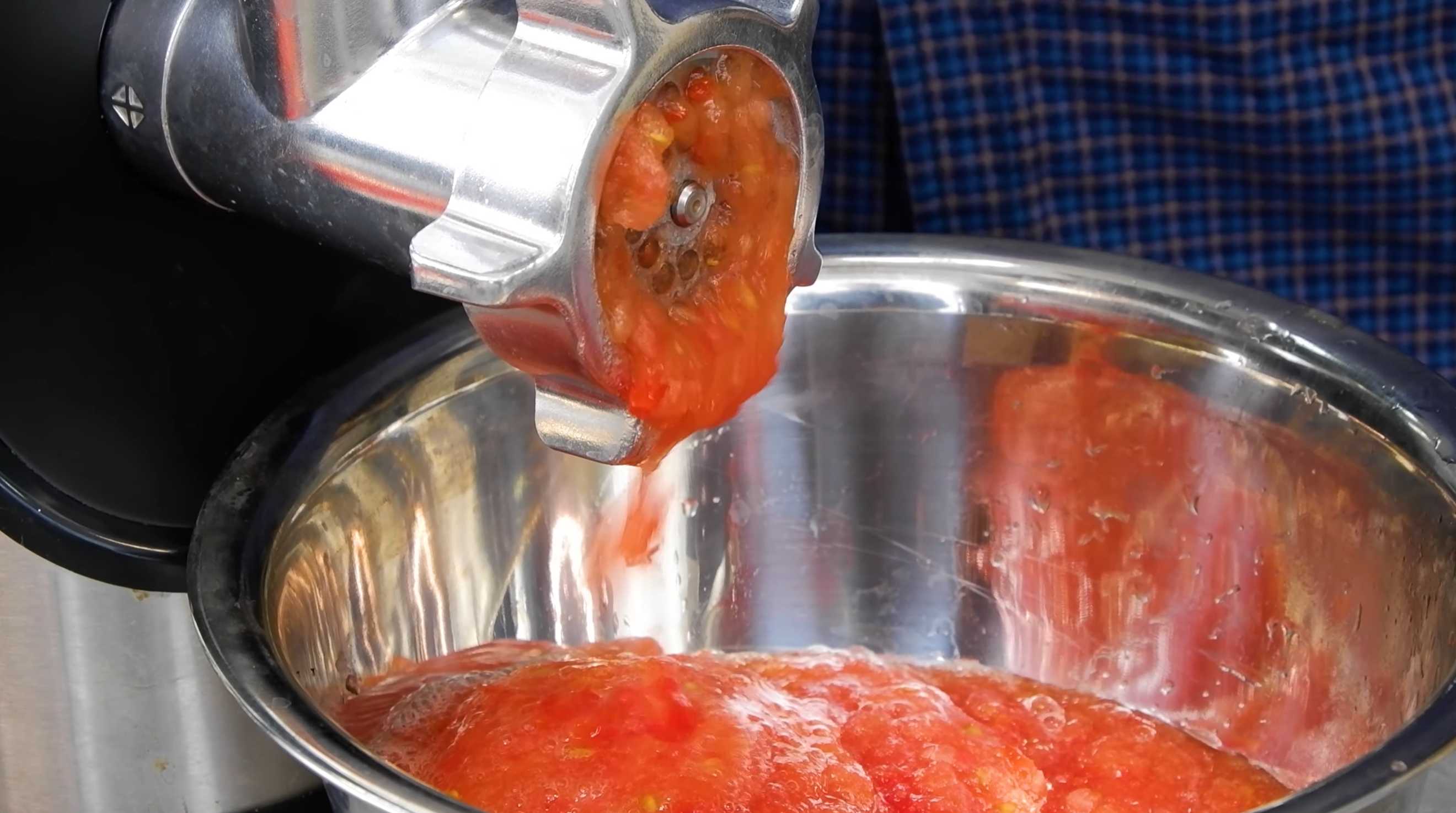 While the onions and carrots are frying, put the tomatoes through a meat grinder.
Step 10:
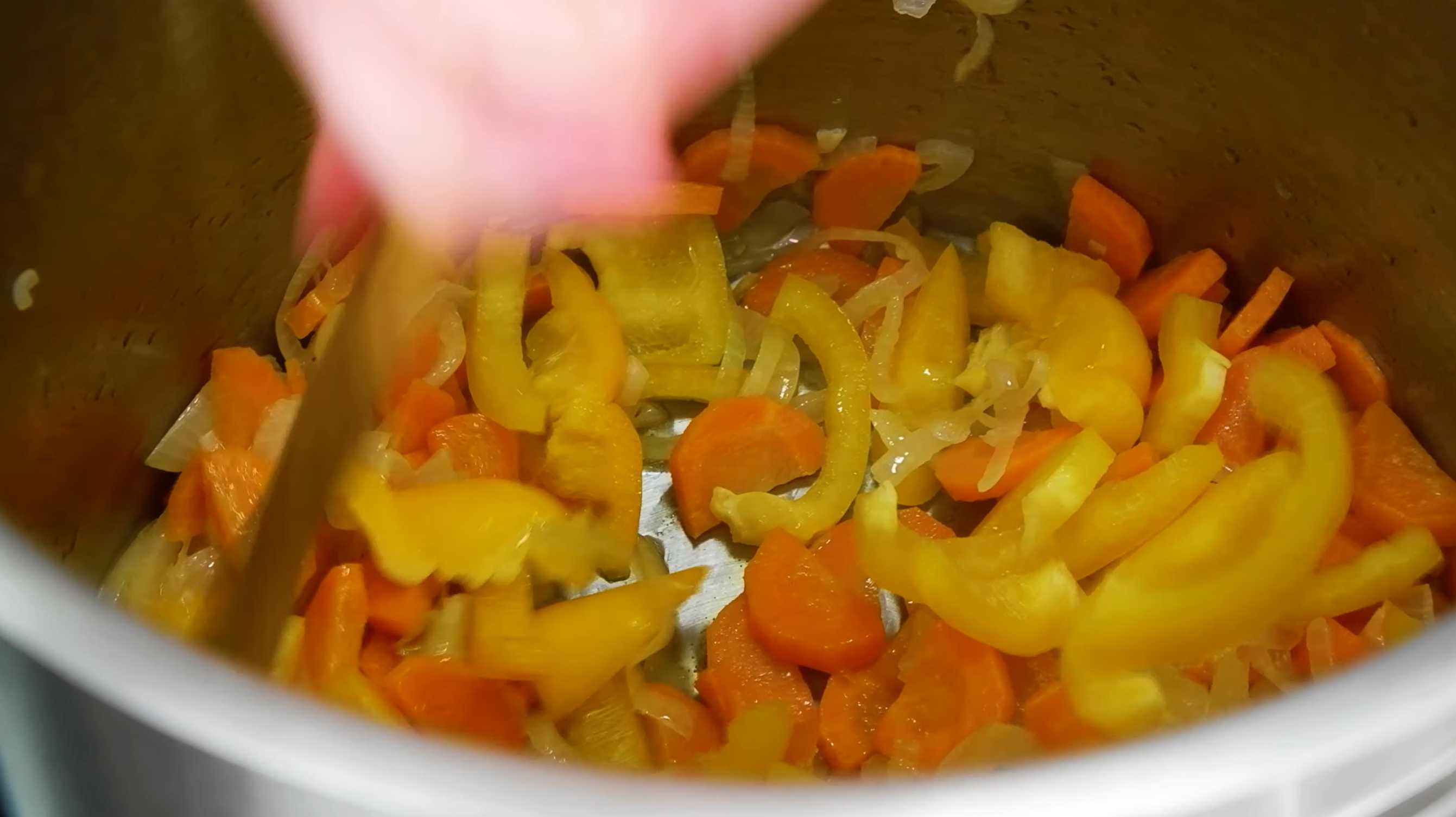 Add the bell pepper to the vegetables, stir, and fry for 10 minutes. Pour in the remaining 75 ml of vegetable oil.
Step 11:
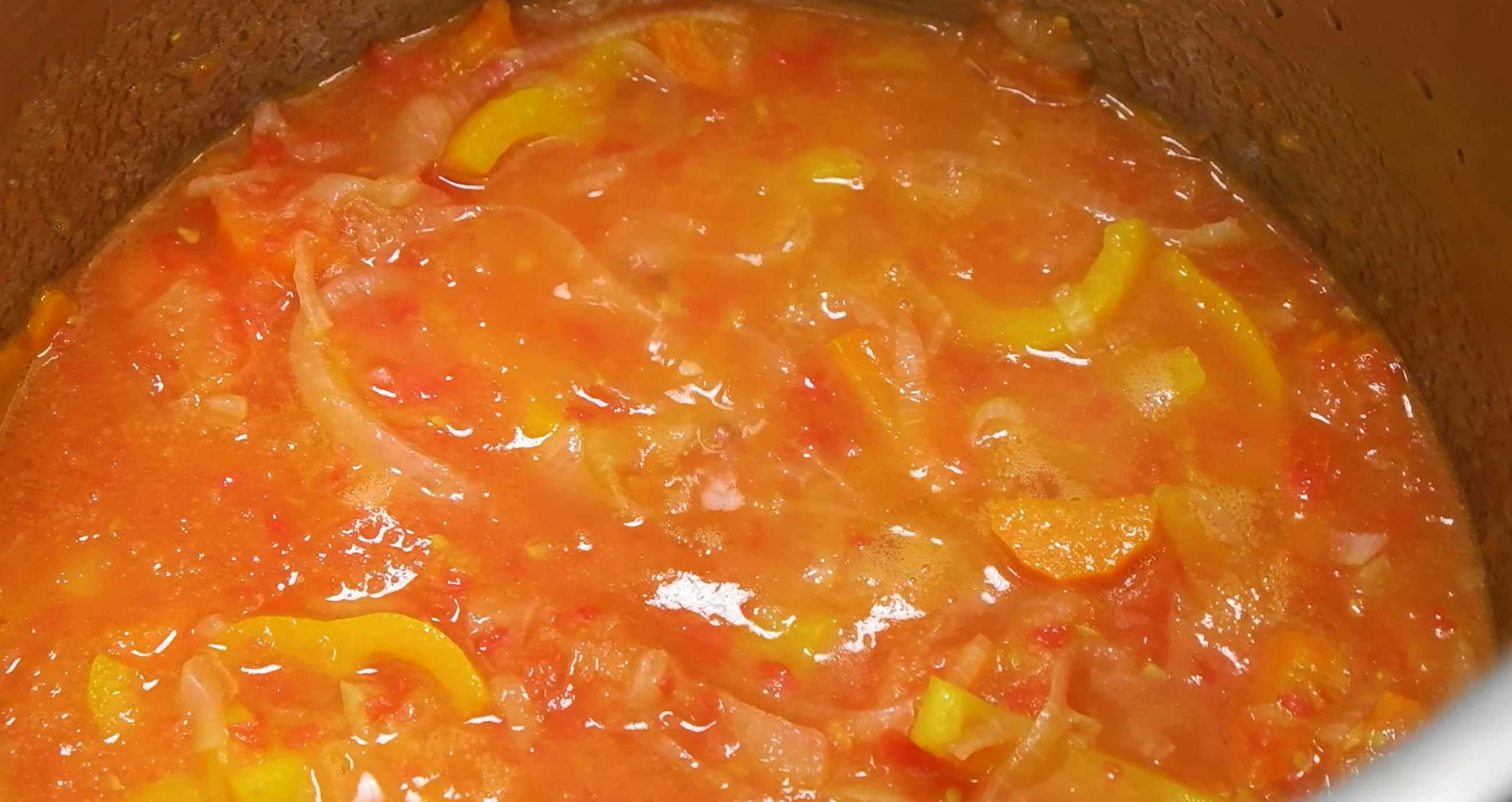 Pour the tomato mixture over the vegetables and bring to a boil.
Step 12:
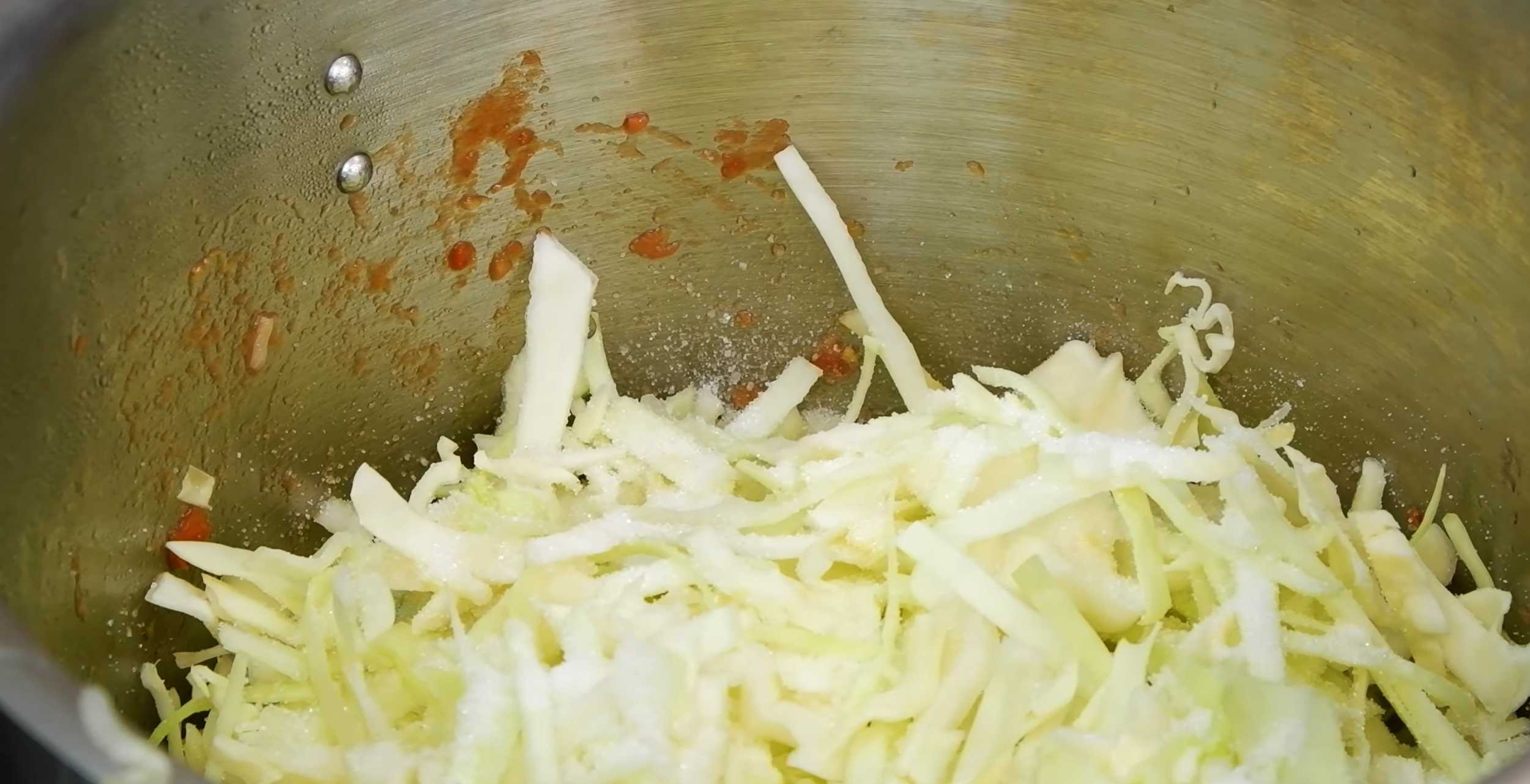 Add cabbage and tomato sauce to the vegetables, sugar to taste.
Step 13:
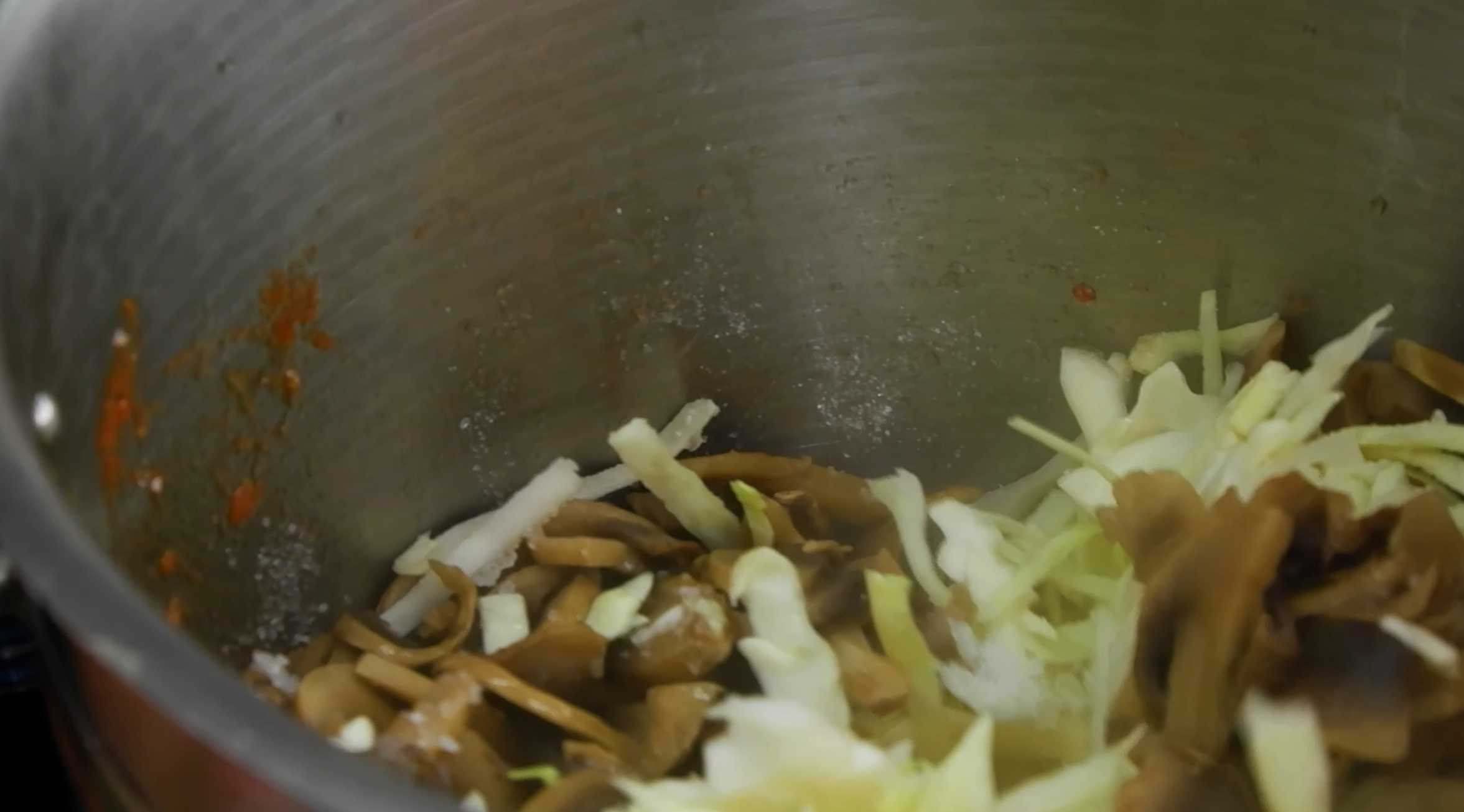 We discard the cooked mushrooms in a colander, add them to the total mass, and mix thoroughly.
Step 14:
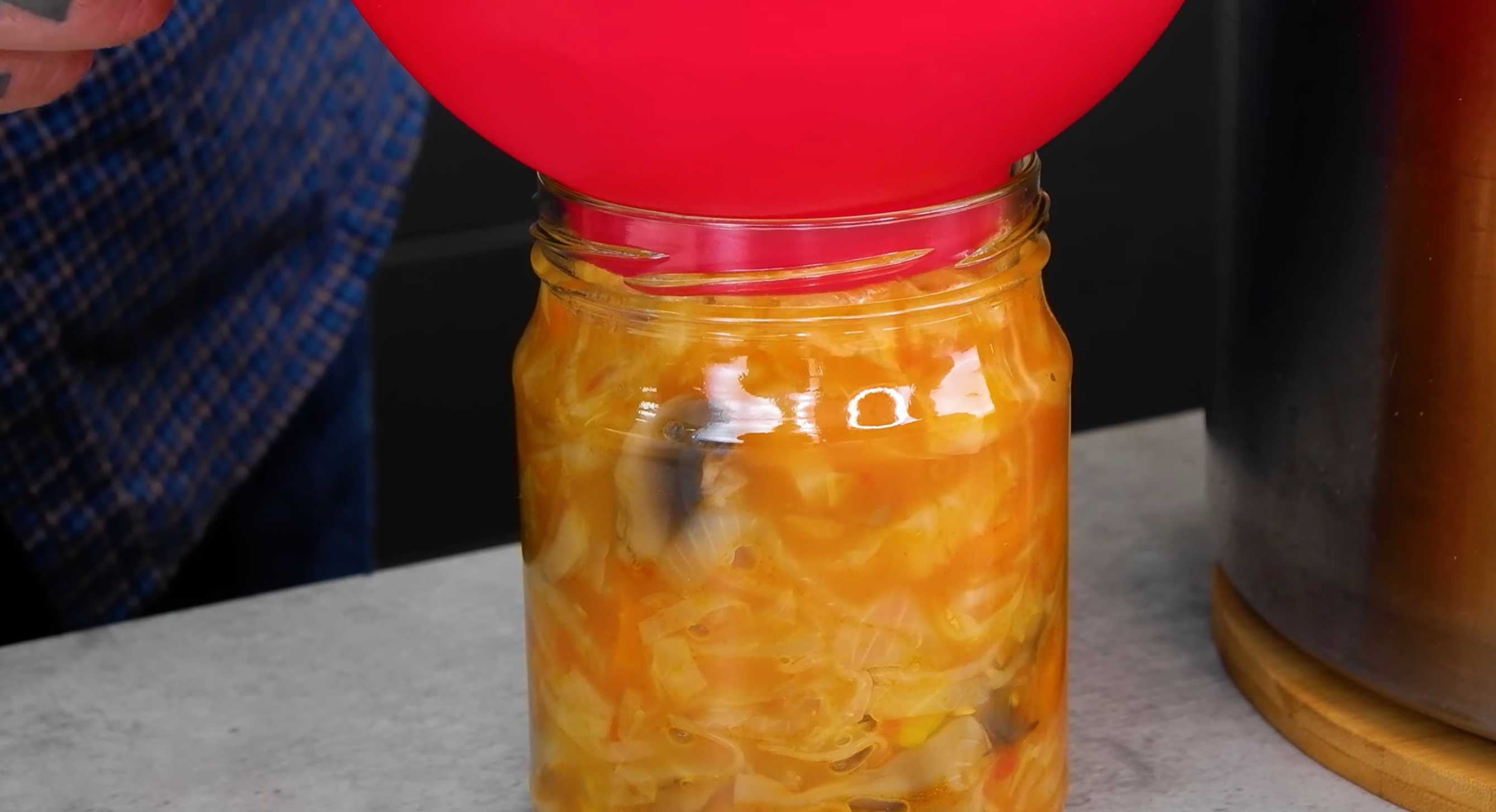 Immediately after cooking the solyanka, pour it into clean, dry jars, compacting the mixture. Seal the jars with lids.
NOTE: You don't need to sterilize the jars beforehand, but boil the lids for 1-2 minutes.
Step 15:
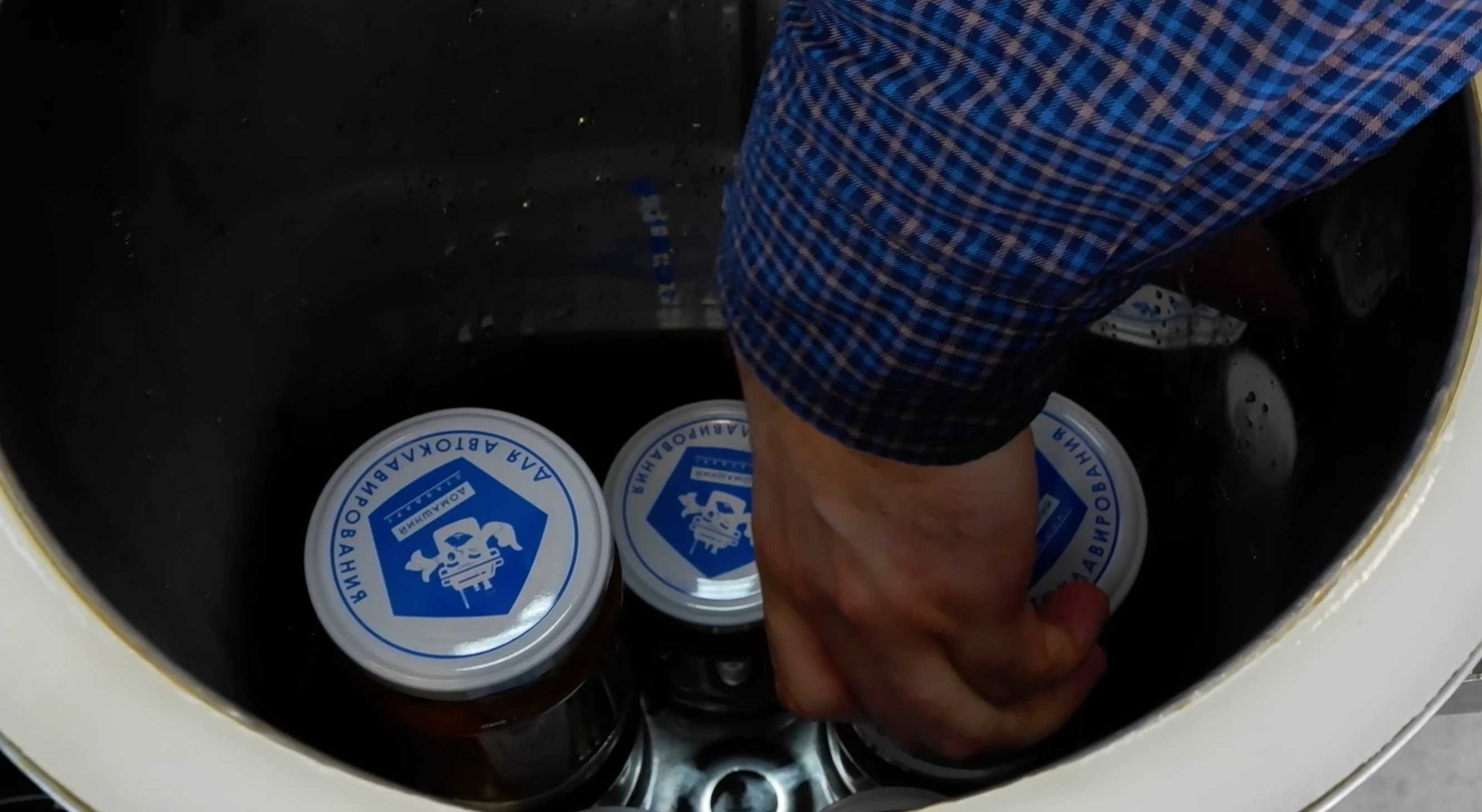 Heat the water for the autoclave to approximately 60 degrees Celsius. Pour the water into the autoclave and lower the jars into it.
NOTE: For an electric autoclave you will need 4 liters, for a classic one – 1 liter.
Step 16:
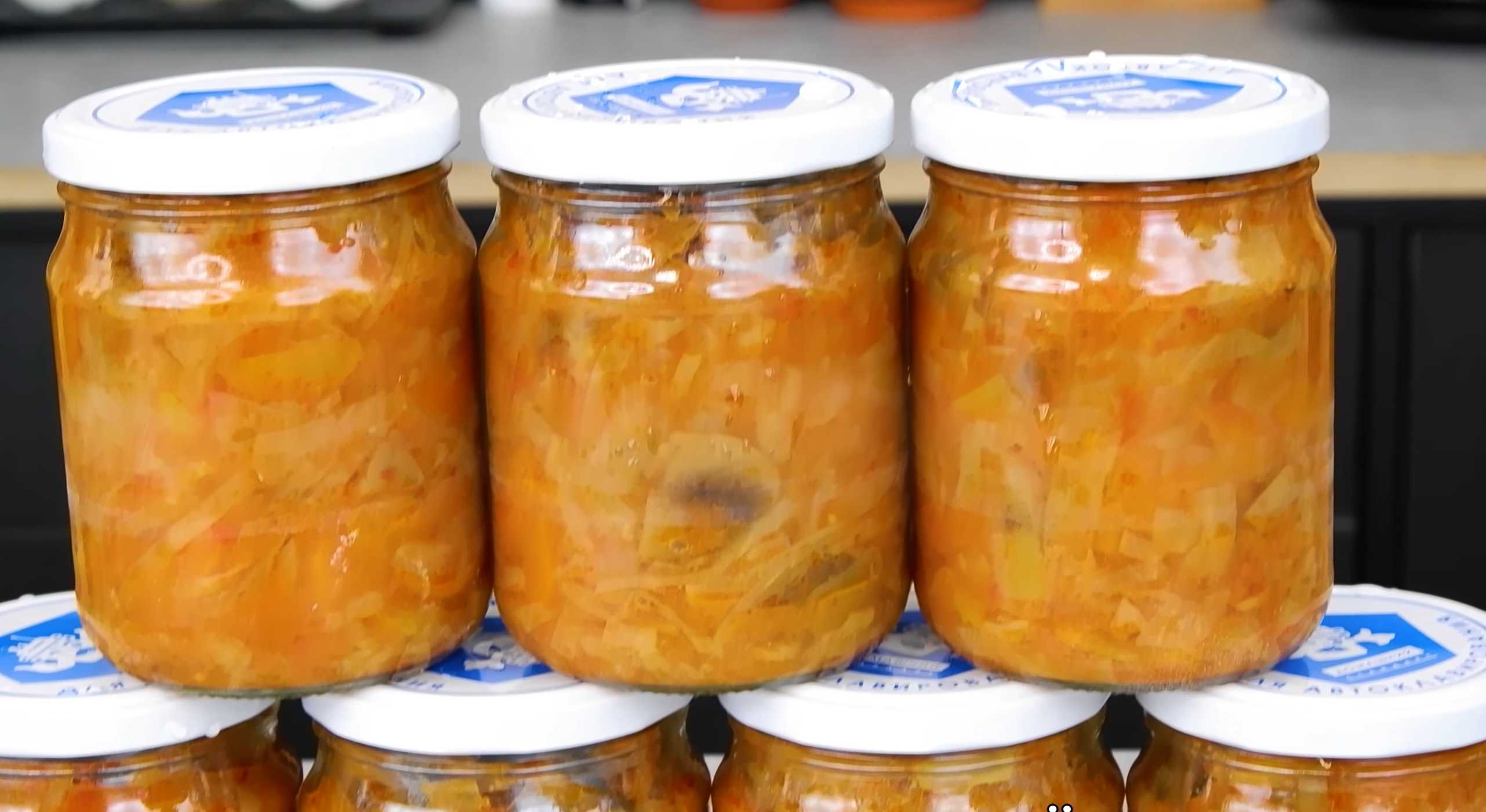 Turn the heat up to medium-high and cook for 50 minutes at 115°C. Once the canner has cooled, you can remove the jars.
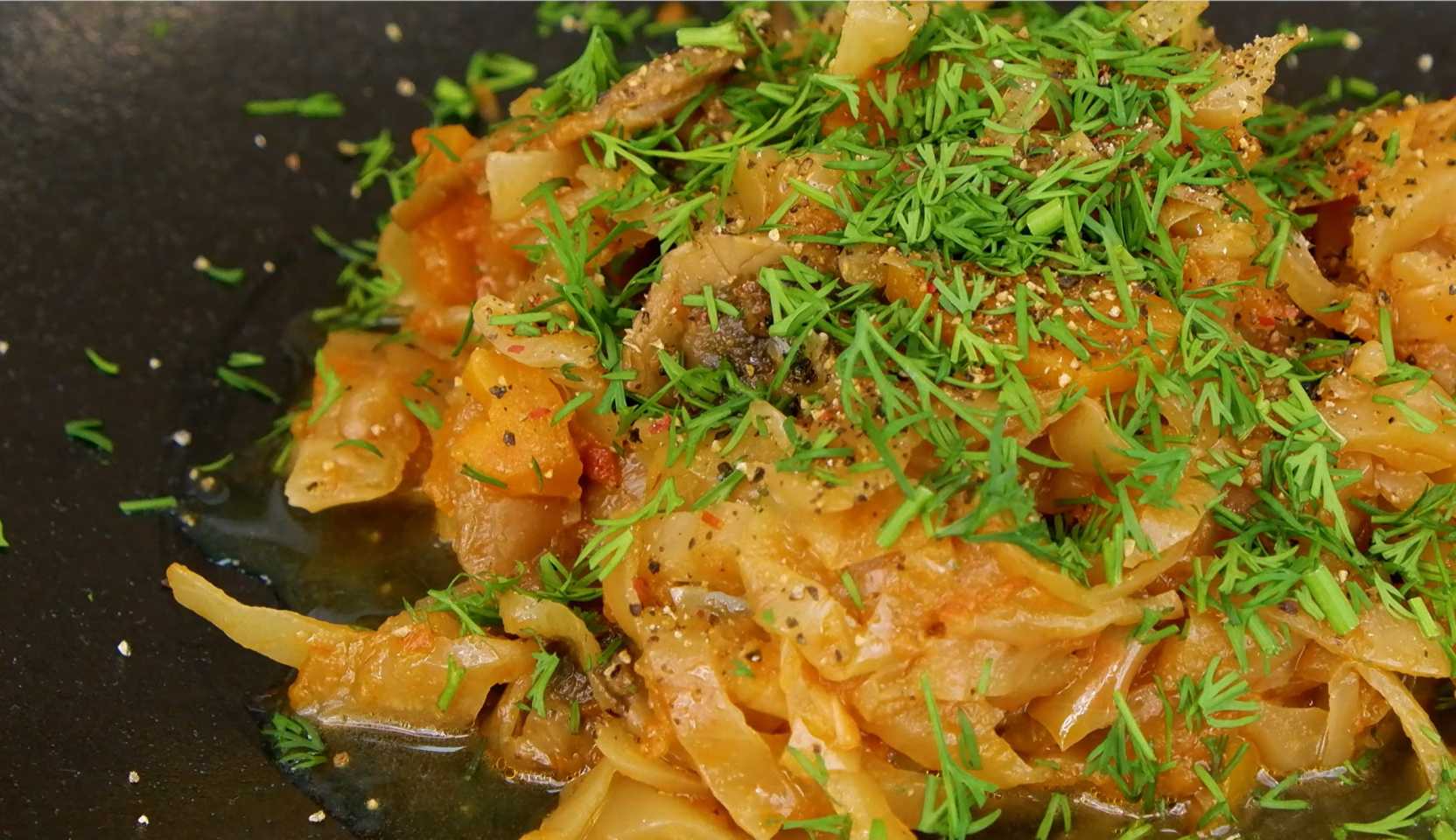
Cooking tips
Serve the solyanka with herbs. If you like it spicier, add some pepper. You can use any wild mushrooms (chanterelles, porcini, or aspen mushrooms) instead of champignons.