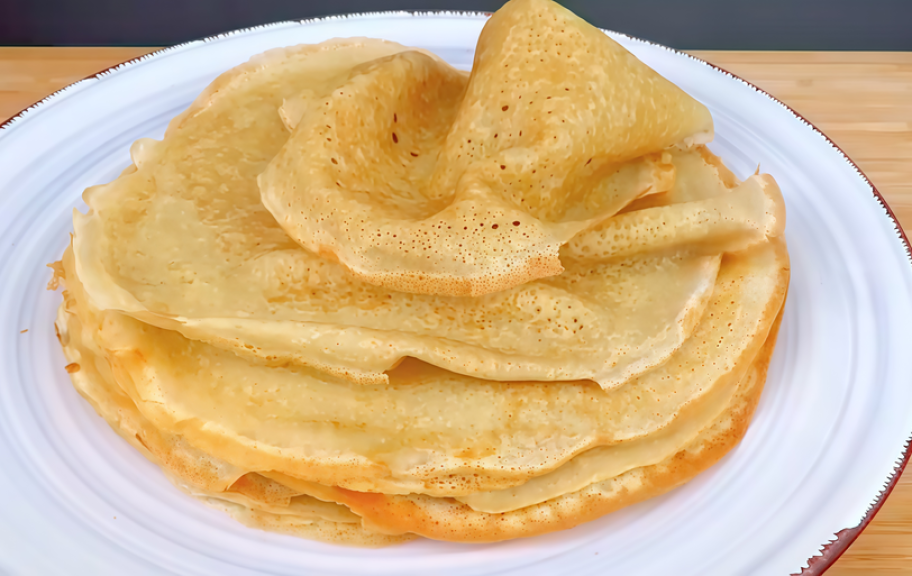
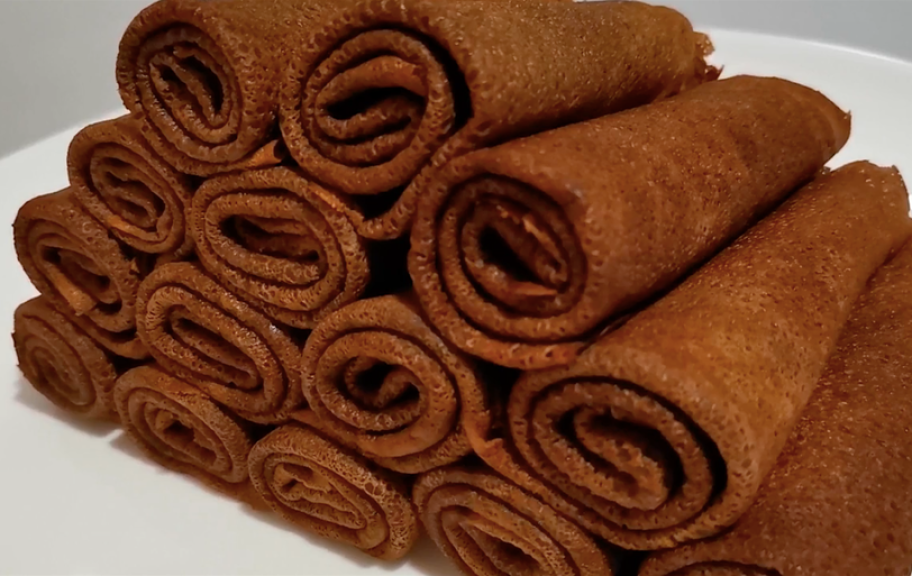
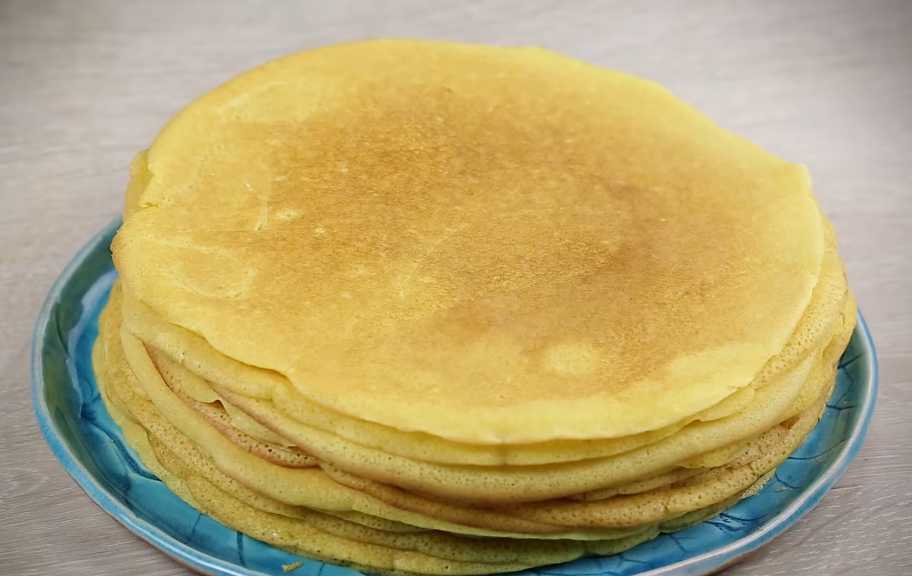
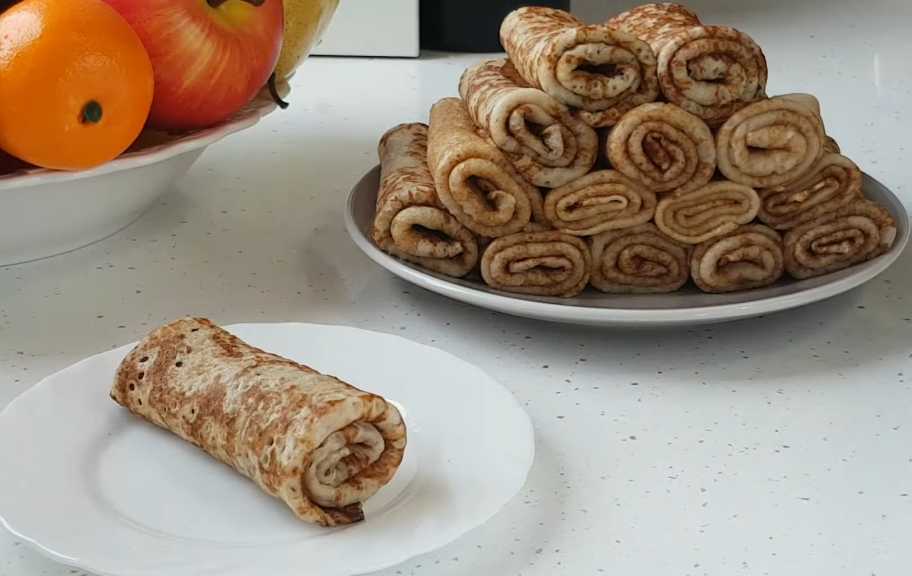
Starch pancakes with milk
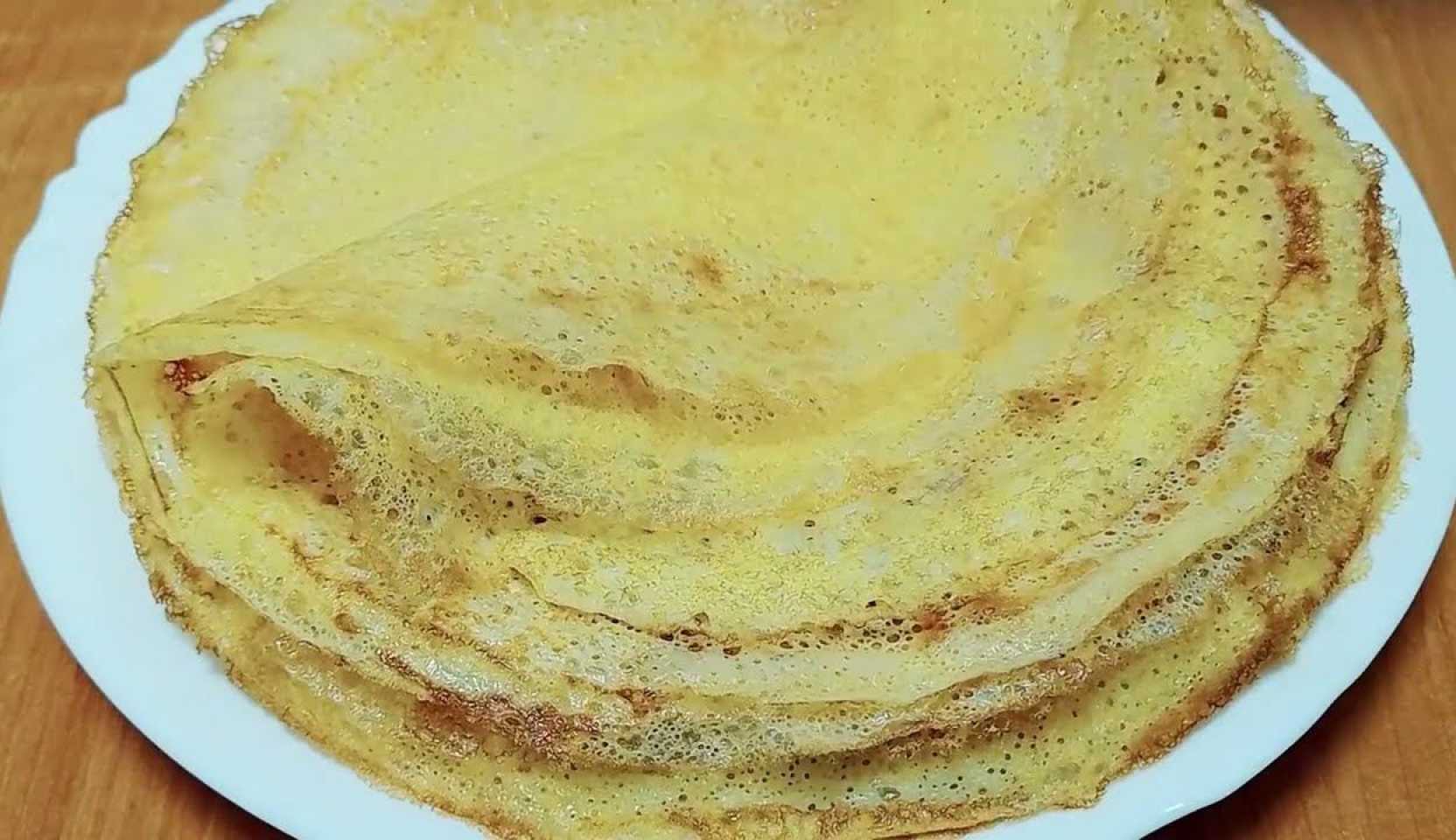
Origin of the recipe
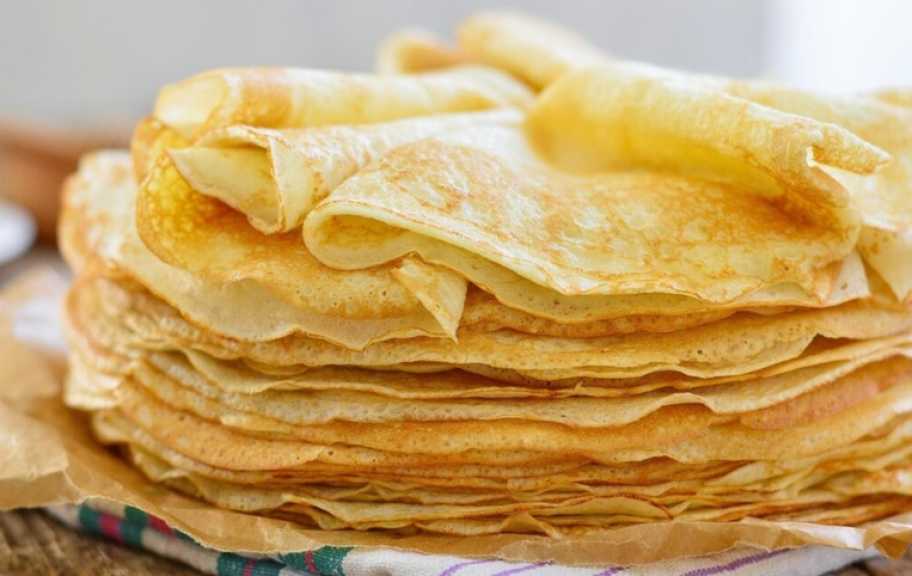
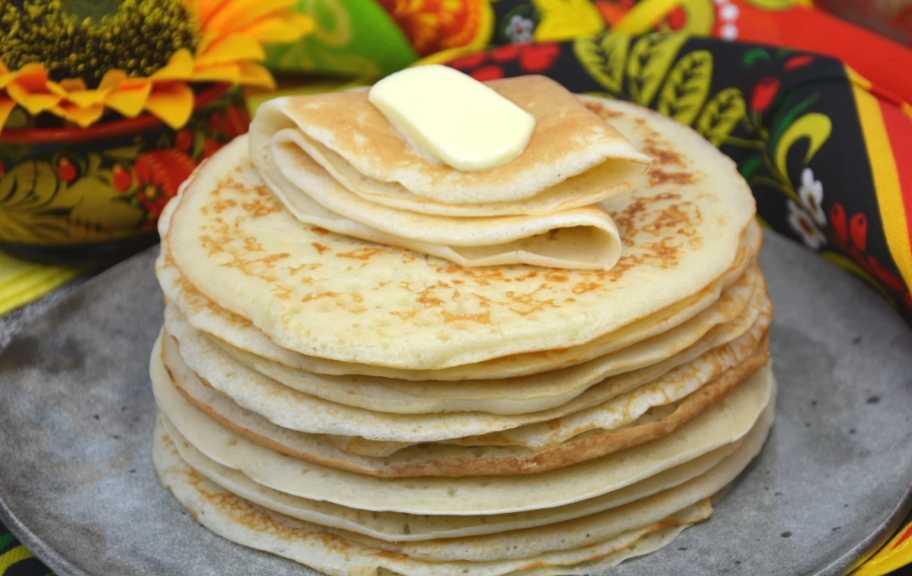
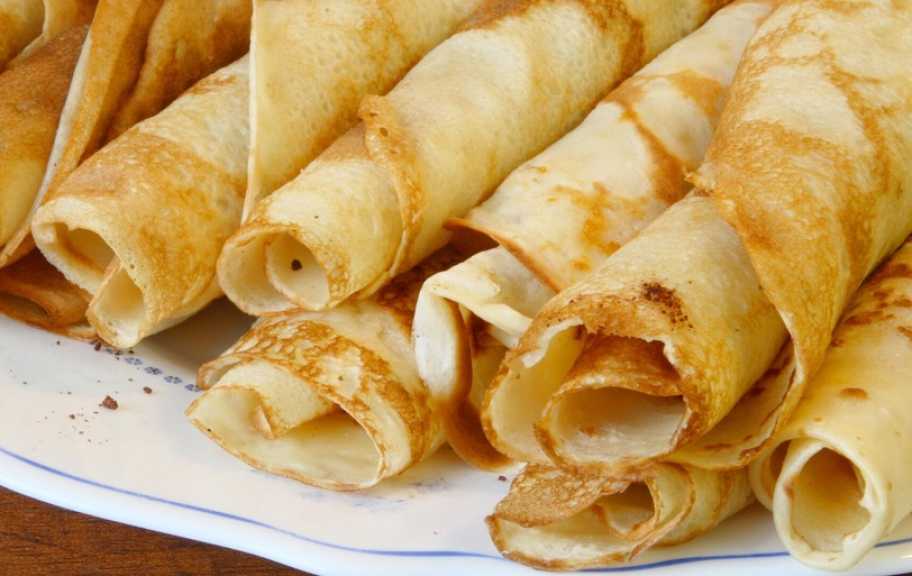
Super-thin starch pancakes with milk are a refined version of classic Russian blini, which became especially popular in the 20th century with the spread of high-quality non-stick frying pans and affordable milk. These pancakes were baked in cities and villages for both weekdays and holidays, especially prized for their ability to "envelop" any filling—from cottage cheese to caviar. They were prepared for Maslenitsa, weddings, and name days, served in a stack with butter or wrapped with filling. Today, this recipe remains a symbol of culinary mastery: a true challenge for the cook, as achieving perfect thinness without tearing is a true art.
What do you need for cooking?
Ingredients
-
Milk
-
Eggs
-
Sugar
-
Salt
-
Cornstarch
-
Vegetable oil
Kitchen utensils
- Knife
- Board
- Spoon
- Whisk
- shoulder blade
- deep bowl
- Non-stick frying pan
Step-by-step recipe:
Step 1:
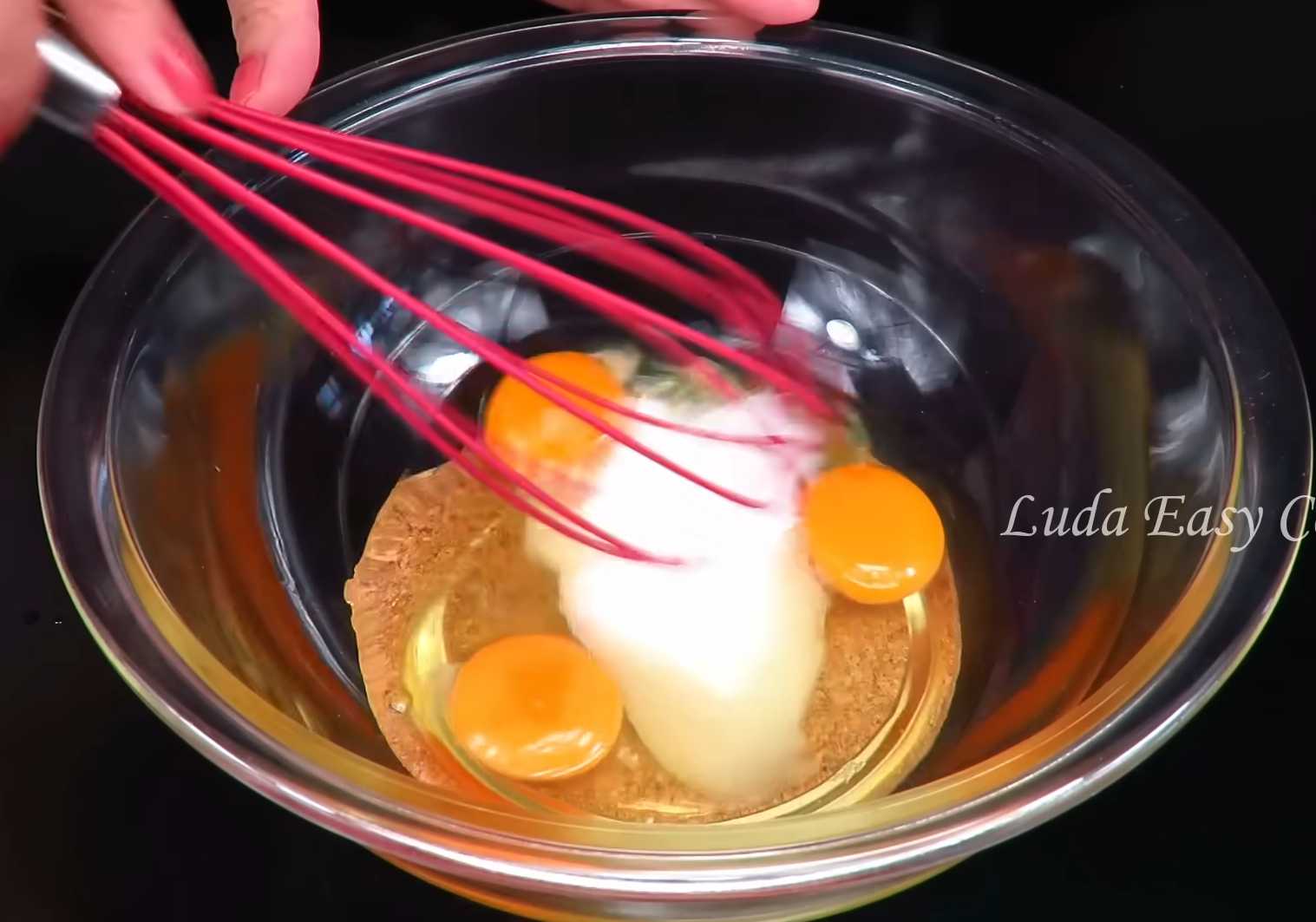 Break the eggs into a bowl, add sugar and salt, then beat well with a whisk until smooth.
Step 2:
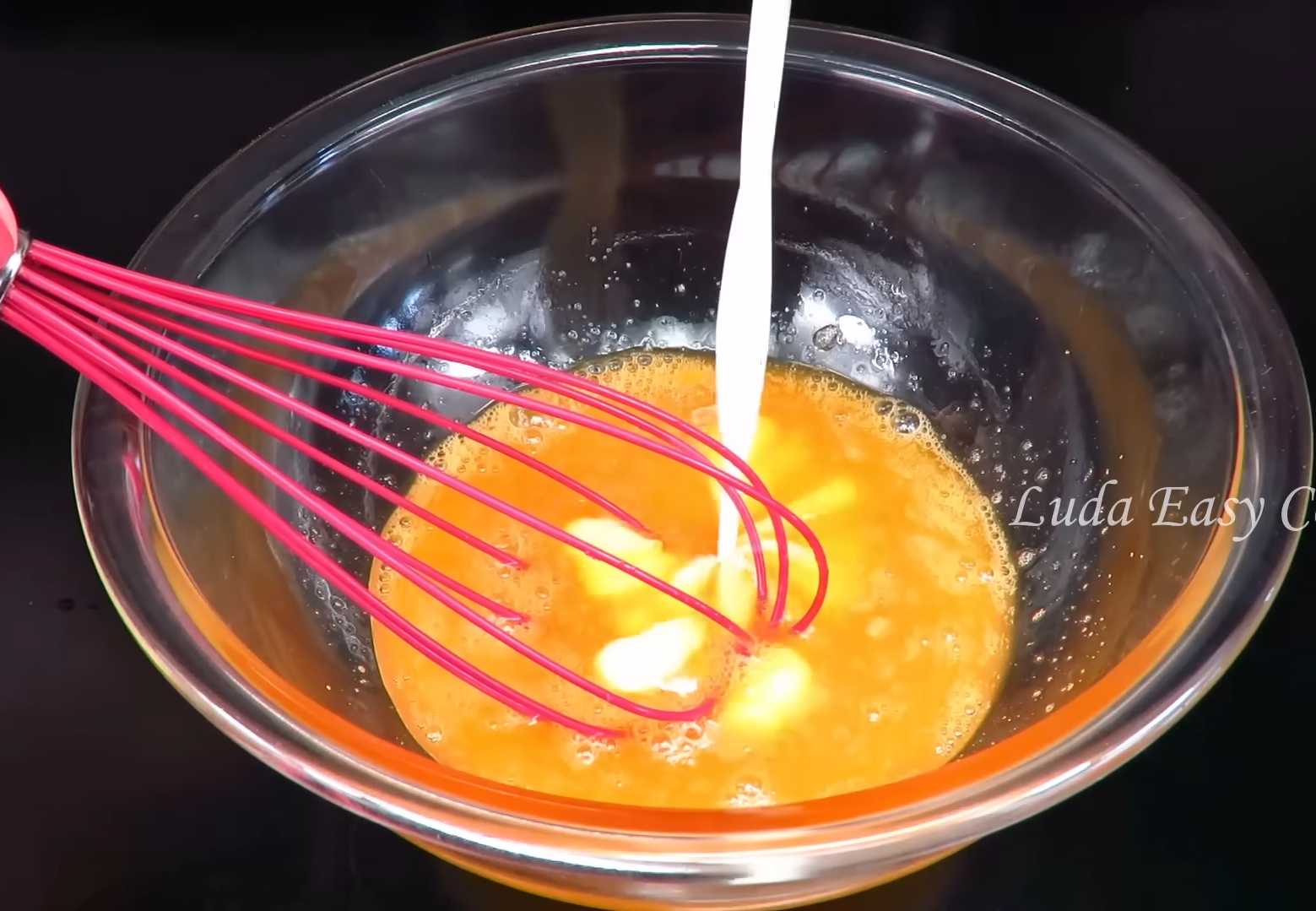 Pour in some warm milk.
Step 3:
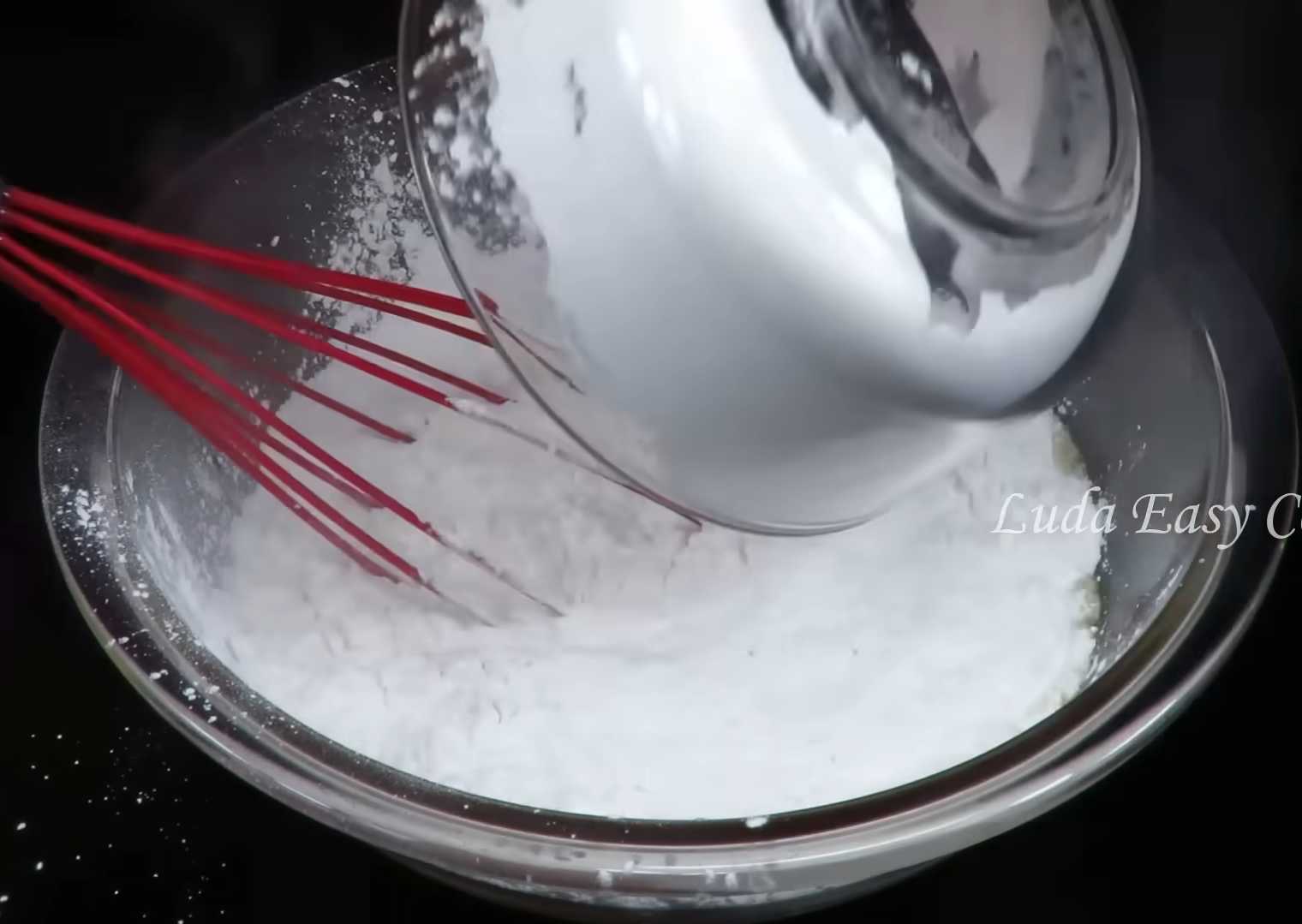 Gradually add the cornstarch, sifting it through a sieve to avoid lumps. Mix until smooth.
Step 4:
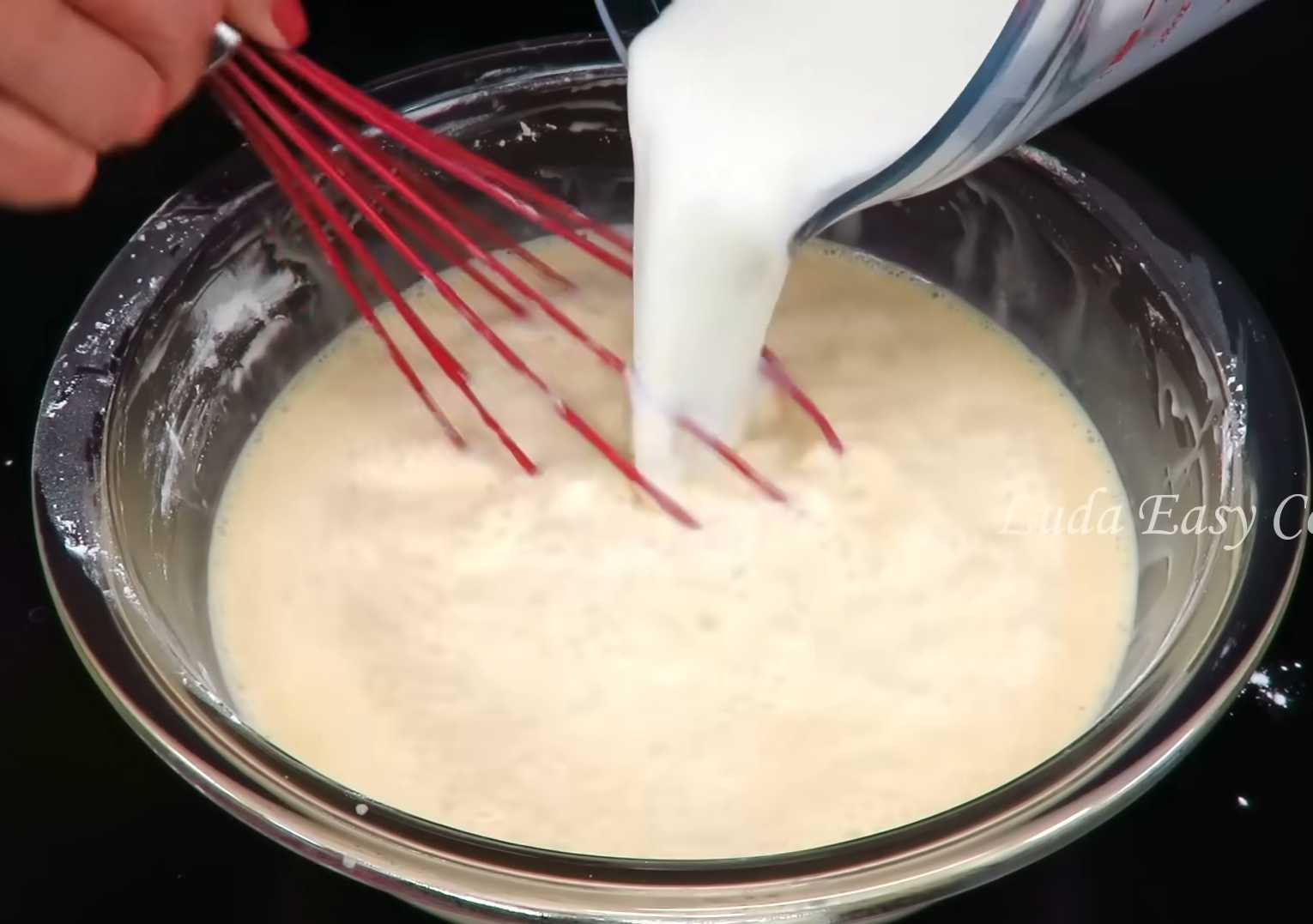 Add the remaining milk and mix well again – the dough should be liquid, like sour cream.
Step 5:
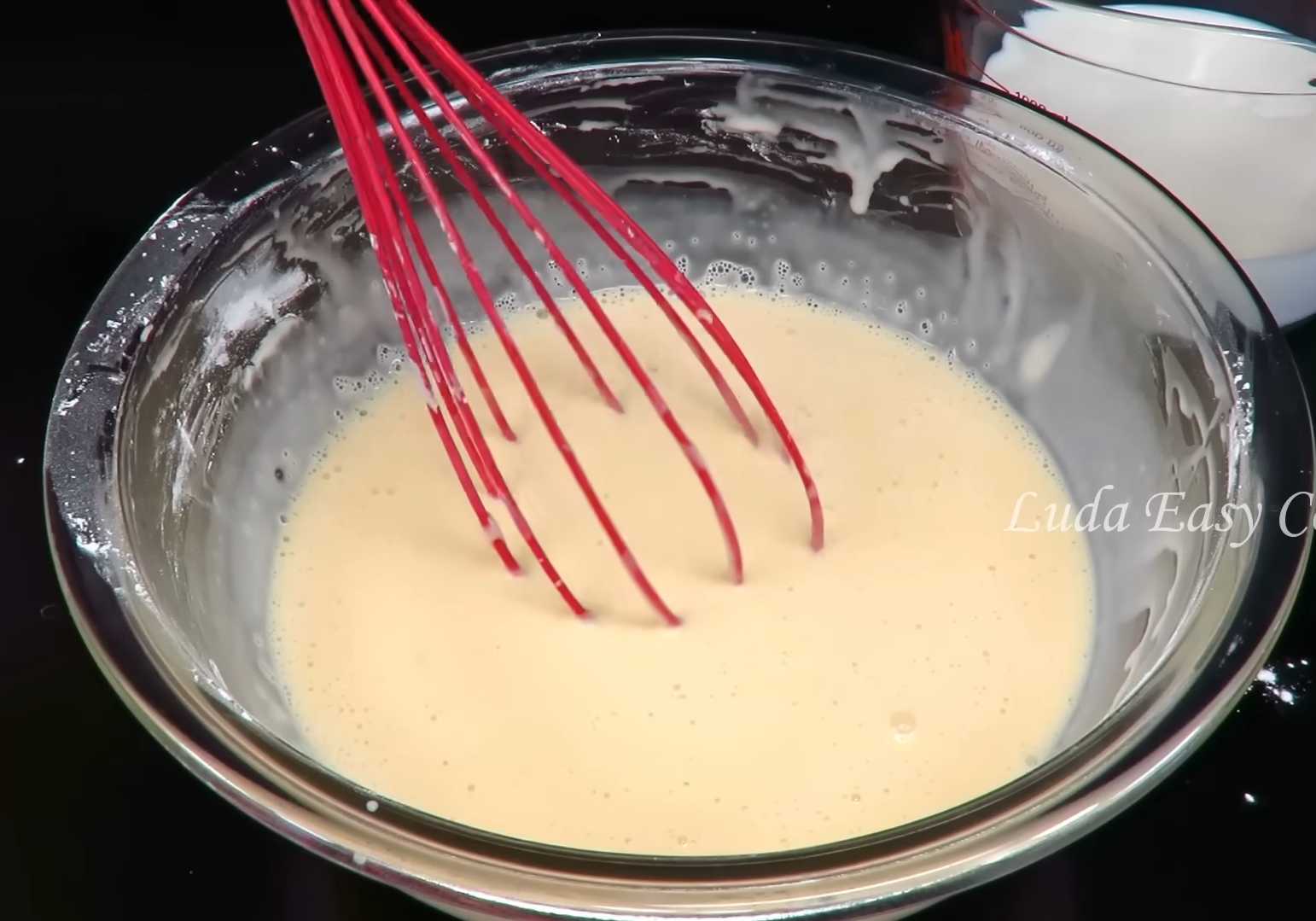 Add vanilla extract or vanilla sugar.
Step 6:
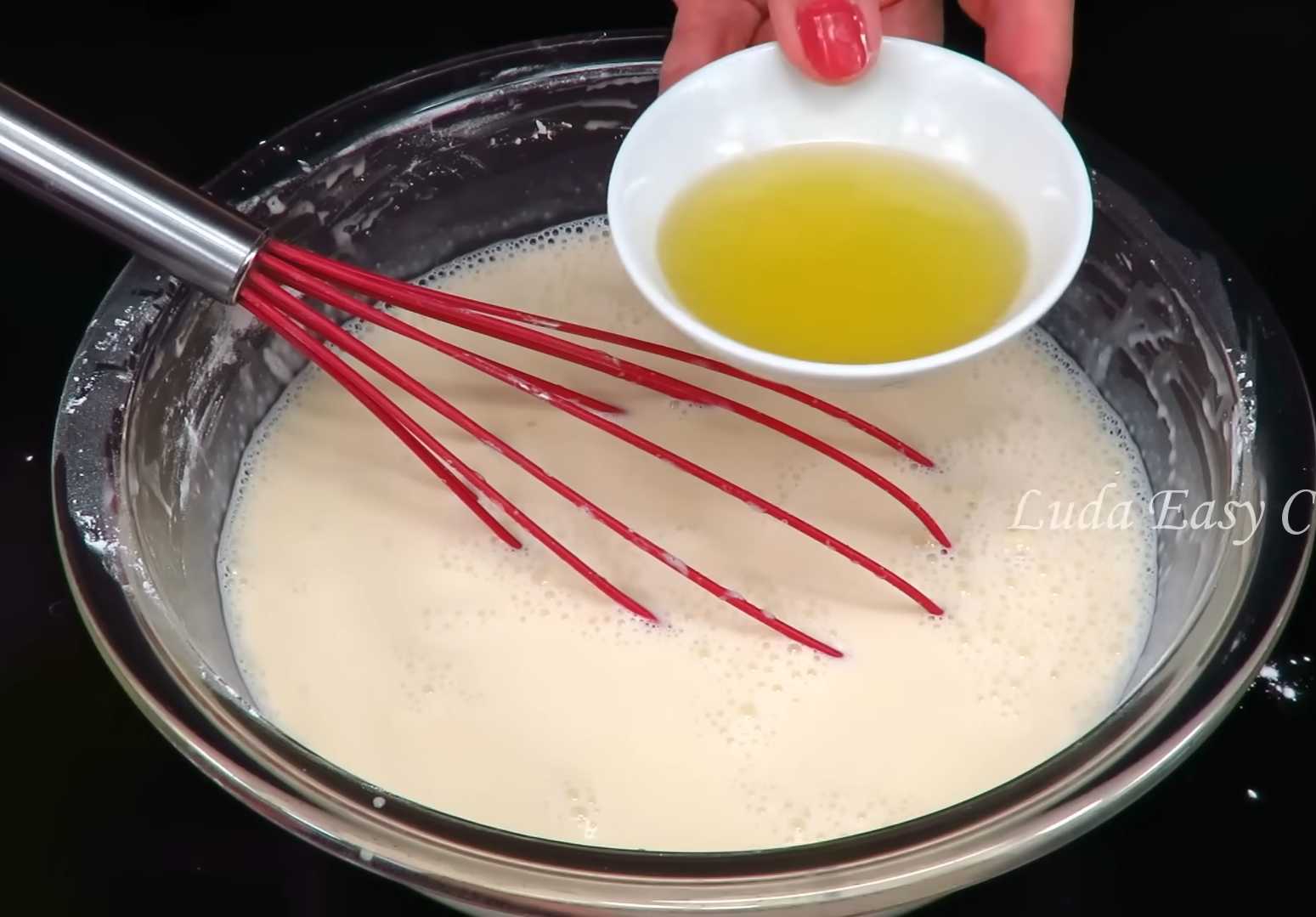 Add vegetable oil and mix well again - this will make the pancakes more elastic.
Step 7:
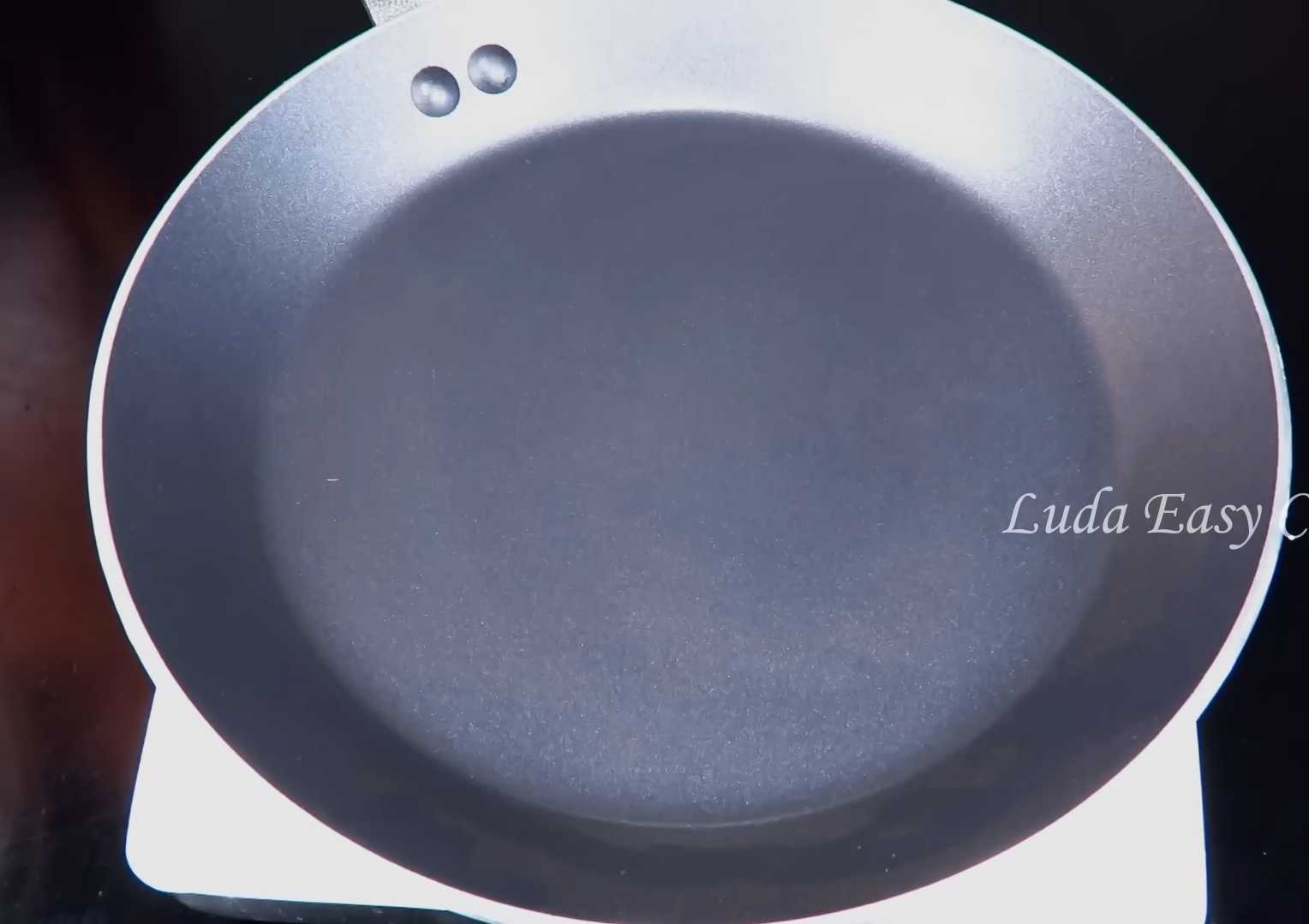 Heat a frying pan over medium heat and brush it with a little oil.
Step 8:
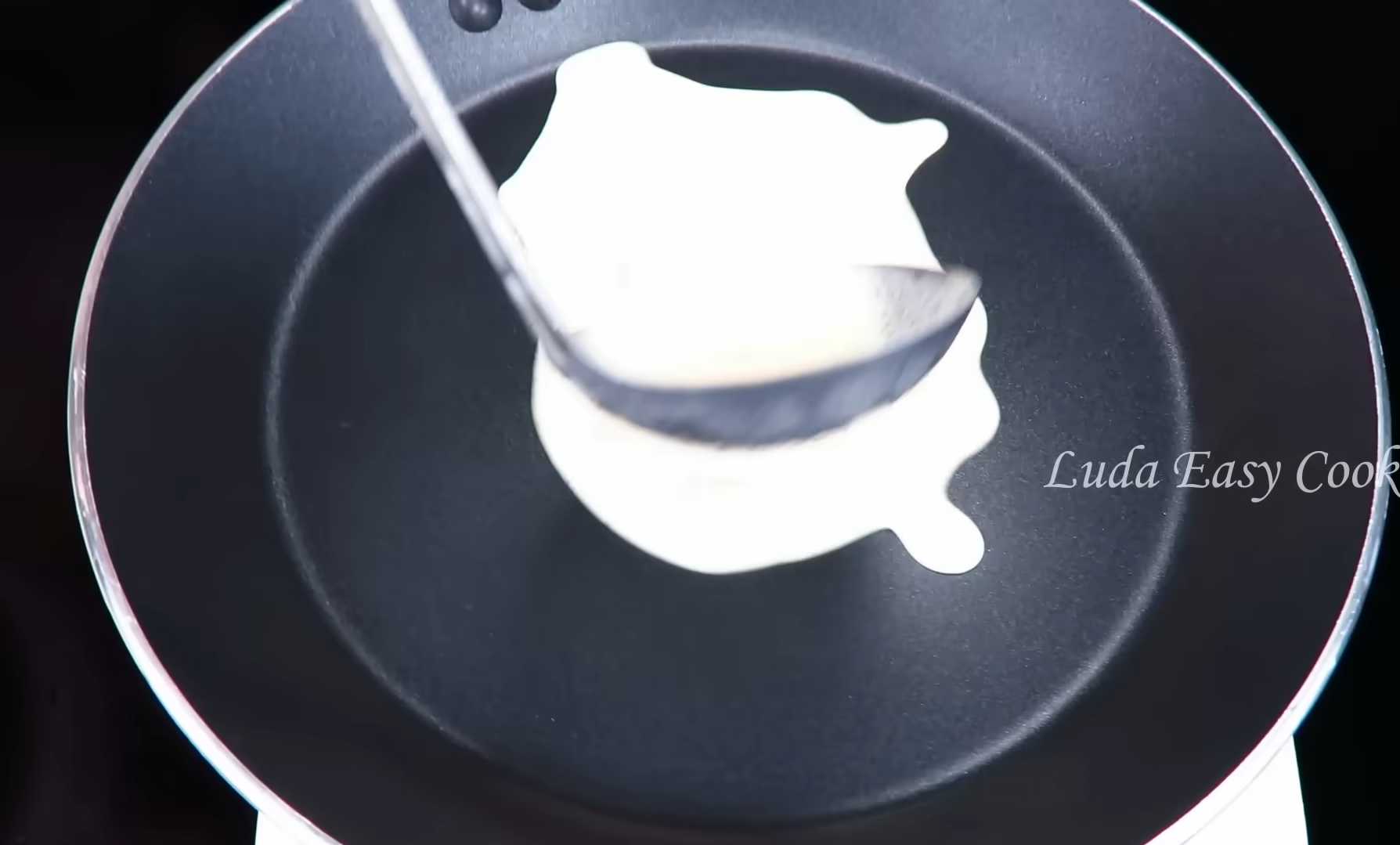 Pour a portion of the batter into the pan and distribute it evenly, tilting the pan slightly.
Step 9:
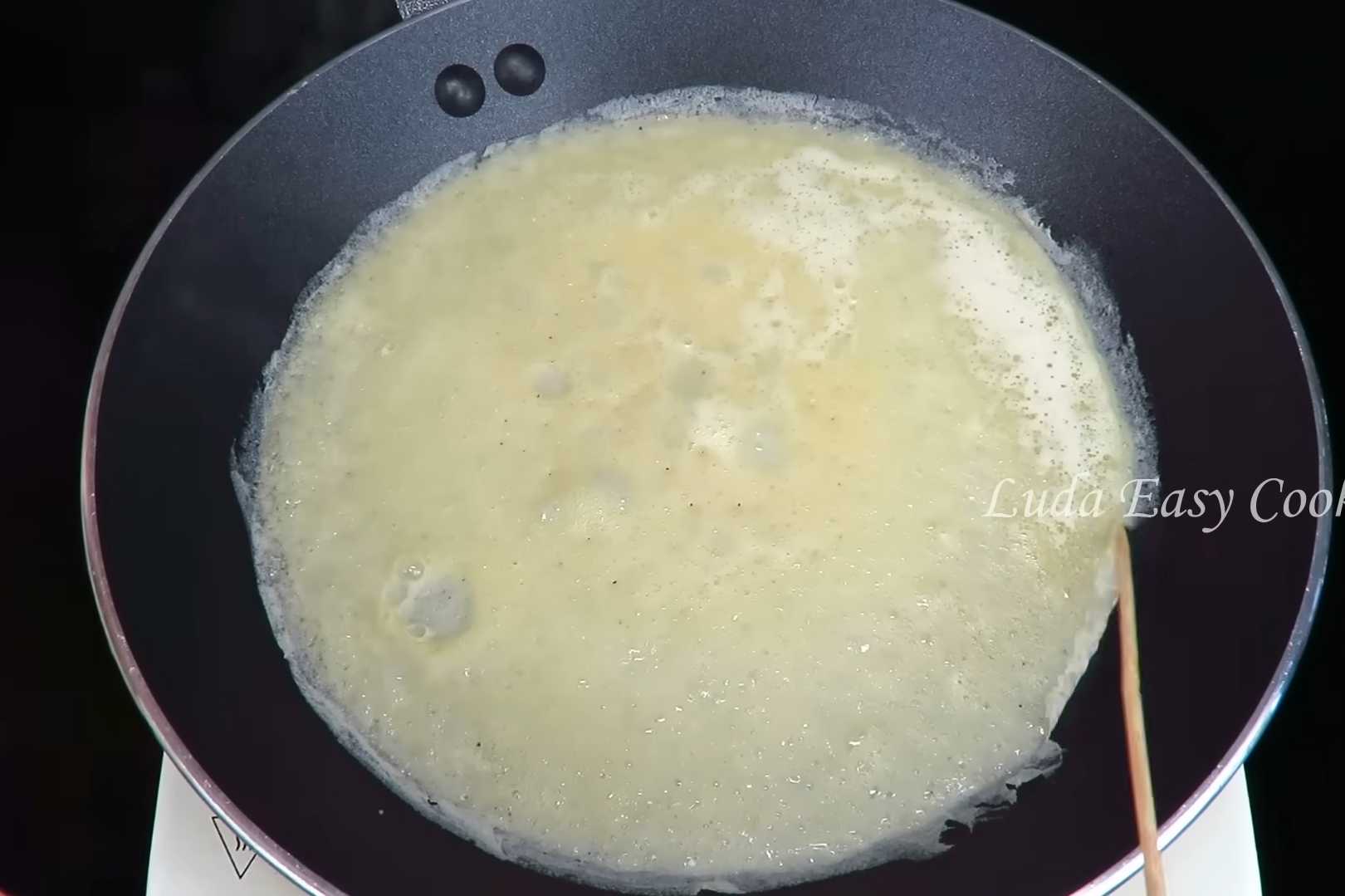 Fry the pancake until the surface is bubbly and matte.
Step 10:
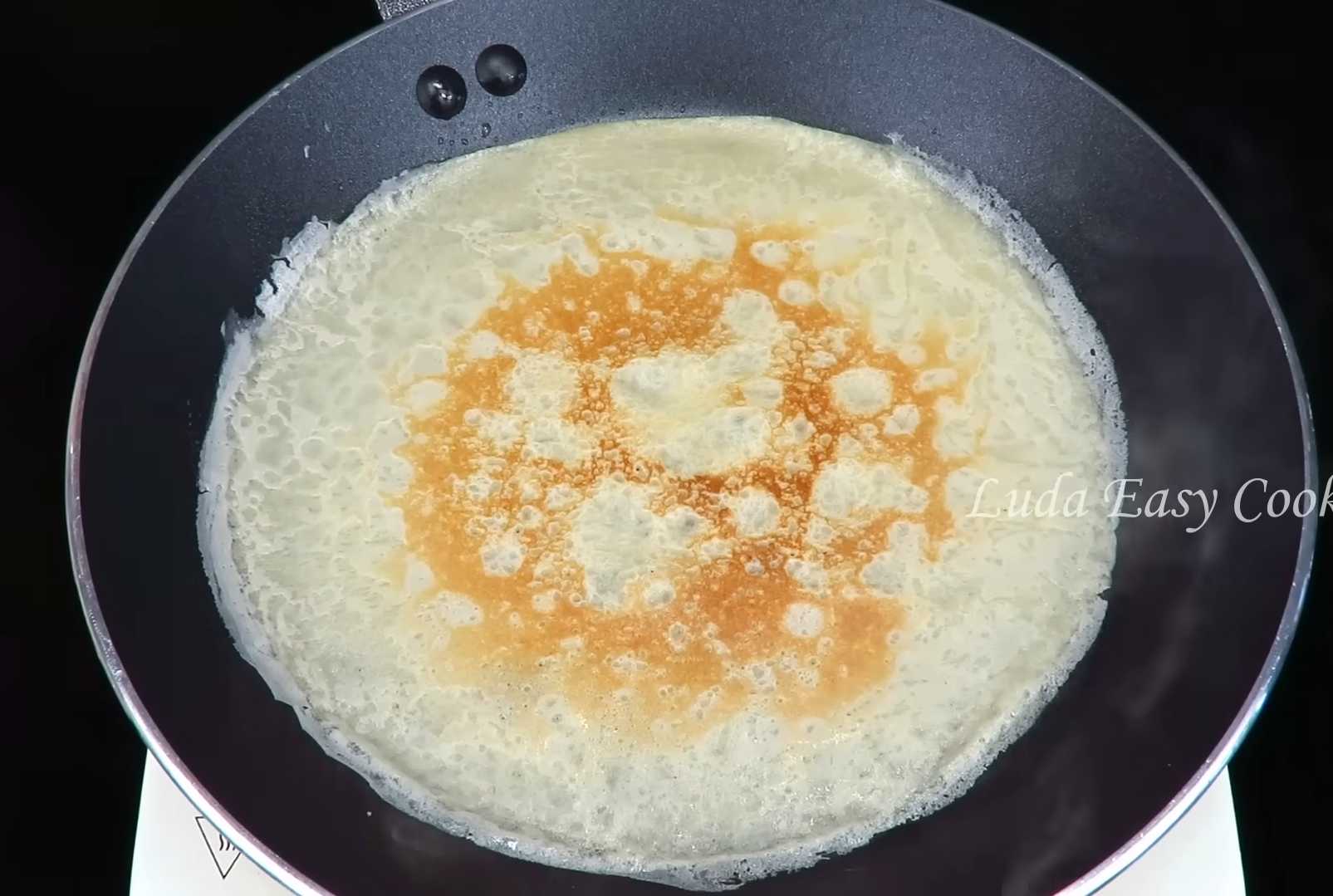 Carefully flip the pancake with a spatula and fry the other side until golden brown.
Step 11:
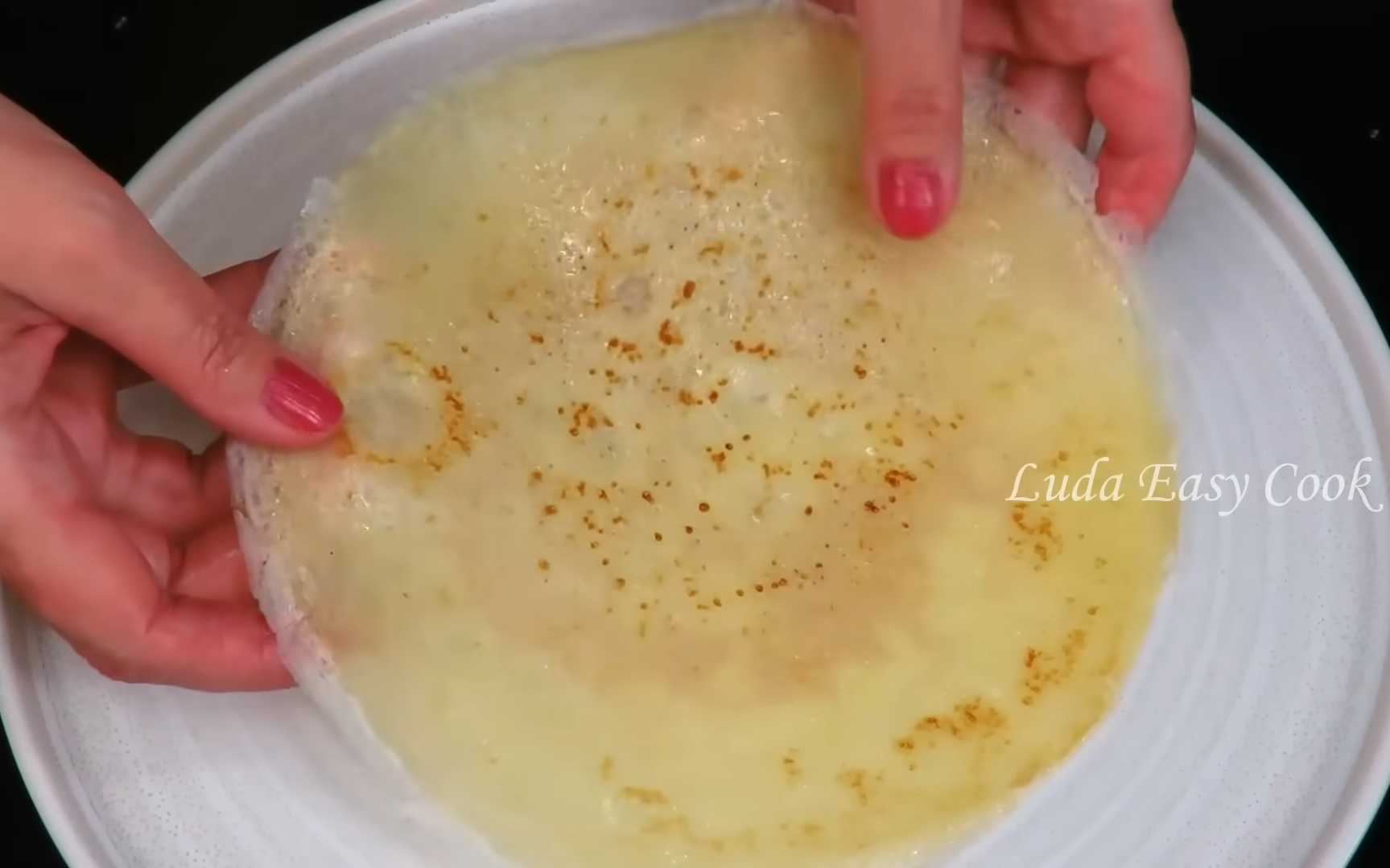 Place the finished pancake on a plate, covering it with a towel to keep it soft.
Step 12:
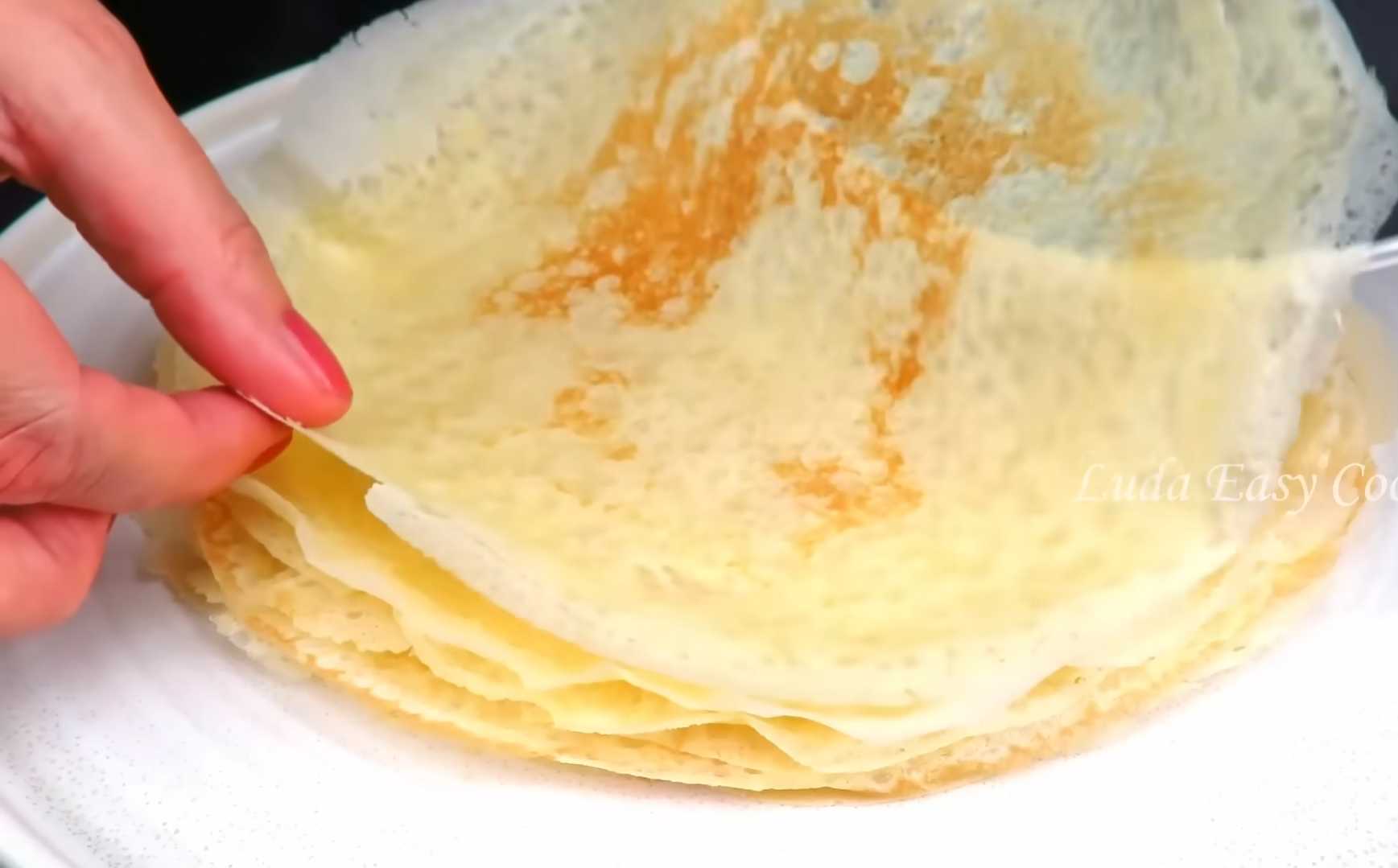 Repeat steps 7-11 until you run out of dough.
Step 13:
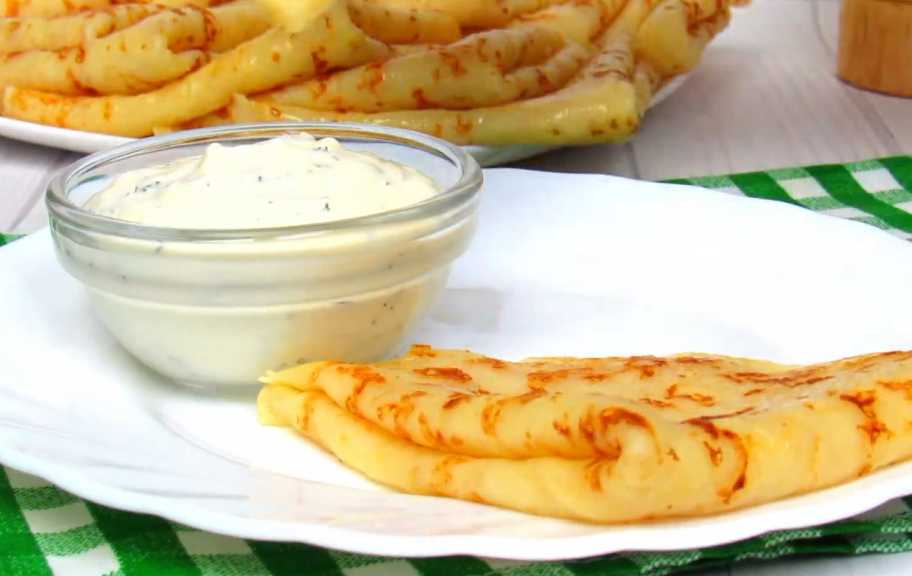
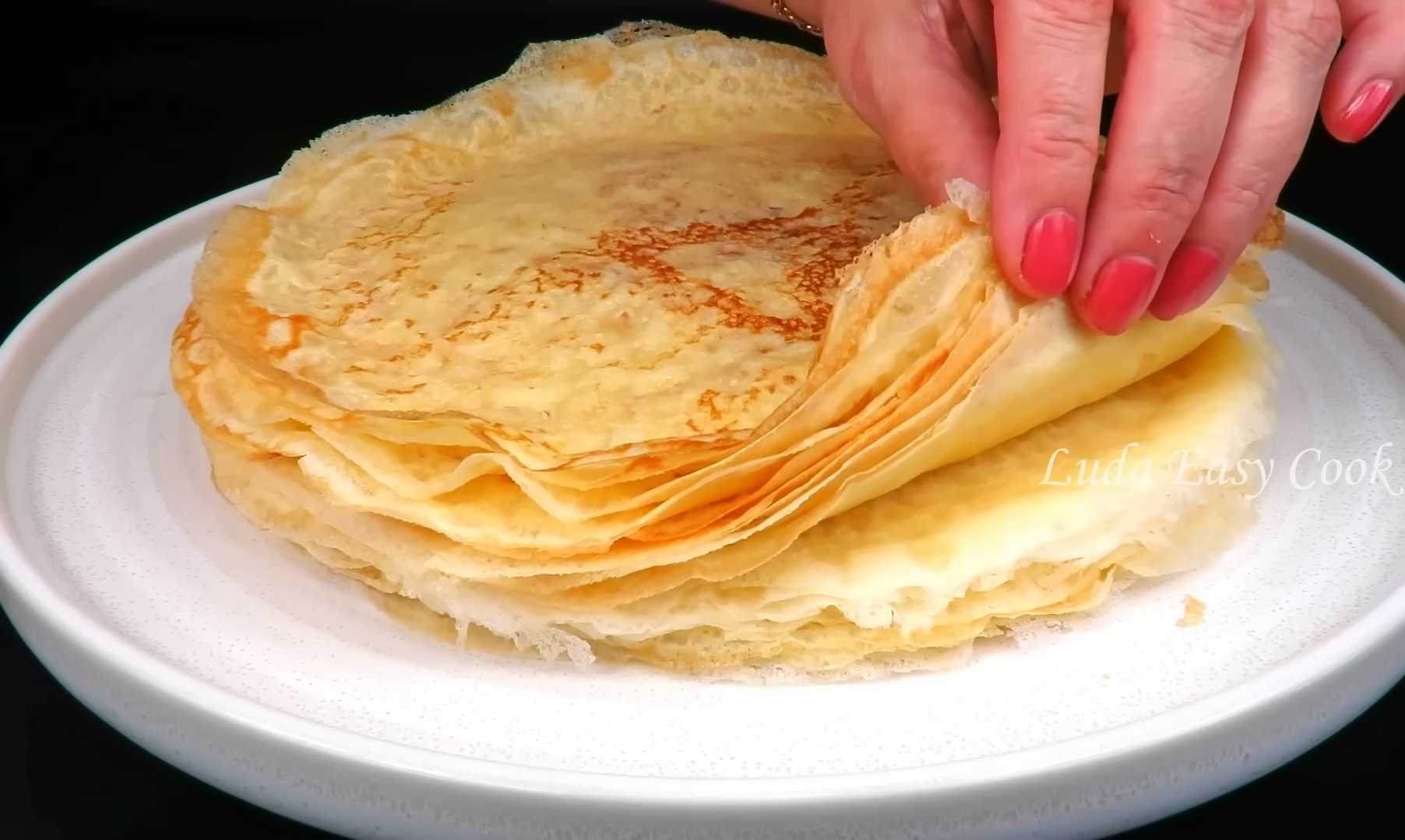 Serve hot with sour cream or any other sauce of your choice.
Cooking tips:
Make the batter thin enough. The consistency should resemble heavy cream or slightly thinner—this is the key to a thin, almost lacy pancake.
Use warm milk. It combines better with the other ingredients and helps prevent lumps, making the dough smooth and uniform.
Sift the cornstarch. This will improve the dough's structure, oxygenate it, and prevent lumps from forming even with minimal amounts of starch.
Add a little vegetable oil to the batter. It will make the pancakes more elastic, prevent them from sticking to the pan, and give them a slight shine.
Let the dough rest for 15–20 minutes. This will allow the gluten to settle and the flour to fully swell, resulting in smoother, thinner pancakes.
Fry in a well-heated, but not overheated, frying pan. Ideally, medium or slightly below-medium heat. Too much heat will quickly dry out the pancake, preventing it from spreading.