Classic Greek Salad
Origin of the recipe
Greek salad is not only a delicious and refreshing dish, but also reflects Greece's rich culinary history. Its simplicity and use of fresh ingredients make it a popular choice in many countries around the world.
What do you need for cooking?
Ingredients
-
Tomatoes
-
Green bell pepper
-
Red onion
-
Pitted olives
-
Fresh cucumbers
-
Brynza cheese
-
Olive oil
-
Wine vinegar
-
Mustard
-
Salt
-
Ground black pepper
-
Oregano
-
Sugar
Kitchen utensils
- Knife
- Cutting board
- deep bowl
- Dish
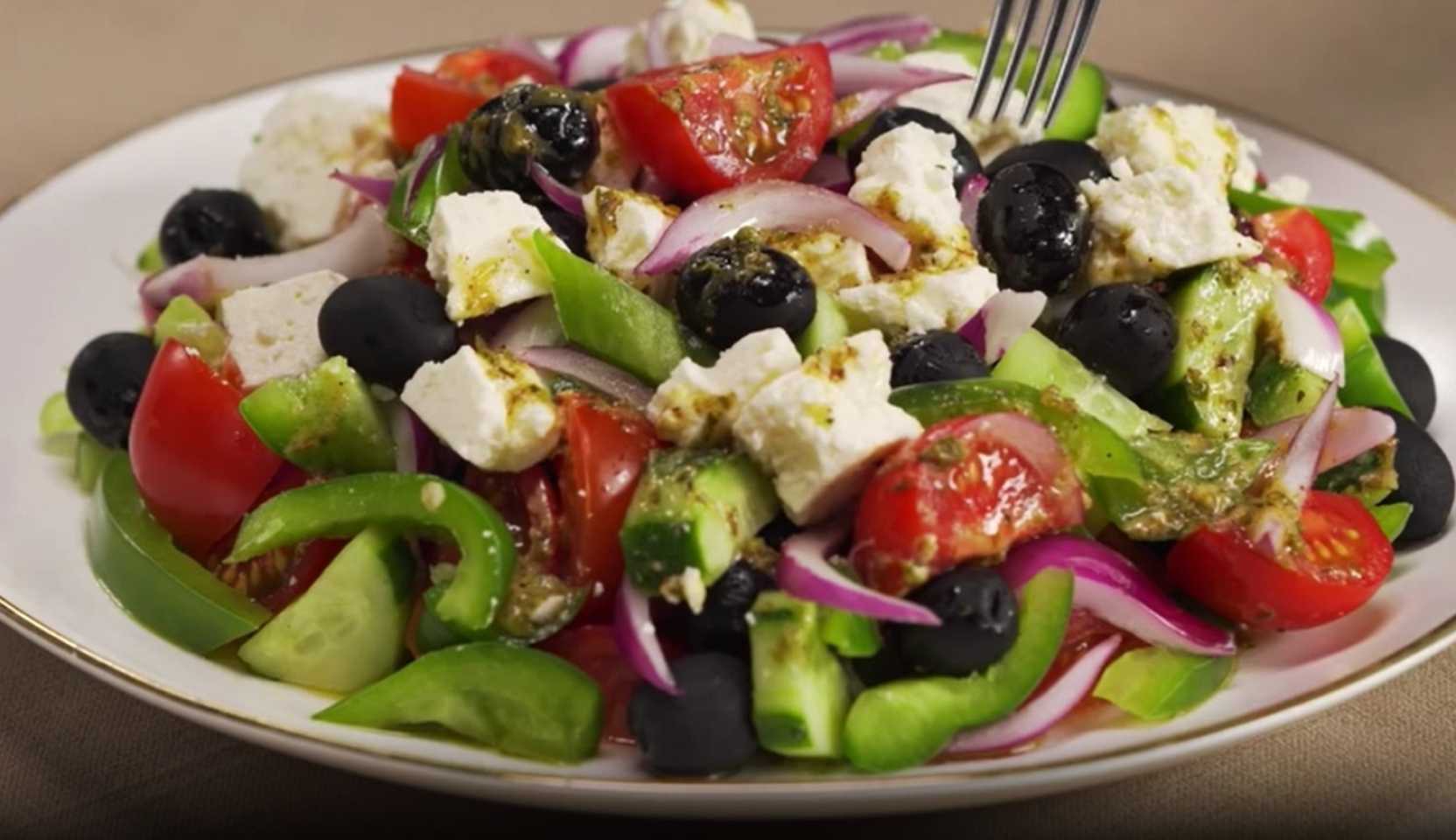
A classic Greek salad is a simple and incredibly delicious dish that beautifully combines fresh vegetables, aromatic spices, and the rich flavor of feta cheese. Juicy tomatoes, crisp cucumbers, sweet onions, and olives are complemented by a light olive oil dressing, creating a harmonious blend of flavors. This salad is ideal for a light lunch or dinner, and also makes a great side dish for main courses. It doesn't take much time to prepare, but the results will delight everyone at the table. Follow our recipe to create a true culinary masterpiece from simple ingredients. Savor the authentic taste of Greece in every bite!
Step-by-step recipe
Step 1:
 Mix olive oil, wine vinegar, salt, sugar, ground black and dried oregano, and mustard in a bowl.
Step 2:
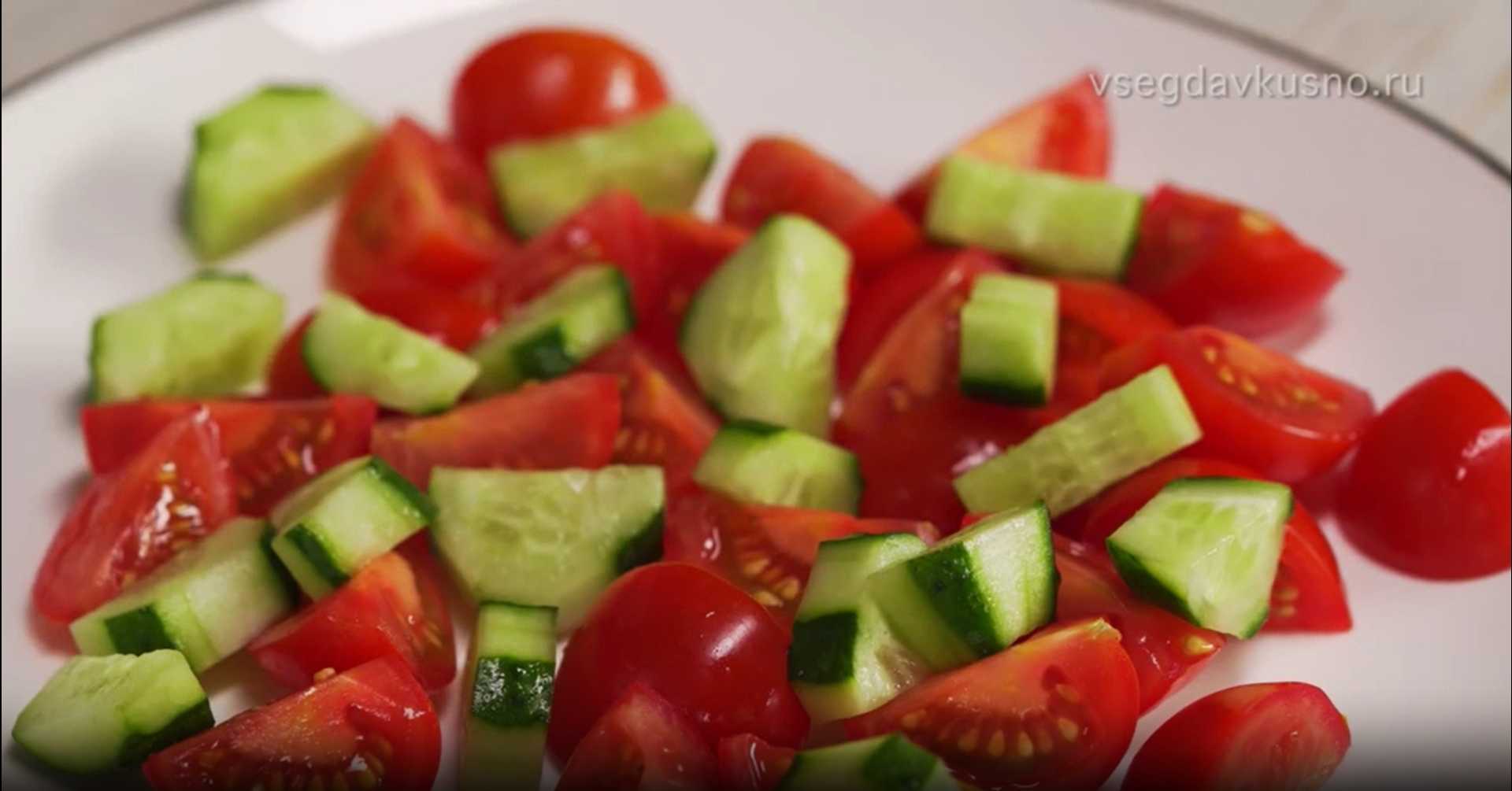 Cut the small tomatoes into 4 pieces, partially peel the cucumbers and cut into half slices.
Step 3:
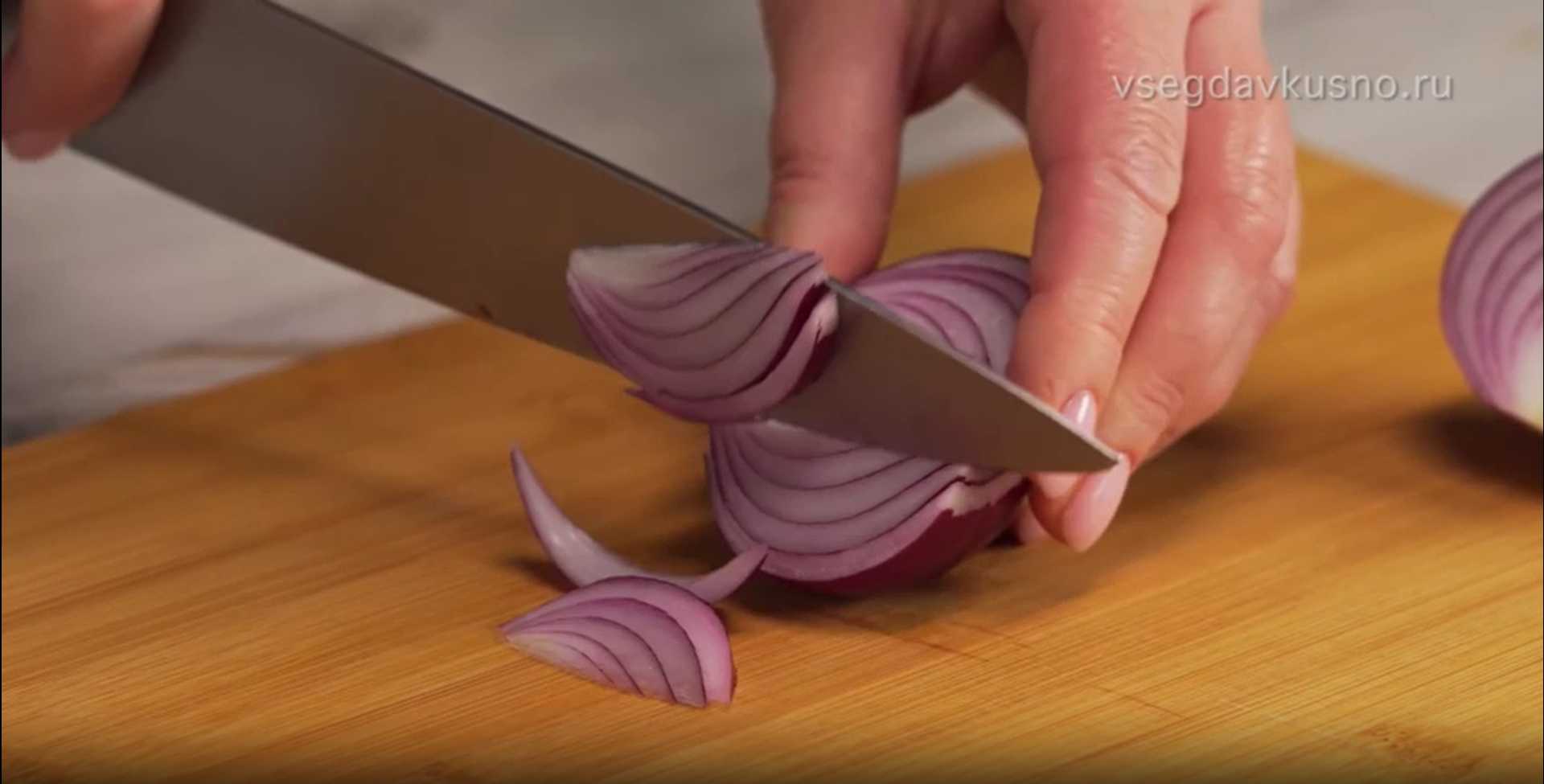 Cut the red onion into half rings, slicing from the center to the edge.
Step 4:
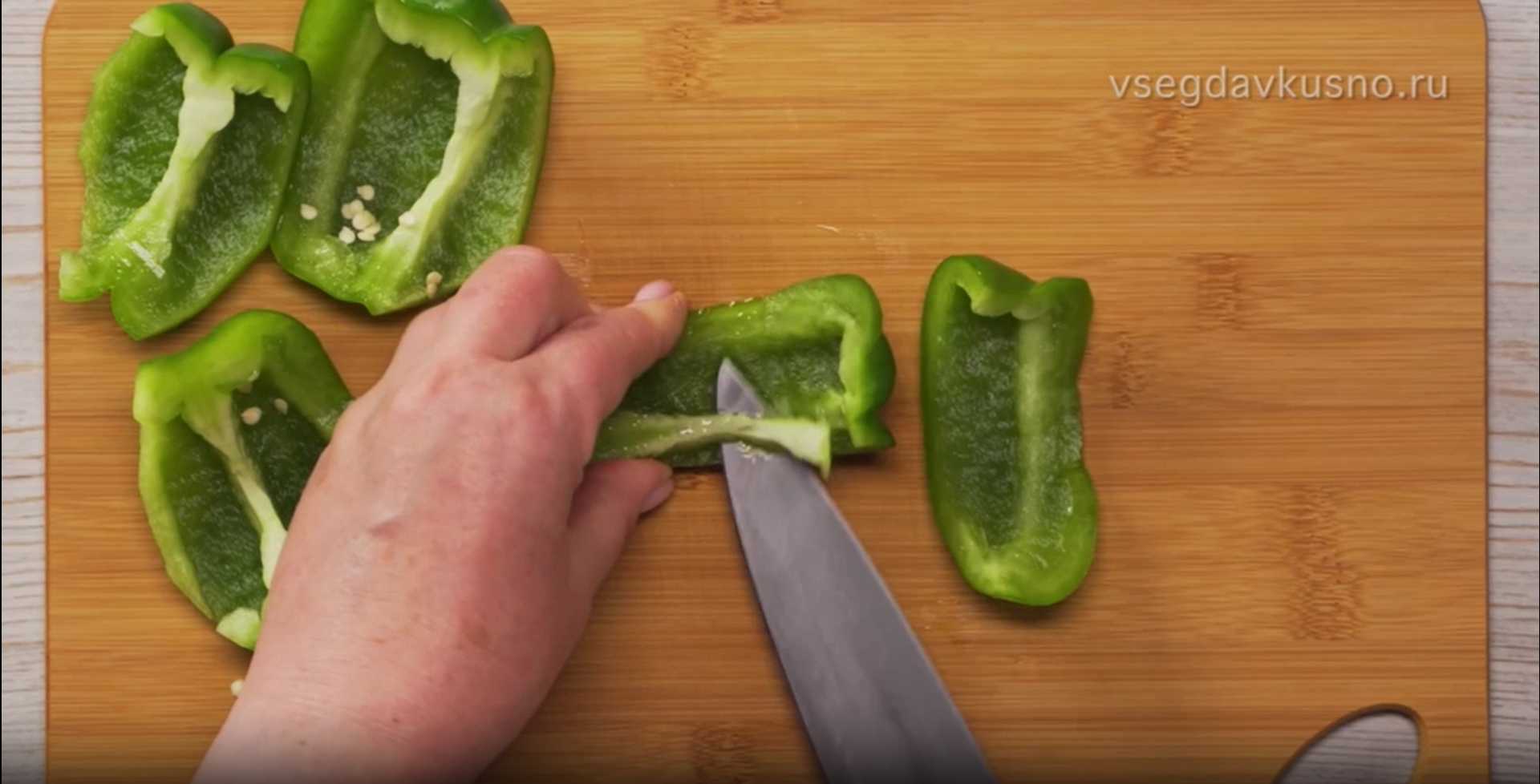 Cut the bell pepper into small wedges, removing the white pith. Cut the wedges at an angle into thin strips.
Step 5:
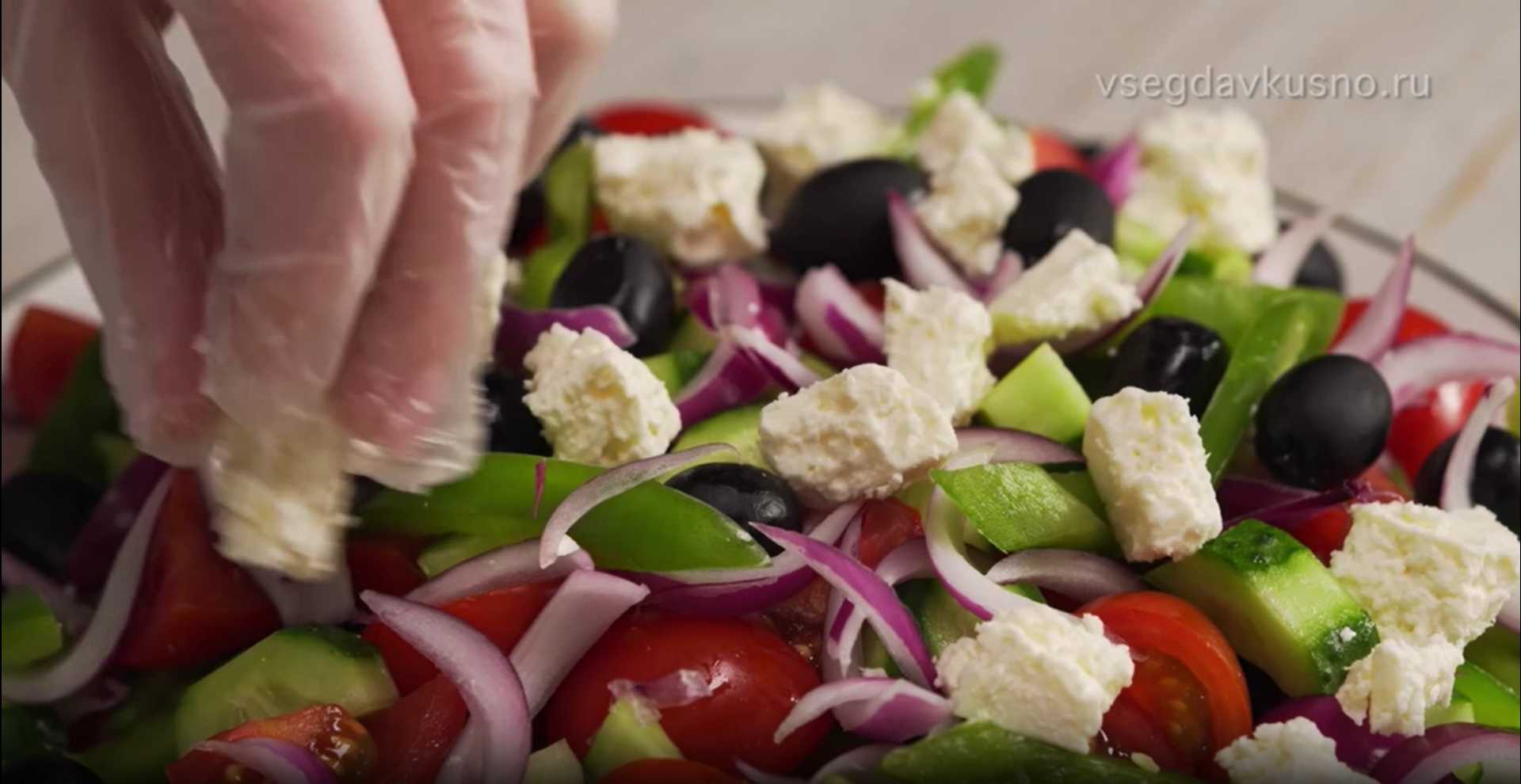 Place the vegetables and olives on a large plate, top with small pieces of feta or feta cheese, and pour over the prepared sauce.
Cooking tips
Serve Greek salad with fresh white bread or ciabatta.
The most important thing in a Greek salad is the fresh ingredients, not the way they're sliced or served. Greeks typically chop their salad into large chunks, and they use olives with the pits—Greek olives, with their buttery flavor. The main herb in the salad is oregano, and a touch of basil.
The salad's portioned presentation, practiced in Greek restaurants, is interesting. It's extremely simple: the customer receives a deep bowl of vegetables without any sliced cheese. The cheese is placed in one piece on top of the vegetable slices. This way, the customer decides how to eat it.
Likewise, the dressing is almost always served in a separate container for each serving. This way, everyone can decide for themselves how much and when to add it to their Greek salad.
This is very convenient for the hostess. The salad keeps better without dressing. You can chop the vegetables a few hours before guests arrive and pour the dressing on just before serving. If possible, dress the salad after serving, so guests don't have to worry about ladling the salad and spreading the dressing on their plates.
Sometimes, large chunks of vegetables and cheese are mixed into a salad without much stirring. Serving it in large chunks is not popular with many, but it has its advantages: those who don't like onions or olives can easily remove them.
See also: Classic recipes