Españole sauce
Origin of the recipe
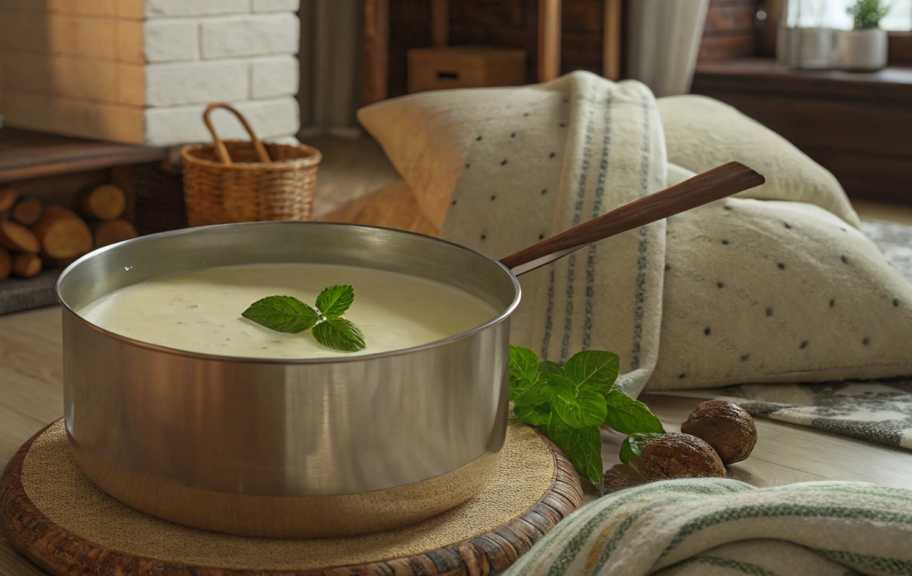
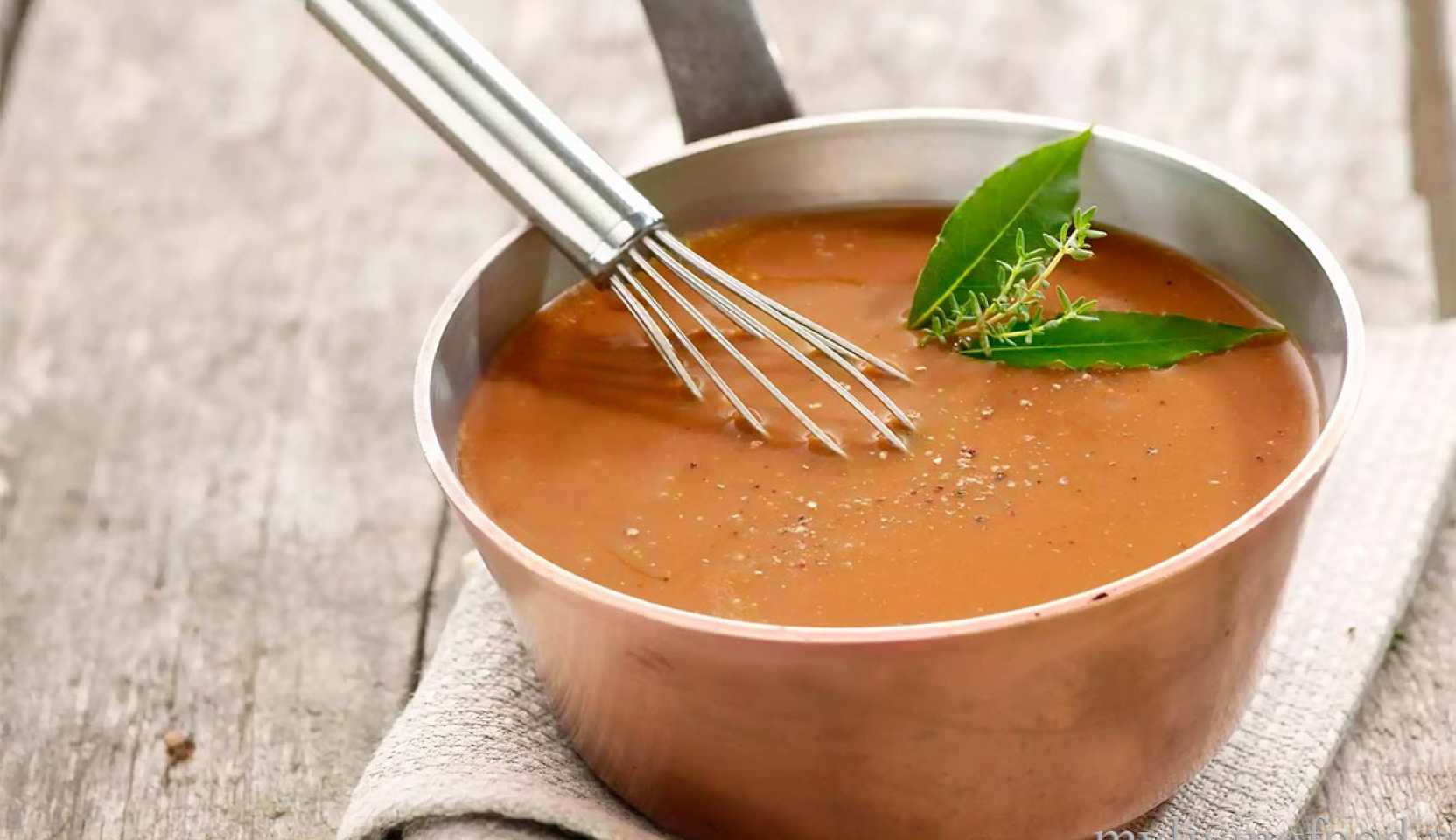
This brown sauce is one of the main, "mother" sauces of French cuisine. It's used as a base for dozens of other sauces, but is rarely used on its own due to its overly rich flavor. The exact reason this sauce is called "Spanish" is unknown, but it's believed that the recipe is indeed influenced by Spanish cuisine, although the ingredients differ slightly from the original.
What do you need for cooking?
Ingredients
-
Veal broth
-
Tomato puree
Roux (thickener)
-
Butter
-
Flour
Vegetable mix
-
Onion
-
Carrot
-
Celery
Herbs
-
Bay leaf
-
Fresh thyme
-
Parsley stems
Kitchen utensils
- Knife
- Board
- shoulder blade
- Funnel with a sieve
- Ladles
Learn how to make classic espagnole sauce—the foundation of French haute cuisine! This rich, deep-flavored brown sauce is made with a fragrant meat broth, sautéed flour, tomato paste, and aromatic herbs. It's the perfect accompaniment to steaks, roasts, mushroom dishes, and vegetable stews. This article includes a step-by-step recipe with photos, tips on choosing a wine for deglazing, ingredient substitutions, and secrets to achieving the perfect consistency. Learn how to make authentic espagnole, just like in the best Parisian restaurants!
Step-by-step recipe
Step 1:
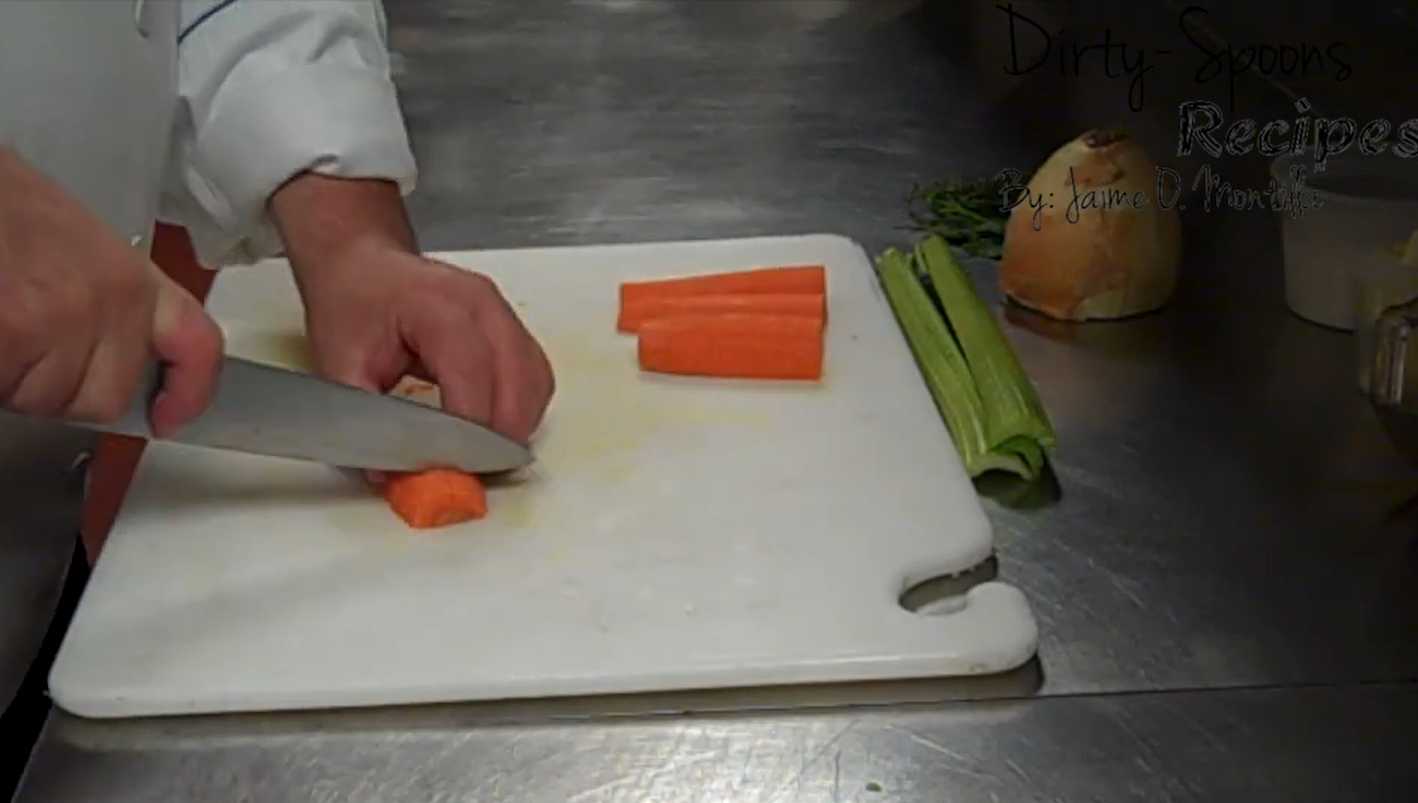 Peel and cut the carrots and celery stalks into medium pieces, and the onion into small cubes.
Step 2:
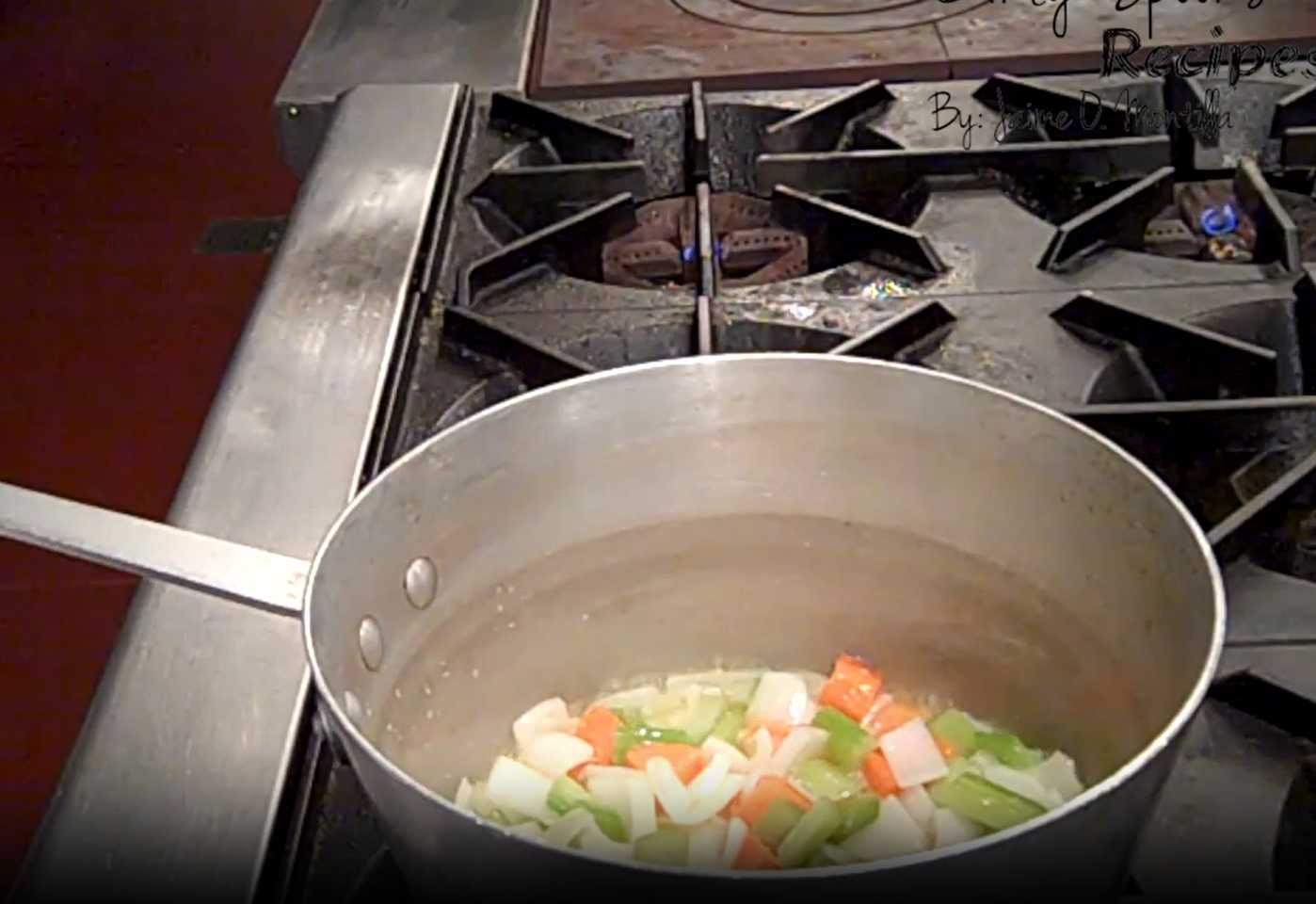 Melt the butter in a saucepan and add the vegetables. Season with salt and stir.
Step 3:
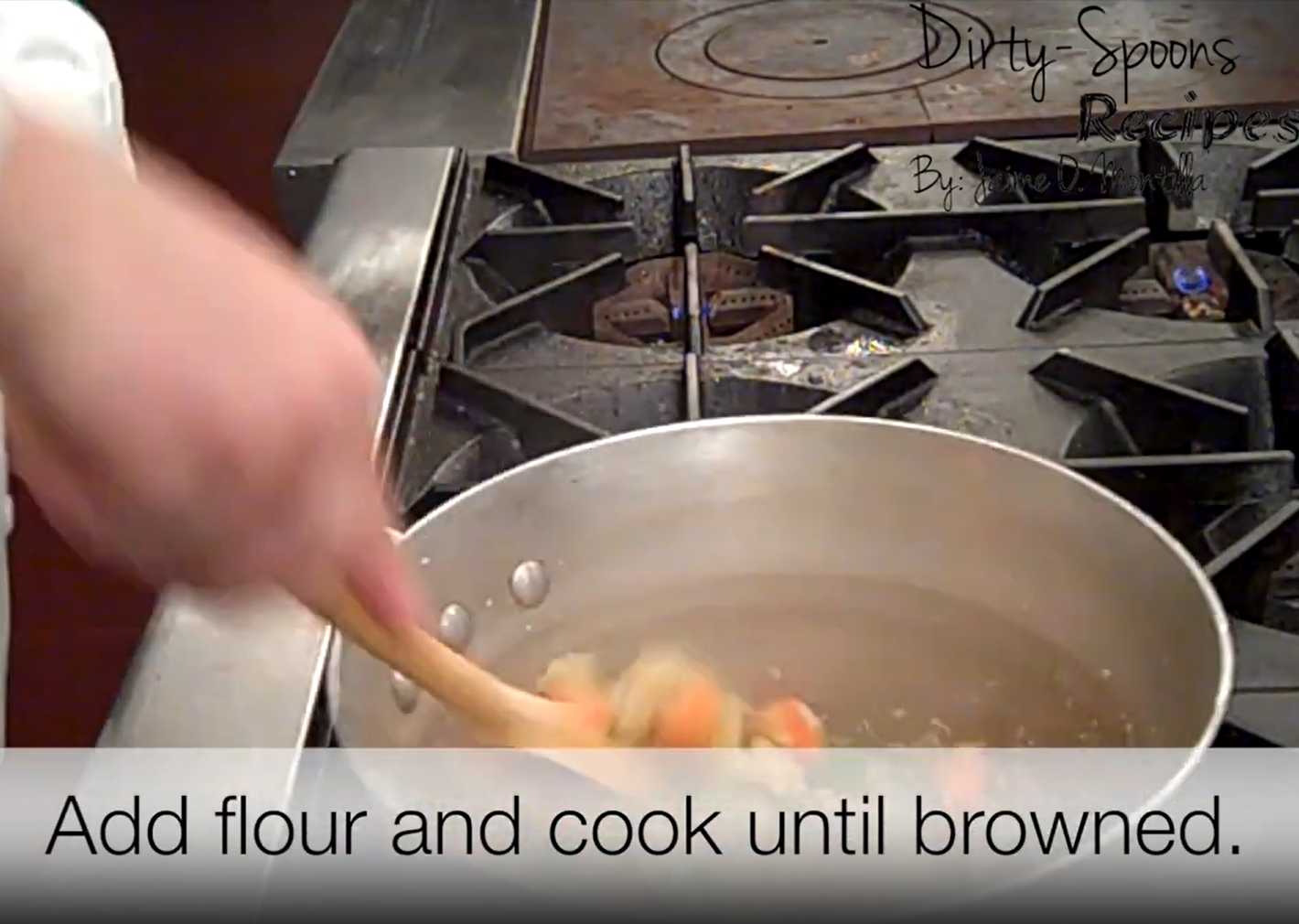 Add flour, stir and cook, stirring occasionally, until golden brown.
Step 4:
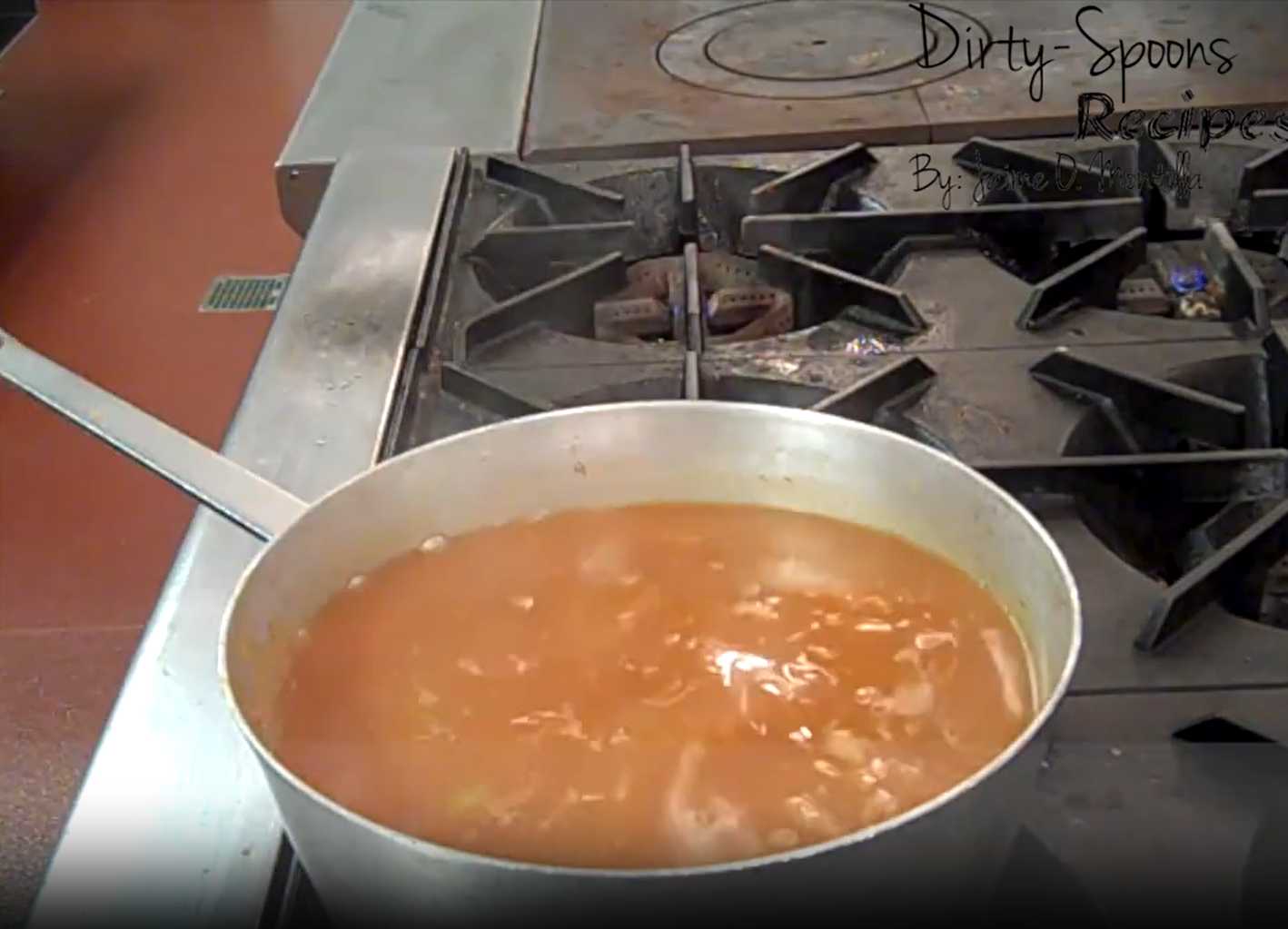 Add tomato puree and veal broth. Mix thoroughly.
Step 5:
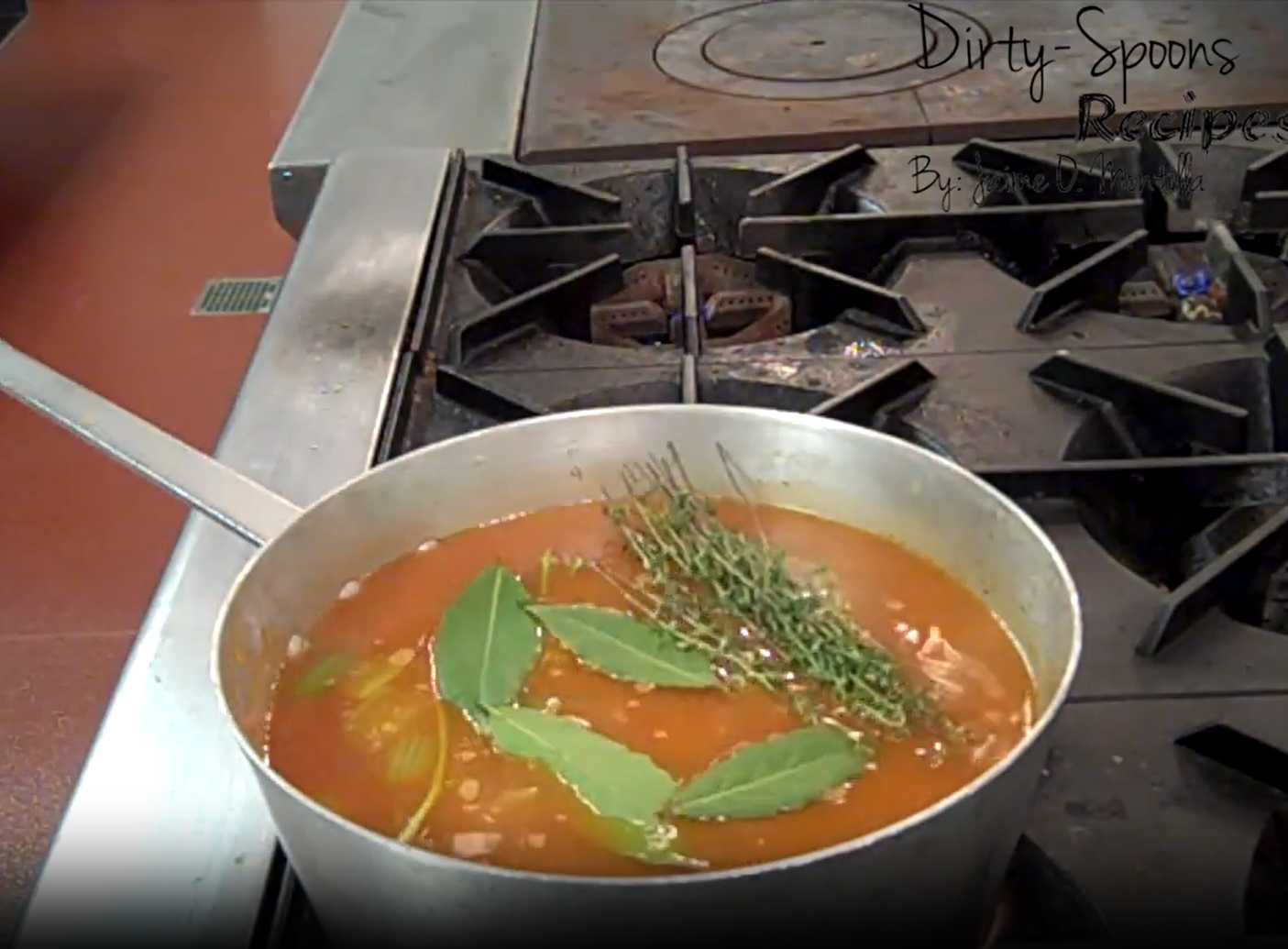 Add parsley stems, bay leaves and thyme sprigs.
Step 6:
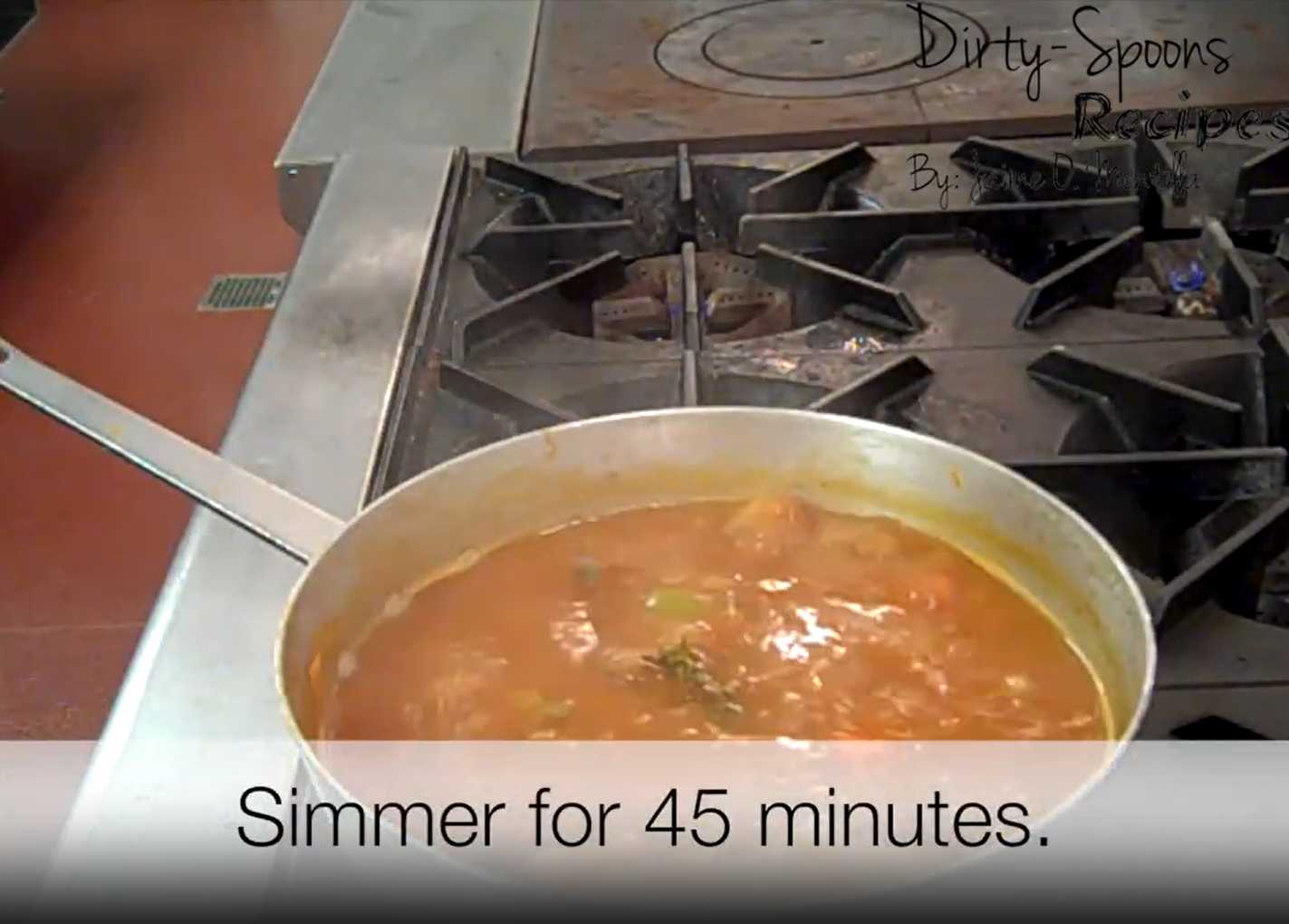 Boil for 45 minutes, stirring occasionally with a whisk.
Step 7:
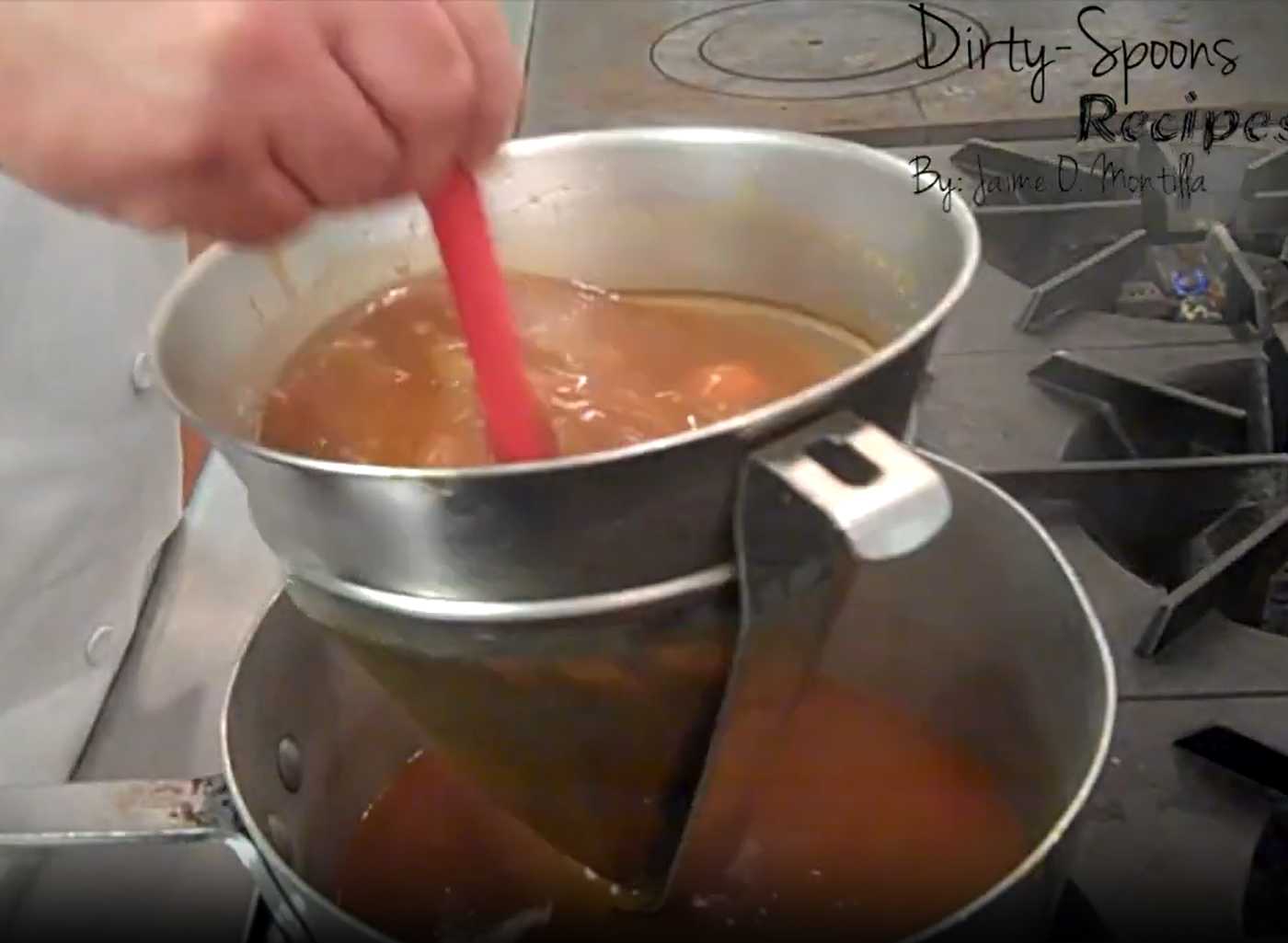 Pour into a funnel with a sieve, strain into a clean ladle and boil for another 30 minutes.
Step 8:
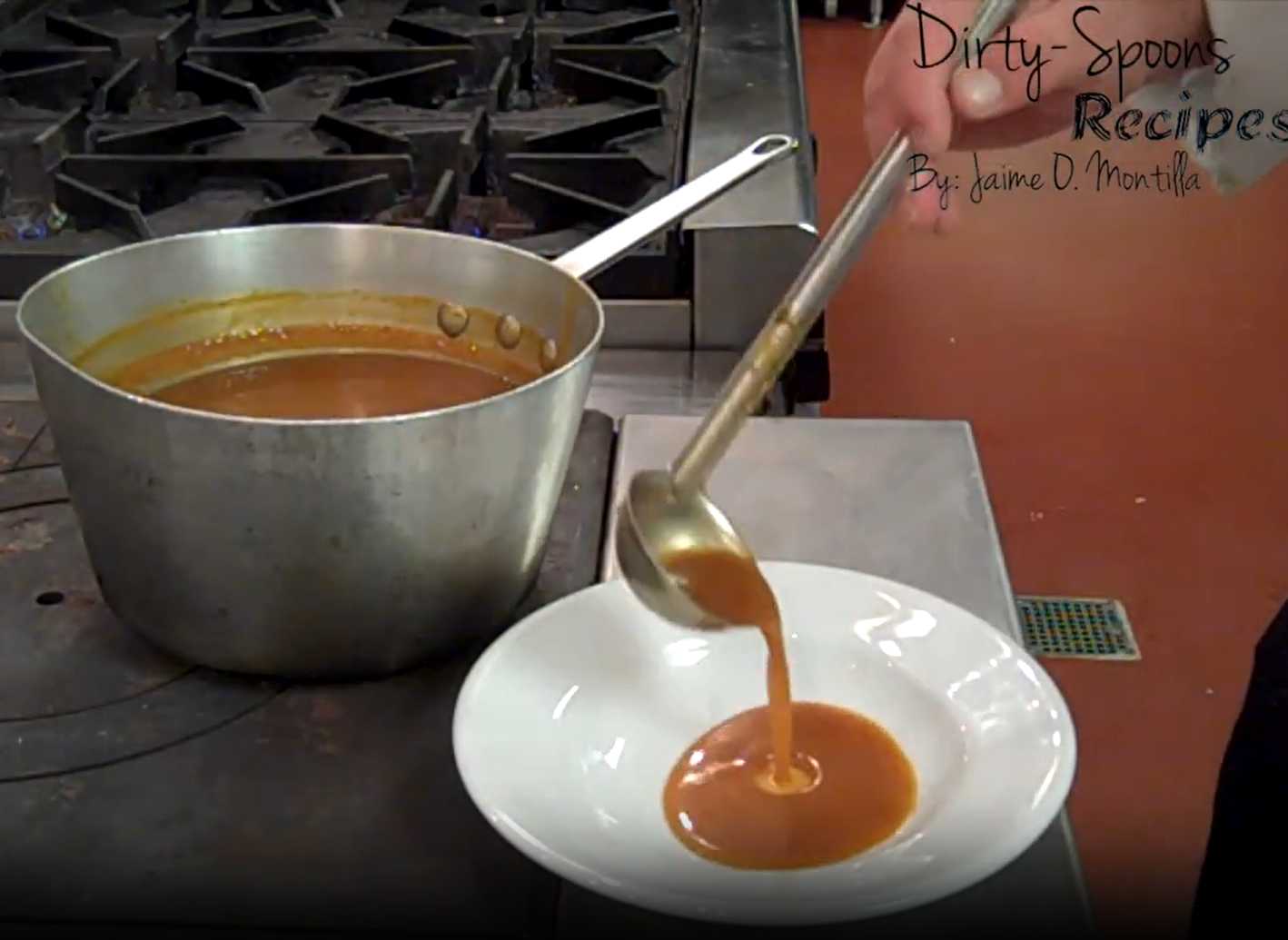 Remove from heat, add salt, pepper and mix thoroughly.
Cooking tips
Stir the sauce thoroughly, especially in the early stages, to prevent the ingredients from burning and lumps from forming.
If you don't have a funnel with a sieve, you can use a regular deep sieve, but the process will be much slower.
See also:
Sauce recipes