Against hunger and thirst – such different soups
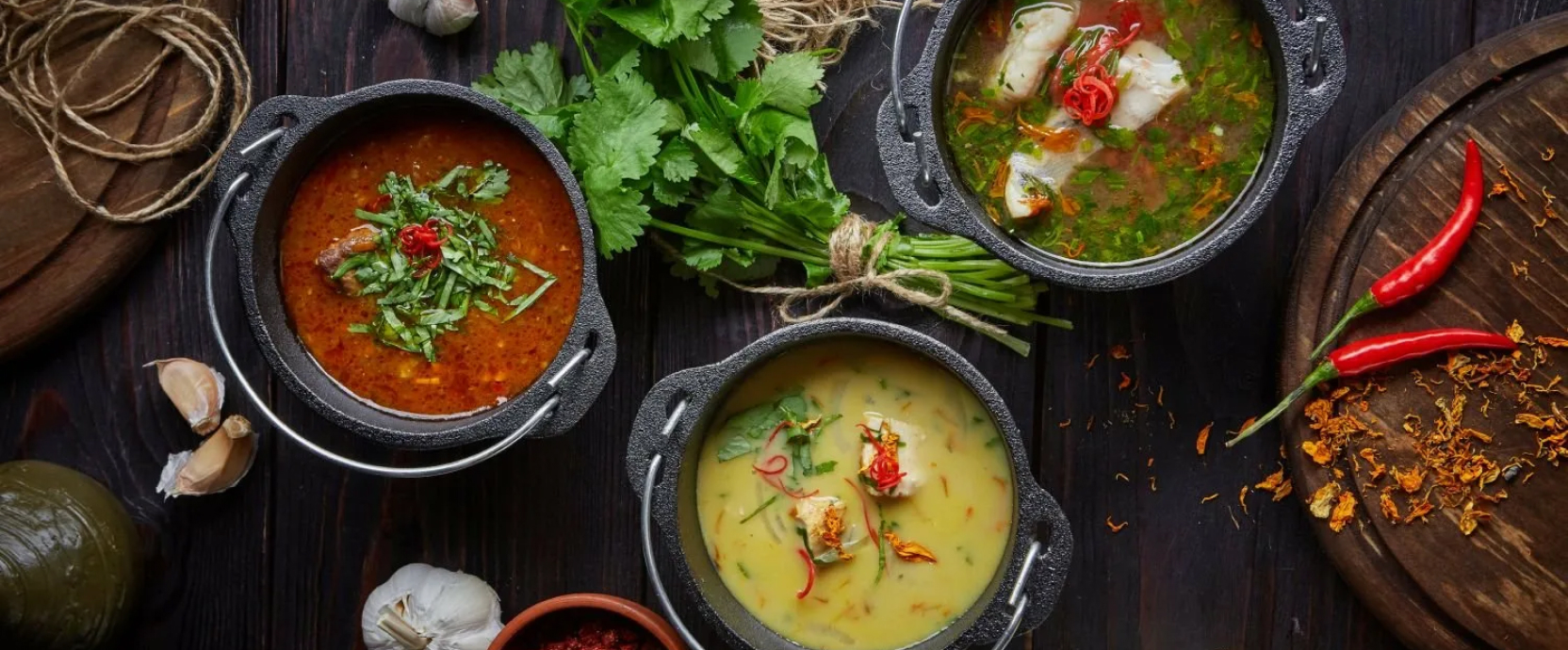
It's hard to imagine a complete meal without soup. This often hot, filling, and hydrating dish is suitable even for those with digestive issues. The nutrients dissolved in the liquid are easily absorbed. There are very few places on the planet that don't make some form of soup.
The very first spoon
Soup is such a common dish on every table that it seems humanity has been eating it forever. However, archaeologists and culinary historians believe that soups in the modern sense began to be prepared in Europe only 400-500 years ago, with the advent of suitable cookware—fireproof, glazed ceramics. In China, this happened even before the Common Era, as such cookware was invented there earlier. Of course, liquid dishes appeared in ancient times, even before humans learned to use fire. Back then, grains and rhizomes were pounded with stones and mixed with water. With the advent of stone and ceramic cookware, food began to be cooked over fire, including simmering in water. Initially, what was cooked in a pot wasn't perceived as a single dish. The broth from meat, fish, or vegetables was either poured off or eaten separately. Soup, on the other hand, is a complete dish, in which all the ingredients form a unified flavor profile and can be scooped up with a single spoon. Spoons, by the way, were also invented relatively recently.
Liquid dishes were prepared by sedentary tribes—it was simply inconvenient for nomadic tribes to carry the necessary utensils. The first prototypes of soups were simple stews made from grains or vegetables—they were eaten even in antiquity. A stew differs from the soup we are accustomed to in its much thicker consistency. Soup as such, which contains at least 50% liquid, appeared in our region no earlier than the 14th-16th centuries. The word "soup" originated in French; "supée" meant something soaked—it initially referred to bread soaked in broth or another broth, or "tyurya." This term soon entered international usage, and it appeared in Russian during the Peter the Great era, eventually replacing the traditional "pokhlebka" or "khlebovo." If in wealthy homes soup was only a prelude to a hearty meal consisting of several courses, then for peasants, both in Europe and in Russia, soup with bread or porridge were the only dishes “in one sitting.”
This colorful world of soups
There are thousands of soup recipes, but they all fall into a few basic types. Based on the cooking method, soups are classified as clear, seasoned, thickened, fried, pureed, combined, and sweet.
Clear soup consists of a clear broth as a base and a garnish (grounds). The broth for this soup is made clearer by using special additives—egg whites, chilled ground meat, chicken necks, and similar ingredients—that absorb impurities dissolved in the liquid.
Lightly fried vegetables, sometimes sautéed flour and tomato paste, are added to seasoned soups. Seasoned soups include shchi, borscht, solyanka, and rassolnik.
Thickened soups are thickened during cooking with flour, eggs, and fermented milk products.
Stir-fry soups are prepared in the reverse way to garnished soups: the liquid is poured into the sautéed ingredients, and the entire soup is cooked in one pot. These are typically Central Asian soups, such as shurpa.
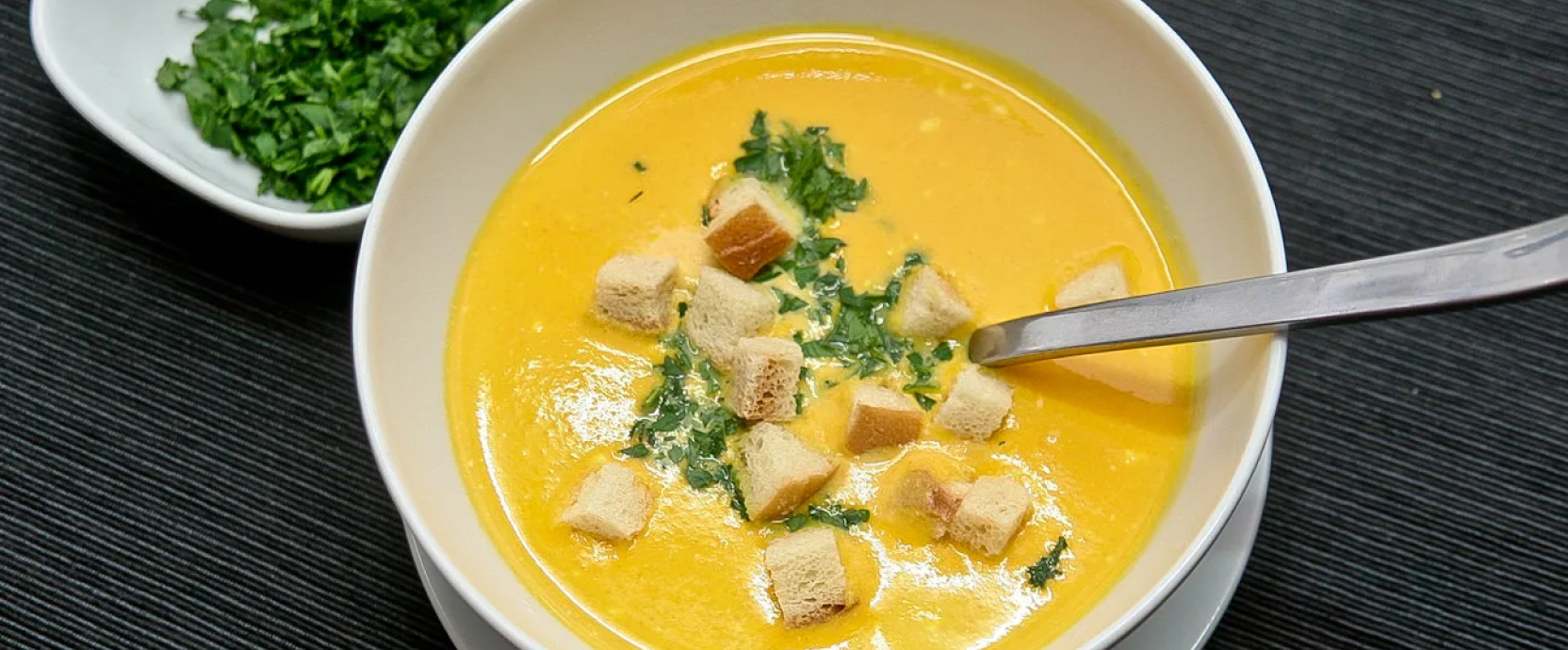
During preparation, the ingredients for pureed soups are strained through a sieve or blended. One famous pureed soup is Spanish gazpacho.
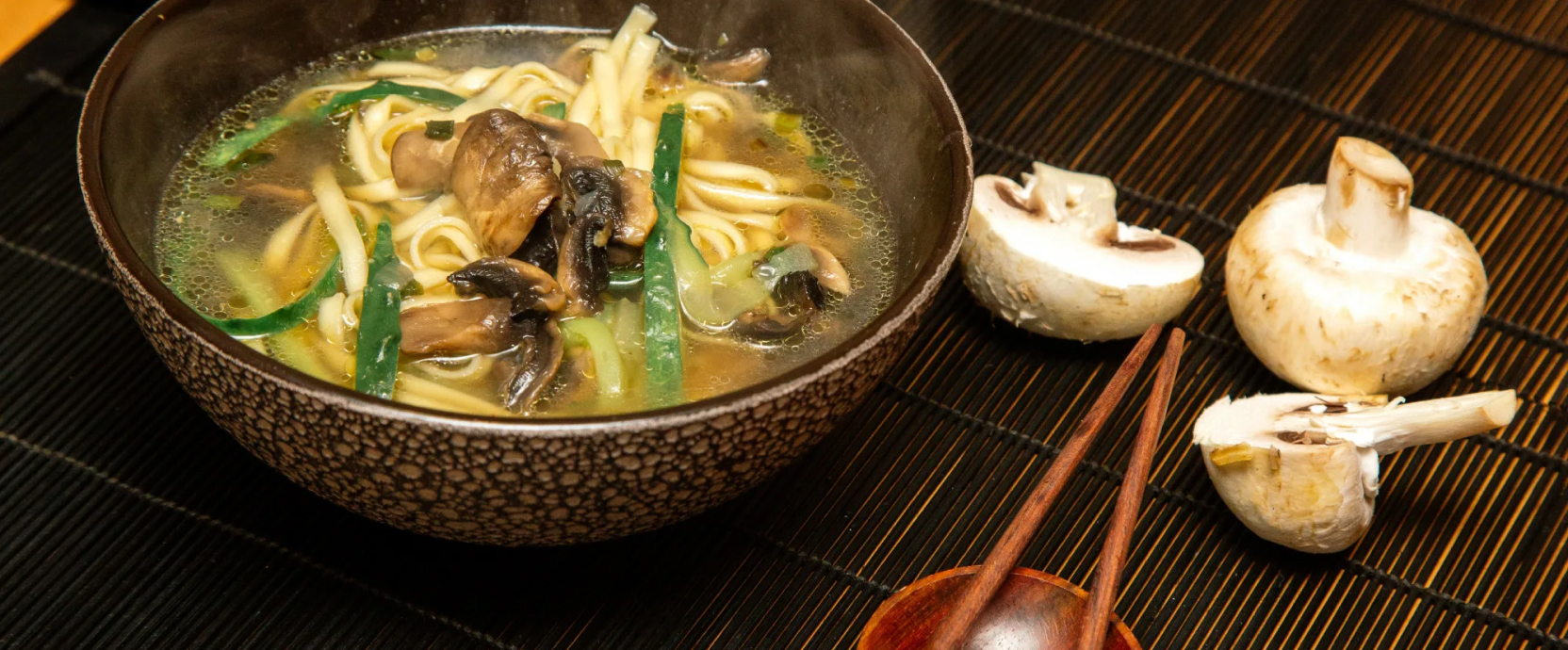
Combination soups are common in China and Japan – in this case, prepared side dish ingredients are added to the liquid when served.
Sweet soups—the name speaks for itself. These are most often dessert fruit soups or milk soups—for example, the childhood favorite milk soup with noodles.
Soups are also divided into groups by serving temperature, by the ingredient that gives the main flavor, by base - soups on water, broth, kvass, kefir, juice, and so on.
Shchi and borscht, but not only
Soups have always been very popular in Russian and Slavic cuisine. While at first they were simple stews cooked in a pot in the oven, later, due to European influence, recipes became much more varied, though this was primarily the case in wealthy homes.
The simplest peasant soup was tyurya—bread or bread crusts soaked in water, kvass, milk, or sour milk. Another very ancient soup was zatirukha, in which small balls of dough were simmered. The food of poor peasants included botvinya—a cold soup made with kvass, beetroot tops, and herbs; green shchi made from mashed sorrel, nettles, and other greens; nettle and sorrel soups; and the famous okroshka. Ukha (fish soup) was also made in Rus', because fish, unlike meat, was affordable to almost everyone.
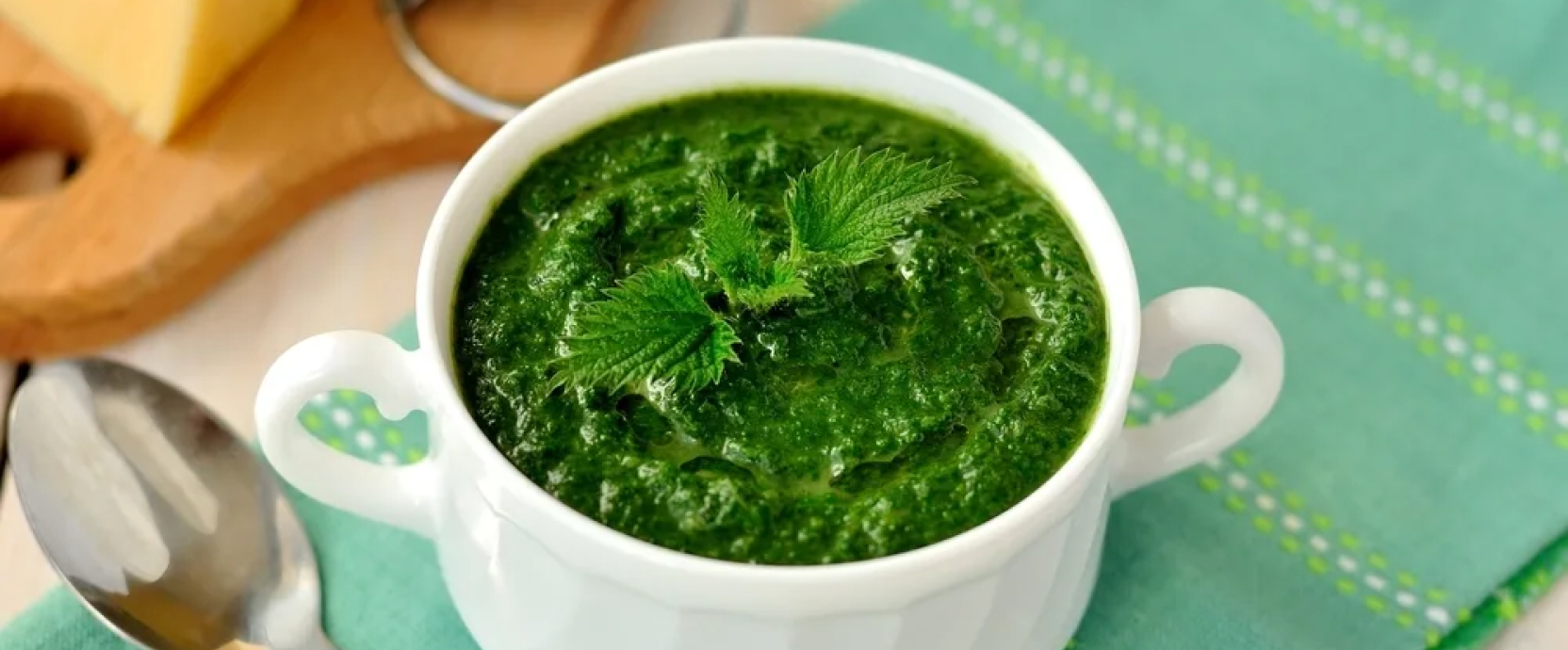
Of course, the two most famous Russian and Slavic soups are shchi and borscht. Shchi is a rich soup made with many ingredients, the main one being cabbage. Shchi can be made with a variety of ingredients—vegetables, grains, mushrooms, meat, and even fish. Although this dish is a staple of Russian cuisine, it's not as ancient as it might seem. Shchi appeared in the mid-19th century, when cabbage began to be grown in Russia. Shchi was cooked in a Russian oven, in a clay or cast-iron pot. The importance of shchi in the life of a Russian peasant is evident in its very name, which derives from the Old Slavic "s'ti"—that which nourishes, food.
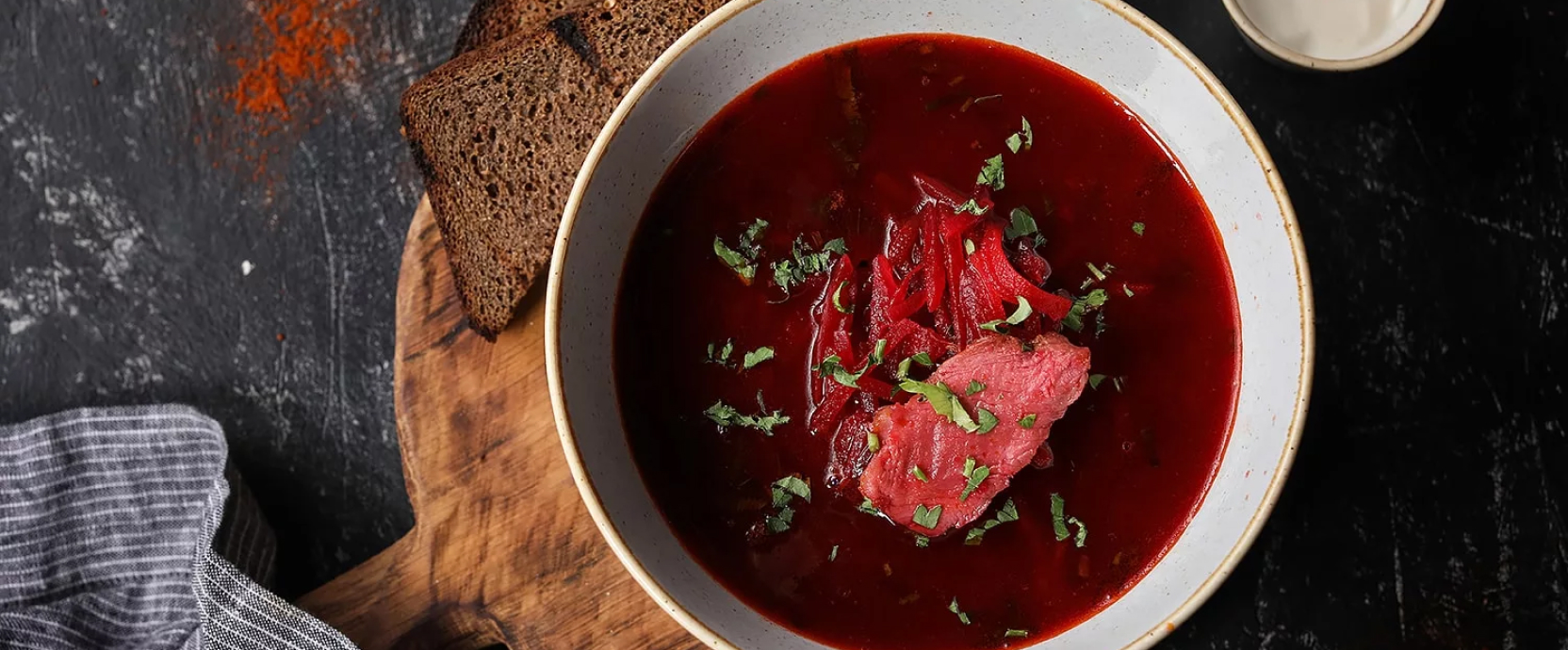
Borscht is a southern Russian (Ukrainian) version of shchi. Initially, this soup was prepared not with beets, but with the leaves of the common (non-spicy) hogweed. Later, borscht was made with beet kvass, to which beets, cabbage, and carrots were added, and the mixture was simmered in the oven. Later, potatoes were added to red borscht. On weekdays, peasants boiled borscht in water, adding crushed lard, and only on holidays did they cook it in bone broth and add meat. Borscht is a rather complex soup to prepare, as the vegetables are first stewed or fried, often separately. There are heated debates among chefs about the proper way to cook borscht and the order in which the ingredients should be added to the pot.